 Follow Us on Google News


 Follow Us on Google Discover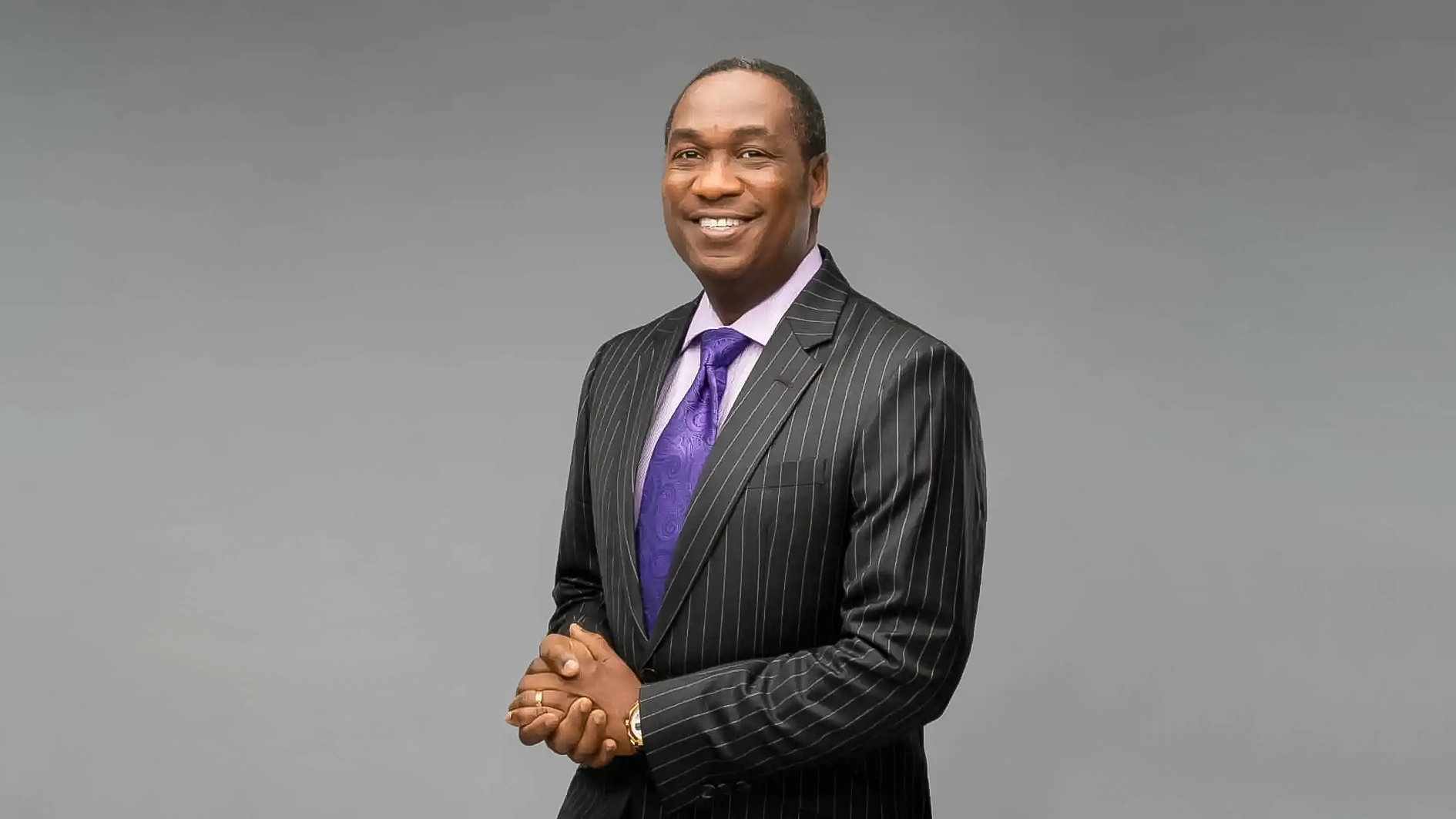
By Tayo Ogunbiyi
“Have you noticed something about Dr. Obafemi Hamzat, the Lagos State deputy governor?” my friend of over 30 years, Bola Adeoti, asked, almost immediately after we sat down at a quiet but classy eatery on the Island.
I looked at Tolani, another friend, with whom we were together. Tolani also stared back at me quietly.
I knew that look. Whenever Bola started a conversation with “Have you noticed something?”, it usually meant we were about to get a lecture we hadn’t asked for.
“Something like what?” I asked cautiously.
“He doesn’t behave like someone desperate to be noticed.”

Tolani laughed.
“Ah! So that is now a political qualification?”
“It is not just a qualification,” Bola replied. “In Nigerian politics, my brother, that may be a superpower!”
We all laughed.
But beneath the laughter was a serious conversation.
With Dr. Kadri Obafemi Hamzat’s birthday approaching on September 19, the conversation about the man, his public service career, and his political future is difficult to avoid. Born on September 19, 1964, Hamzat has spent years moving through engineering, the private sector, and public administration before becoming Deputy Governor of Lagos State in 2019.
And now, as the political conversation around 2027 gathers momentum, his name is increasingly mentioned in connection with the Lagos governorship.
“Let us start from the beginning,” Tolani said. “Who exactly is Hamzat?”
“An engineer,” I replied.
“Technocrat,” Bola added.
“Politician,” I said.
“Administrator,” Tolani supplied.
“Family man,” Bola added.
“Public servant,” I said.
Tolani smiled. “You people have almost finished his CV.”
“Not yet,” Bola said. “We haven’t got to the interesting part.”
The interesting part, indeed, is the journey.
Hamzat did not emerge from nowhere. His academic background is firmly rooted in engineering. He studied Agricultural Engineering at the University of Ibadan, obtained a master’s degree in the same field, and later earned a PhD in System Process Engineering from Cranfield University in England. His professional career also included work in the private sector before his entry into Lagos public service.
“Which means,” Bola said, “when politicians are calculating political arithmetic, this man may actually be calculating something with a calculator!”
Tolani burst out laughing.
“But seriously,” she added, “something is interesting about his background. He combines technical training with political experience.”
That combination is perhaps one of the more distinctive features of Hamzat’s public career.
He became Lagos Commissioner for Science and Technology in 2005 and later served as Commissioner for Works and Infrastructure. His years in government therefore preceded his current position as Deputy Governor by more than a decade.
“He has seen Lagos from inside the engine room,” I observed.
“Exactly,” Bola said.
“And that is why some people talk about continuity whenever his name comes up.”
Continuity has become an important word in the Lagos political vocabulary.
Over the years, the state’s development model has been associated with successive administrations building on existing institutions, policies and infrastructure. Hamzat has been part of that political and administrative ecosystem for years.
As Deputy Governor, he has also occupied an unusual position: he has served under Governor Babajide Sanwo-Olu since 2019 and was returned to office with him in 2023.
Governor Sanwo-Olu, in a birthday message to Hamzat, described his deputy as an “administrator par excellence” and praised his dedication to the administration’s mission of building a Greater Lagos.
“Now that one is interesting,” Tolani said.
“What?”
“The Governor himself speaks highly of him.”
“Politicians praise one another,” Bola cautioned.
“True,” I said. “But public records also matter.”
And public records show that Hamzat’s career has not been confined to one political office.
There is another quality his supporters frequently point to: experience.
By the time he became Deputy Governor, he had already worked in the private sector, served as a commissioner and occupied other public-sector responsibilities. His supporters therefore see him as someone who understands both the technical and political sides of governance.
“He is not coming to learn the geography of Alausa,” Bola declared.
Tolani shook her head.
“Bola, please!”
“What?”
“You are already campaigning.”
“I am only making observations.”
“That is how campaign speeches begin.”
We laughed again!
But the joke revealed something important about Hamzat’s appeal among his supporters.
For them, the attraction is not simply that he is Deputy Governor. It is that they believe his long exposure to government has given him an understanding of how Lagos works.
And Lagos is not exactly a small classroom.
It is a state of more than 20 million people, a commercial nerve centre, a transportation nightmare one minute and an economic miracle the next.
“Anyone governing Lagos must have a strong stomach,” Tolani said.
“And strong legs,” Bola added.
“For what?”
“To survive Lagos traffic!”
That was another round of laughter.
But beneath the humour lies a serious question: what kind of person can manage a state as complex as Lagos?
Hamzat’s supporters would answer with words such as experience, technical knowledge, administrative exposure, political maturity and continuity.
His critics and political opponents, naturally, may assess the same record differently. That is the nature of democratic politics.
But there is another dimension to Hamzat that deserves attention: his temperament.
He is not generally associated with the flamboyant political style that dominates contemporary politics. His public personality tends to be more measured and cerebral.
“Maybe that is why people sometimes underestimate him,” Bola said.
“Or maybe,” Tolani replied, “he simply doesn’t believe every room requires him to be the loudest person in it.”
That, I thought, was a fair observation. Politics often rewards noise. Governance, however, frequently requires patience.
The ability to sit through meetings, study documents, listen to competing arguments, understand technical details, and still make decisions is not as glamorous as a campaign rally. But it matters.
And Hamzat’s engineering background may partly explain his attraction to systems and processes.
His career has repeatedly crossed the boundaries between technology, infrastructure and administration. That history is one reason supporters portray him as a technocrat who understands governance beyond political slogans.
“Still,” Tolani said, “let us not turn him into Superman.”
“Why not?” Bola asked.
“Because Superman didn’t have to govern Lagos.”
That ended the argument.
The truth is that no politician should be treated as infallible. Every public servant’s record deserves scrutiny. Every aspiration deserves questions. And every promise should eventually be measured against results.
That is particularly important as Lagos approaches another political transition.
Hamzat’s fans see a man with years of institutional experience, knowledge of the machinery of government, and familiarity with the state’s development agenda.
His public record, meanwhile, provides plenty for citizens to examine—from his earlier commissioner roles to his years as Deputy Governor.
“So,” Bola asked, leaning forward, “what do you think makes him different?”
I paused.
“Perhaps, it is the combination.”
“Combination of what?”
“Education. Experience. Exposure. Humility. Temperament. Political apprenticeship. And knowledge of Lagos.”
Tolani nodded.
“That sounds reasonable.”
“But there is something else,” Bola insisted.
“What?”
“Timing.”
He was right about one thing: birthdays have a strange way of making people reflect on journeys.
On September 19, Dr. Obafemi Hamzat will mark another birthday. It is therefore natural to look beyond the celebration and examine the journey that brought him here.
From engineering classrooms to corporate offices; from commissioner to deputy governor; from the machinery of government to the centre of Lagos politics, the journey has been long.
Whether that journey ultimately leads to Lagos State Government House is a question that belongs to the political process, the electorate and the choices that will be made in 2027.
“But if you ask his supporters?” Tolani asked.
Bola smiled.
“Ah! If you ask his supporters, they have already packed his bags for Alausa.”
We laughed.
“Don’t forget,” I said, “politics is not a bus you board because your friends say there is space.”
“True,” Tolani agreed.
“And the people of Lagos will have their say.”
That brought the conversation to its natural conclusion.
Perhaps the most interesting thing about Dr. Obafemi Hamzat’s political journey is not merely that he wants to become governor. Many politicians want that.
The more important question is what he brings to the table.
His supporters see a technocrat who has acquired political experience; a former commissioner who has spent years inside government; a Deputy Governor who has worked alongside the current Governor; and a Lagosian whose public career has been closely connected with the evolution of the state.
His critics and opponents will undoubtedly have their own interpretations of that record.
That is precisely how democracy should work.
But one thing is already clear: as the 2027 conversation gathers steam, Dr. Kadri Obafemi Hamzat is no longer simply a Deputy Governor waiting in the wings. He has become one of the central figures in the conversation about Lagos’s political future.
And that is why, as Bola would probably put it, “the man who is destined to be governor” is already giving Lagos plenty to talk about.
Ogunbiyi is Director, Public Enlightenment and Community Relations, Ministry of Information and Strategy, Alausa, Ikeja.

