 Follow Us on Google News


 Follow Us on Google Discover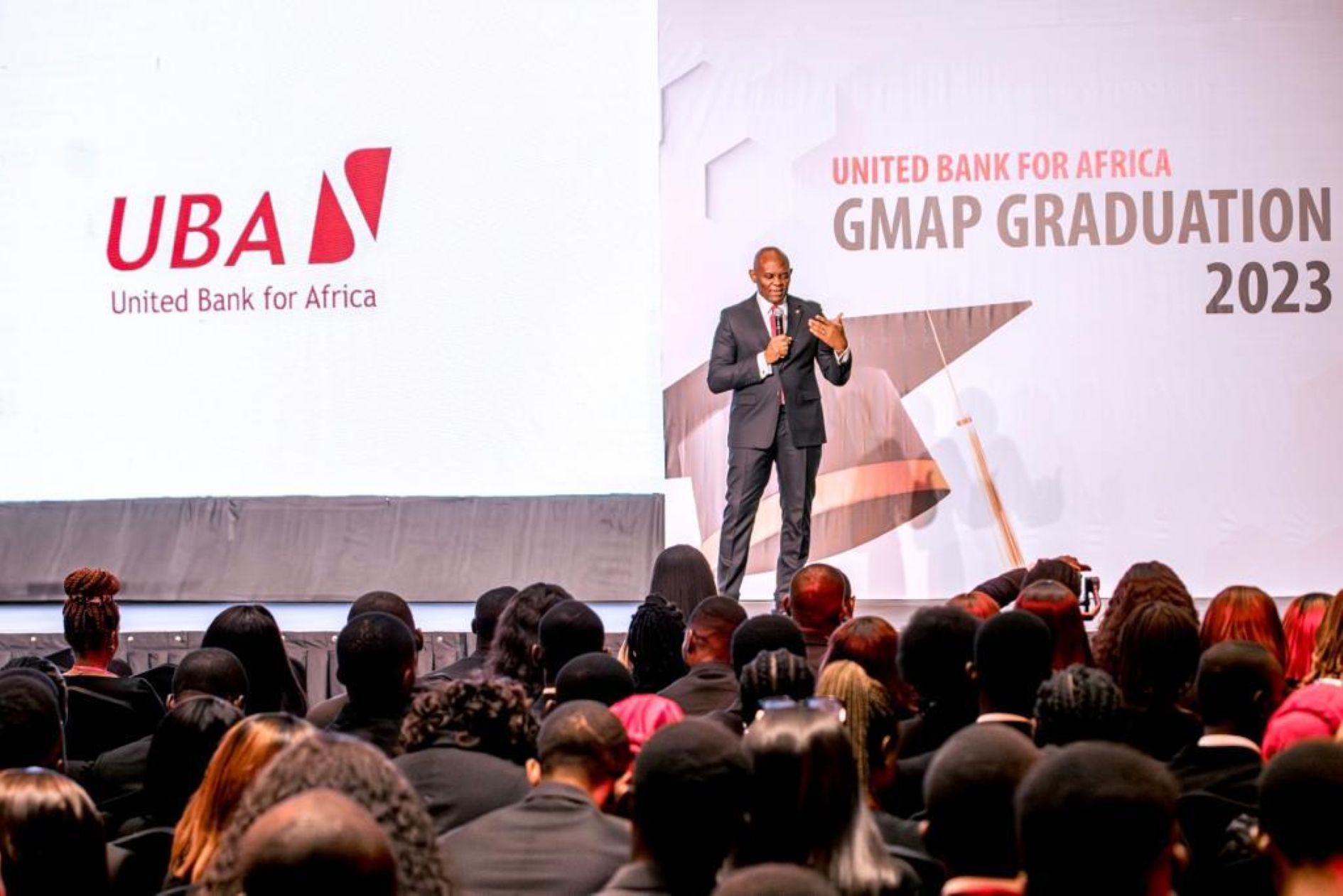
By Onome Amawhe
Sometimes a country’s entire leadership culture reveals itself in a few seconds.
No presidential address is required. No parliamentary investigation. No lengthy treatise on governance. Sometimes all it takes is a young graduate trainee saying:
“Good morning, Tony.”
And suddenly, there it is: hierarchy, power, culture, privilege and the uncomfortable Nigerian distinction between rules for ordinary people and rules for those at the top.
That is why the viral exchange involving Tony Elumelu and a young participant at United Bank for Africa’s Graduate Management Accelerated Programme deserves more serious consideration than the social-media argument over whether a young Nigerian should call an older man by his first name.
During the gathering, the young woman addressed Elumelu as “Tony”. He corrected her and indicated that she should address him as “Mr Elumelu” or “TOE”, adding that he did not subscribe to that kind of “Oyinbo life”. The internet promptly put the young woman on trial.
She was disrespectful. She lacked home training. She should have known better. Elumelu was older than her. He was the chairman. He was a billionaire. He was an elder. But all this outrage avoids the more interesting question.
What happens when an employee follows an organisation’s own stated culture and discovers that the culture apparently stops when it reaches the man at the top? That is the real story.

The problem isn’t “Tony”
The controversy becomes especially difficult to dismiss because UBA’s workplace culture has been described as one in which employees across ranks are addressed by their first names.
Indeed, the policy, as it has been described by people familiar with the organisation, is intended to strip away unnecessary titles and encourage a more accessible corporate environment across strata. That matters enormously.
Because if young employees are inducted into a culture that tells them first names are acceptable across hierarchy, then a trainee who calls Tony Elumelu “Tony” is not necessarily inventing familiarity. She may simply be following the culture she has been taught. And if there is an exception for Tony Elumelu, that exception should be explicit.
If the first-name policy applies to everyone except the chairman, say so. If it applies during ordinary office interactions but not during ceremonial occasions, say so. If it applies horizontally and only partially vertically, define those boundaries.
Otherwise, what is being practised is not really a first-name culture. It is hierarchy disguised as egalitarianism.
The rule meets the ruler
That is why those few seconds matter.
The trainee did not insult Elumelu.
She did not use an offensive nickname.
She simply called him by his first name—the very convention associated with the corporate culture around her.
And suddenly, when the rule reached the apex of the hierarchy, another rule appeared.
“Mr Elumelu.”
That is where an argument about etiquette becomes an argument about leadership.
It is easy to introduce progressive corporate practices when everyone else must observe them.
It is easy to talk about accessibility when other executives must become accessible.
It is easy to flatten hierarchy when the flattening takes place beneath you.
The real test arrives when the same culture reaches your own chair.
And suddenly “Tony” becomes “Mr Elumelu”.
Then another “Tony” appeared
The controversy became more intriguing when an older video resurfaced showing Elumelu being addressed as “Tony” during a 2022 appearance at Stanford Graduate School of Business.
He did not publicly correct the speaker in the manner witnessed at the UBA gathering.
Context undoubtedly matters.
Stanford is an American institution operating within a culture where first-name address is commonplace. The UBA event took place in Nigeria, and Elumelu’s own reference to “Oyinbo life” suggests that cultural distinction mattered to him.
That is a legitimate explanation.
But it also raises an awkward question.
If “Tony” can be accepted from a young person in California, why does the same first name suddenly become inappropriate when spoken by a young Nigerian professional within an organisation associated with first-name culture?
Is the issue really respect?
Or does familiarity become unacceptable when it travels upwards through a Nigerian hierarchy?
Nigeria’s culture of exceptionalism
This is where a seemingly trivial workplace episode becomes recognisably Nigerian.
Nigeria does not suffer from a shortage of rules.
We have rules everywhere.
What we often lack is equality in their application.
Political leaders preach fiscal restraint while protecting expensive privileges.
Public officials demand sacrifice from citizens while insulating themselves from failing public services.
Regulators enforce rules against the weak and frequently discover remarkable flexibility when power enters the room.
The underlying philosophy is familiar:
The rule is excellent—until it reaches me.
That is the broader leadership problem exposed by the Elumelu controversy.
The comparison is not that a disagreement over corporate etiquette is equivalent to a politician violating the law. It obviously is not.
The comparison concerns the mentality of exceptionalism.
Leaders establish principles.
Institutions advertise values.
Organisations proclaim cultures.
But the credibility of those cultures is determined by what happens when the people at the top become subject to them.
A rule that governs only downward is not much of a rule.
It is an instrument of hierarchy.
Elumelu’s own leadership philosophy
That contradiction is particularly interesting in Elumelu’s case because his public philosophy has long emphasised institution-building, accessibility, entrepreneurship, merit and developing young Africans.
Those are valuable ideas.
UBA’s emergence as a major pan-African banking institution is itself evidence of what disciplined institution-building can achieve.
But the ultimate test of institutional culture is whether it becomes bigger than the personality at the top.
If an organisation believes in openness, senior leadership must embody openness.
If it believes hierarchy should be reduced, those at the top must surrender some of hierarchy’s comforts.
If employees are encouraged to operate within a first-name culture, the most powerful figures should either participate in that culture or clearly establish why they are exempt.
Otherwise the organisation risks producing equality horizontally while preserving exceptionalism vertically.
The rule remains subordinate to the ruler.
Respect is not the issue
Many of those attacking the trainee have equated respect with title.
That is far too simplistic.
Respect is essential in every workplace. But respect is demonstrated through conduct, competence, courtesy and professionalism—not merely through honorifics.
Calling somebody “Mr” does not necessarily mean you respect him.
Calling somebody by his first name does not necessarily mean you do not.
Modern organisations embraced first-name conventions partly because excessive hierarchy can inhibit communication.
A junior employee who is terrified of appearing insufficiently deferential to a senior executive may also hesitate to challenge a bad decision, volunteer an unconventional idea or identify an emerging problem.
That does not mean Nigerian institutions must imitate Western corporate culture wholesale.
Elumelu is entitled to believe that African ideas of respect should survive globalisation.
But organisations cannot simultaneously embrace the symbolism of flat corporate culture and preserve an invisible ceremonial wall around the most powerful person in the room.
Choose.
The problem with invisible exceptions
The most important defence offered on Elumelu’s behalf is that a liberal workplace does not give employees the liberty to address senior figures however they please.
That is reasonable in the abstract.
Personal preferences matter.
But corporate culture exists precisely so that employees do not have to negotiate thousands of individual preferences.
If UBA tells employees across strata that first-name address is its convention, then the responsibility shifts.
A young trainee should not be expected to know that one particular first name is somehow different.
If “Tony” requires special permission, make that clear.
If everyone can be called by first name except the most senior leadership, state it.
What is difficult to defend is an unwritten hierarchy in which the least powerful employee is expected to understand exceptions that the organisation itself has not clearly articulated.
That is not professionalism.
That is decoding power.
Perhaps the trainee taught the lesson
There is something almost poetic about the fact that this happened at a programme designed to develop young professionals.
Perhaps one of the trainees inadvertently provided the most important leadership lesson of the day.
Institutions should say what they mean.
Policies should mean what they say.
And leaders should be prepared to live inside the cultures they create, approve or inherit.
If UBA believes Nigerian cultural norms require formal address for senior leadership, there is nothing wrong with establishing that.
Change the policy.
Clarify it.
Say that the first-name convention has limits.
What becomes problematic is asking employees to operate within one culture and then blaming them when they discover, publicly, that power has created another.
From Tony to Mr Elumelu
The irony is that Elumelu’s correction produced a much larger conversation than the one he probably intended.
Instead of simply reinforcing respect, it opened a debate about hierarchy.
Instead of making the trainee’s judgement the only issue, it raised questions about institutional consistency.
And the resurfaced Stanford footage complicates matters further.
The issue is no longer simply:
Was the trainee wrong to call him Tony?
It is:
When exactly is Tony “Tony”, when does he become “Mr Elumelu”, and who is responsible for knowing the difference?
That question captures something much larger about Nigerian leadership.
We speak enthusiastically about modern institutions while retaining deep attachments to traditional hierarchy.
We want meritocracy—but also deference.
We want employees who speak up—but also know their place.
We want flat organisations—but still want everyone to recognise the chairman.
We want rules—but too often preserve exceptions for power.
Tony Elumelu has every right to decide how he personally prefers to be addressed.
But leadership demands something more difficult than exercising that preference.
It demands consistency.
If UBA’s first-name culture applies across strata, then it should be capable of reaching the highest office.
If it does not apply to the highest office, that exception should be stated clearly rather than discovered by a young trainee in front of an audience.
Because the defining test of any institutional rule is not how comfortably the powerless obey it.
It is what happens when the rule finally reaches the powerful.
“Good morning, Tony.”
Two ordinary words.
But in a country where rules have an extraordinary habit of changing as they travel upwards, they became a much bigger question:
Are the people who create and preside over our institutional cultures prepared to live by them too?
Onome Amawhe is the Lead Consultant at Africa Executive, a media consultancy specializing in editorial strategy, executive content, corporate publishing, and special reports.

