
 Get Guardian on Google
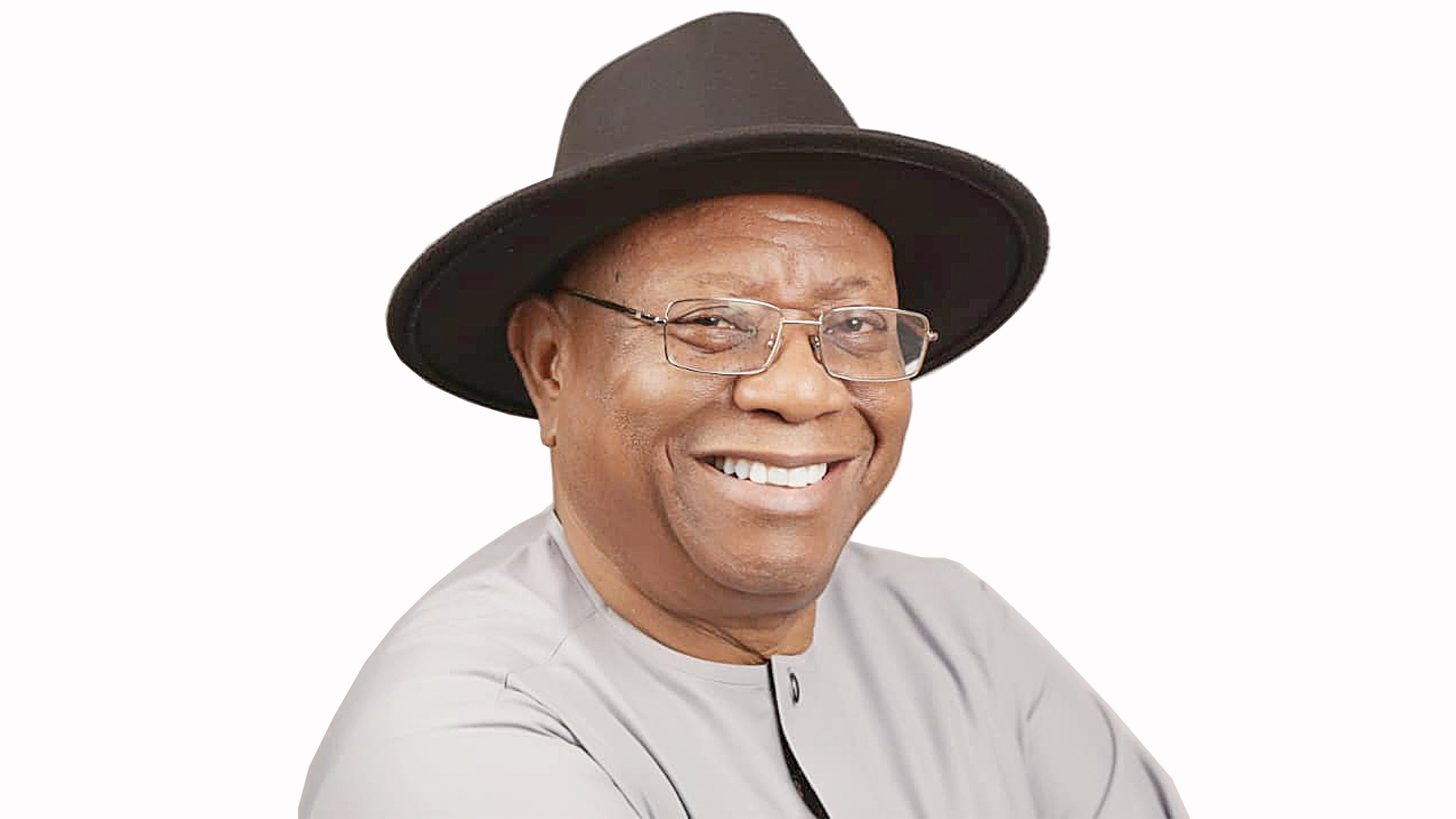
Former member of the House of Representatives for Amuwo-Odofin Federal Constituency, Lagos State, Oghene Emmanuel Egoh, who also served in the ECOWAS Parliament and is currently a member of the President Bola Tinubu Campaign Organisation, speaks with OBIRE ONAKEMU on fuel subsidy removal, its economic impact, measures introduced to cushion the hardship and the Tinubu administration’s record ahead of the 2027 elections, among other issues.
What is your assessment of the political developments in Nigeria with the 2027 general election around the corner?
It is a glaring fact that the 2027 general election is approaching. Usually, as elections draw closer, political parties engage in accusations and counter-accusations. The opposition accuses the ruling party of planning to rig the election, while the ruling party accuses the opposition of failing to organise itself and reach out to the electorate.
However, one can see that the APC is working very hard. There is no doubt about that. The party has set up its campaign committee and is taking its campaign across the country.
The opposition parties have not demonstrated the same level of organisation. The APC is campaigning from the wards to the local governments and states. What some opposition politicians are doing is gathering a few people and shouting,
“Tinubu must go!” That is not a campaign. Campaigning is about explaining why the electorate should vote for your candidate and what that candidate intends to offer. It goes beyond simply calling for Tinubu’s removal. The political atmosphere is not unusual for a country approaching a general election.
What are your fears and the issues you envisage will determine voting patterns in the 2027 general election?
I have no particular fears about the issues that will determine voting patterns. People are aware of President Tinubu’s performance. In my view, he is the greatest president Nigeria has ever had. Although he has not spent four years in office, there are signs of his administration’s activities across the country.
People complain about hunger, but they should also acknowledge that President Tinubu’s government has introduced measures to provide support. For example, more than one million students are benefiting from the student loan scheme. If parents cannot afford to finance their children’s university or polytechnic education, the students can apply for loans, provided their institutions are owned by the Federal or state governments. Billions of naira have been allocated to the scheme to enable students to pay their fees and complete their education.
The government also provides beneficiaries with a monthly upkeep allowance of N20,000. Although that amount may not be sufficient, it is a good beginning. Their school fees are covered, and they also receive some money for their upkeep.
In agriculture, graduates can apply through the Ministry of Agriculture and the Bank of Agriculture for government-supported opportunities to establish farming projects. These are some of the interventions already in place.
Secondly, following the removal of fuel subsidies, more money has become available to the three tiers of government. The funds are shared in accordance with the Constitution among the Federal Government, state governments and local governments.
As a result, many workers and pensioners who were owed salaries and pensions for several months or years are now receiving payments. If a state or local government chairman is still owing workers and pensioners despite increased revenue, such an administration needs to explain why.
There is no country where poverty and hunger are completely absent. Even in the United States and Britain, there are homeless people. However, governments are expected to introduce measures to support vulnerable citizens, and people should take advantage of the opportunities provided.
Do you really think the 2027 general election will reflect the will of the people?
Why should it not reflect the will of the people? Once people vote, their votes should be counted. However, some people have already made up their minds that the 2027 election will not reflect the wishes of the electorate. Whatever the outcome, they may still claim that the election was manipulated.
These are the people who keep alleging that the ruling party will rig the election. If you believe the election will be rigged, why participate in it? My position is that everybody should go out and vote without fear. Political parties should deploy their agents to polling units to protect and defend their votes and ensure that the results are properly recorded.
APC agents will be there, just as agents of other political parties will be present to ensure that the correct results are declared.
Don’t you think the political climate and public sentiment in Nigeria have shifted significantly against the ruling party?
I don’t know about that. What I know is that the opposition is telling a lot of lies to the electorate. It is unfortunate that some people believe these claims. They need to change their mindset and understand the policies and interventions of the government.
How do you call for greater accountability and policies that address Nigerians’ everyday struggles?
There is a government at every level. At the councilorship level, there is government, just as there is government at the local government chairmanship level. At the state level, we have the Houses of Assembly and the governors, while at the Federal level, we have the House of Representatives and the Senate.
For instance, Senator Ede Dafinone is committed to the issue of the railway line running from Ujevwu in Udu Local Government Area of Delta State to Itakpe in Kogi State. That is the kind of commitment expected from our representatives.
People should approach their elected representatives, explain their problems and demand action rather than sit at home complaining that things are bad. Complaining without engaging those elected to represent the people will not solve the problems.
Do you concur that government performance should be assessed by its impact on ordinary citizens, particularly the poorest, rather than institutional growth or financial gains alone?
Government performance should be assessed by what the government is doing and the impact of its policies. The Federal Government has established new universities, while some existing institutions, including Yaba College of Technology and Kaduna State Polytechnic, have been upgraded to university status.
In our area, particularly among the Urhobo people, there is also a Federal Medical Centre at Ovwian in Udu Local Government Area of Delta State.
One cannot dismiss the importance of building institutions and infrastructure simply because some people remain poor. The government must continue to invest in infrastructure and institutions because their benefits eventually reach the wider population.
However, there are people who, irrespective of what the government does, may remain poor because they are unwilling to work hard and would rather complain. Even in the villages, while some men and women go to the farms, others spend their time doing nothing. When farmers harvest yams, those who have not worked on their farms have nothing to harvest. The same applies to fishing. People must change their attitude and be willing to work.
Do you think Tinubu’s administration would have faced an even more difficult situation if it had chosen to maintain the previous subsidy arrangement?
If President Tinubu had maintained the fuel subsidy, it would have meant continuing a policy that had contributed to the difficulties faced by previous administrations. Nigeria was spending heavily on fuel subsidy, and the benefits were not restricted to Nigerians. We were also indirectly subsidising fuel consumption in neighbouring countries such as Chad, Cameroon, Niger and Sudan.
The reality is that the subsidy arrangement largely benefited the rich rather than the poor, while also creating opportunities for people in neighbouring countries to benefit from the system.
Would you criticise Atiku and his allies for opposing the policy?
No! They have a right to criticise the government because they are in opposition. When Tinubu was in opposition, he also criticised former President Goodluck Jonathan’s administration. So, Atiku has the right to criticise, but, as the saying goes, he should remove the log in his own eye before pointing out the speck in another person’s eye.
How do you assess the off-cycle elections conducted by INEC so far? Do they provide a vital testing ground for key structural upgrades?
I don’t know what they mean by that. Off-cycle elections are constitutionally permitted. The Constitution and the relevant electoral laws provide for elections to fill vacancies arising from death, resignation or other circumstances, including when an elected official leaves office to become a minister.
Whenever such a vacancy occurs, an election has to be conducted. Until the National Assembly amends the relevant provisions, the process will continue.
I am also happy with the outcomes of the elections conducted so far, as the APC has won most of them. Even in Kano and other parts of the country, the party has recorded victories. In the last set of six elections, the APC won five. This shows that the party has a strong presence on the ground, unlike some opposition parties. That, in my view, explains some of the criticisms directed at the APC.
And for the 2027 general election, are you sure of INEC’s commitment to neutrality, operational excellence and the integrity of the ballot box?
I don’t know whether you are suggesting that the entire INEC should be dismissed and replaced with another group of people. INEC officials are Nigerians recruited from different parts of the country. The commission is not made up of foreigners; its personnel are Nigerians.
Why should we employ our own citizens to conduct elections and then refuse to have confidence in them? We should give them the benefit of the doubt. I believe INEC will carry out its responsibility and conduct a credible election.
Are you going for any elective position in 2027? And how has it been since you left the House of Representatives?
No, I am not contesting any election. I have made up my mind about that. When I left the PDP for the APC because of the crisis in the PDP at the time, I was asked whether I intended to contest an election. I said no. I only wanted to join the Renewed Hope Agenda, and that is what I am doing.
I am not contesting in 2027, but I am supporting my party, the APC.
Life has been good since I left the House of Representatives. I remain actively involved in issues affecting my people. For instance, I have been engaging Senator Ede Dafinone on the railway project and other matters concerning our area.
Since leaving office, I have continued to help my people by approaching relevant government institutions and drawing their attention to the challenges they face. I still represent their interests whenever issues arise.
Today, I am a member of President Bola Ahmed Tinubu’s Presidential Campaign Council, which is one of the highest organs of the campaign organisation. Being given that responsibility shows that the party recognises my contributions, and I am working hard to justify the confidence reposed in me.
How would you assess President Tinubu’s administration so far?
President Tinubu is doing very well. People keep complaining about hunger and the rising cost of goods in the markets, saying they can no longer afford certain items. However, the problem of hunger did not begin with Tinubu’s administration. He inherited these challenges and is making efforts to address them.
We are also happy with the projects being undertaken by the administration. For instance, the coastal highway project has undergone some adjustments following the discovery that certain sections of the proposed route would require extensive bridge construction because of the depth and nature of the terrain. The important thing is to ensure that the project is properly executed.
There are also plans to extend the East-West Road towards Calabar, passing through Delta State and other states to connect different parts of the country. We welcome these developments.
The Badagry-Sokoto Highway is also being executed in phases, just like the South-South road projects. Several other infrastructure projects are ongoing across the different geopolitical zones.
These projects are important to national development, and we are happy that the administration is pursuing them.