 Follow Us on Google News



 Follow Us on Google Discover
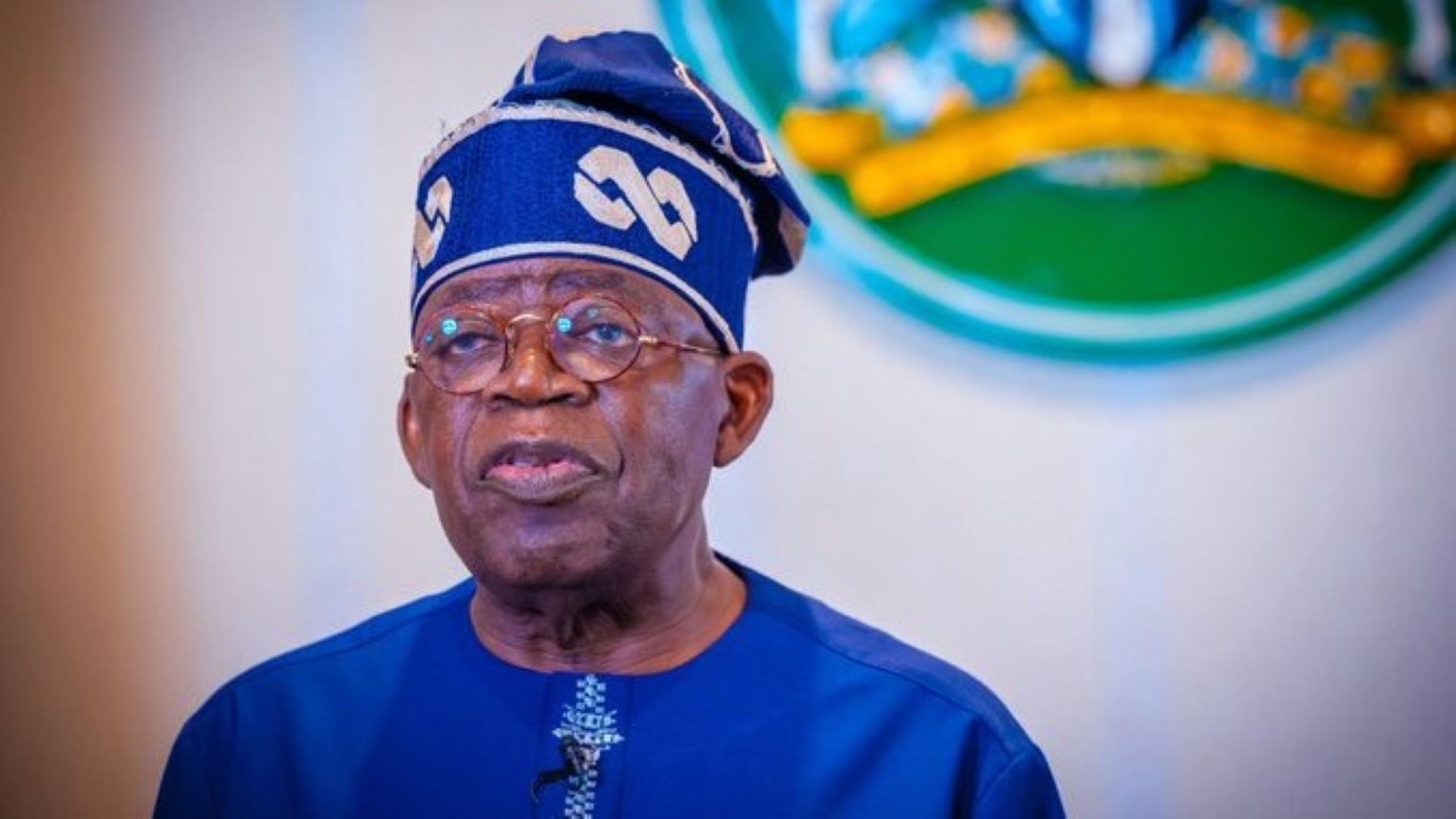
President Bola Tinubu’s re-election campaign, launched in Kaduna on Saturday, has turned attention to the Southwest, his traditional political base, where economic hardship, opposition challengers and disaffection among sections of the Yoruba political elite could complicate the second-term bid, SEYE OLUMIDE reports.
President Bola Ahmed Tinubu’s re-election campaign began in Kaduna on Saturday as the All Progressives Congress (APC) mobilised its political machinery behind his second-term bid. Beyond the rally and the party’s national mobilisation, however, a critical question confronts the President: can he retain the Southwest, the region that nurtured his political career and remains central to his electoral calculations, amid economic hardship, opposition realignments and growing dissent among sections of the Yoruba elite?
Tinubu’s political structures remain formidable, but the 2023 presidential election demonstrated that the Southwest is not an automatic electoral inheritance. Peter Obi of the then Labour Party defeated him narrowly in Lagos, while Atiku Abubakar of the then Peoples Democratic Party (PDP) won Osun. Tinubu carried Ogun, Ondo, Ekiti and Oyo.
The results exposed the limitations of assuming that party machinery, regional identity and endorsements by influential individuals will necessarily translate into votes.
Tinubu polled 2,279,407 votes across the six Southwest states in 2023, accounting for about 25.9 per cent of his national total of 8,794,726. He lost Lagos to Obi by 9,848 votes and Osun to Atiku by 10,421 votes. The narrow margins in both states underscore the importance of the region to his re-election prospects.
The political landscape has since changed. Obi is now the presidential candidate of the Nigeria Democratic Congress (NDC), while Atiku is running on the platform of the African Democratic Congress (ADC). Other politicians are also seeking to challenge the incumbent through different platforms, creating a more complex contest for the region’s votes.

Oyo State Governor Seyi Makinde’s presidential ambition on the platform of the Allied Peoples Movement (APM), Social Democratic Party (SDP) candidate Adewole Adebayo and African Action Congress (AAC) candidate Omoyele Sowore present different challenges to Tinubu in the zone, although none should automatically be regarded as a decisive threat to his support.
Makinde is particularly significant because he combines executive experience, an established political network and familiarity with Oyo State’s voters. His candidacy could attract voters dissatisfied with the Federal Government, especially in Oyo. However, extending that influence beyond his home state, building a wider national coalition and translating state-level popularity into a substantial presidential vote remain major tests.
Adebayo offers another platform for voters seeking an alternative to the APC and the larger opposition parties. His electoral significance will depend on whether he can move beyond political messaging to present a compelling programme on economic recovery, governance and public accountability.
Sowore’s AAC candidacy brings a more radical reform message, potentially appealing to younger voters and citizens frustrated with the political establishment. Yet the ability to articulate public discontent is different from building the nationwide organisation required to secure substantial votes.
The implications for Tinubu are therefore not straightforward. If these candidates attract voters who might otherwise support the APC, they could reduce his margin. If they divide the opposition vote, they could indirectly benefit him. Alternatively, their campaigns could mobilise citizens who might otherwise abstain. The eventual effect will depend on their appeal, organisation, alliances and voters’ choices.
Economic hardship remains a central test
THE more consequential challenge may come not only from opposition candidates but also from economic hardship and the public discontent it has generated, particularly in the Southwest.
President of the Yoruba Ronu Leadership Forum, Akin Malaolu, and Convener of the Movement for Credible Elections (MCE), Wale Okunniyi, believe that the removal of the petrol subsidy, exchange-rate reforms, and other policies, which the administration defends as necessary economic adjustments, have placed considerable pressure on household budgets and businesses.
Malaolu was particularly critical of Tinubu’s economic record. “President Tinubu needs not to return in 2027. The damage his economic policies have done to an average Nigerian household should not continue beyond 2027. The obvious fact is he has lost it,” he said.
He argued that higher transport costs, food prices and operating expenses remain central to how many Nigerians assess the government. Improvements in public revenue or investor confidence, he added, would not necessarily translate into electoral support unless citizens experienced tangible benefits.
For the APC, the danger is that dissatisfied voters may either turn to an opposition candidate or withdraw from the electoral process. Neither outcome can be established in advance, but both make it risky for the party to equate attendance at rallies and public endorsements with electoral support.
Persistent insecurity and criticism of what opponents describe as the lackadaisical attitude of some presidential aides, particularly those from the Southwest, could compound the problem. The administration’s challenge is to demonstrate responsiveness to public concerns and tangible progress on food affordability, jobs, electricity, wages, security and the survival of small businesses.
Sections of the Yoruba political and civic elite also remain unconvinced that Tinubu’s re-election deserves automatic support. Elements associated with the late Pa Ayo Adebanjo’s Afenifere represent strands of opinion that have questioned the President’s leadership and political direction.
Such dissent does not necessarily translate into votes for a particular opponent. Nevertheless, it challenges the assumption that regional identity alone will secure the President’s support. The critical question is whether these disagreements can be translated into organised political action capable of influencing voters.
APC supporters insist on Tinubu’s advantage
DESPITE these concerns, prominent APC figures remain confident that Tinubu will retain the region.
Former APC Deputy National Vice Chairman (Southwest), Bankole Oluwajana, expressed certainty that the region would support the President’s re-election, predicting that Tinubu would secure more votes than he did in 2023.
He based his position on what he described as the administration’s infrastructural achievements in the Southwest, arguing that the President should be allowed to continue his programmes.
Similarly, APC governorship candidate in Ogun State, Senator Olakilekan Solomon Adeola, described Tinubu as his political mentor and expressed confidence that the President would win across the Southwest, including Oyo, where Makinde is seeking the presidency. Adeola also predicted substantial support for Tinubu in other regions.
Governors Lucky Aiyedatiwa of Ondo State and Biodun Oyebanji of Ekiti State have likewise expressed confidence in the President’s prospects, arguing at separate engagements attended by The Guardian that retaining the Southwest would not be a major problem.
These positions reflect the APC’s confidence in its political structures, incumbency advantages and the administration’s infrastructure record.
Lagos and Osun present different tests
LAGOS remains especially important to Tinubu’s political legacy and re-election calculations. The mobilisation around governorship candidate Femi Hamzat, involving Musiliu Obanikoro, Director-General of the Hamzat Campaign Organisation, and Fouad Oki, a former director-general of the campaign organisations of Tinubu and Babatunde Fashola, could help the APC reach constituencies beyond its immediate party base.
Obanikoro’s political networks and Oki’s campaign experience may assist grassroots engagement for both Tinubu and Hamzat. However, the strategy’s effectiveness will depend on whether it addresses the concerns of traders, informal-sector workers, professionals, young people and households struggling with rising living costs.
Hamzat’s governorship campaign and Tinubu’s presidential bid may reinforce each other, but the two contests are not identical. Voters can support a state candidate while choosing a different presidential candidate, as the 2023 election demonstrated.
Okunniyi argues that the APC must therefore persuade voters on the President’s record rather than assume that support for its Lagos governorship ticket will automatically transfer to him.
Across Ogun, Ekiti and Ondo, APC control of the state governments provides organisational advantages. Yet party unity and incumbency are not substitutes for effective voter engagement.
Osun presents a different challenge. Tinubu lost the state in 2023, while Governor Ademola Adeleke’s political strength and the Accord Party’s position remain relevant to the presidential contest.
Adeleke has been named as coordinator of Tinubu’s Presidential Campaign Council in the state, raising questions about the extent of any understanding between the Accord Party and the APC. The precise nature of the arrangement, including whether it extends beyond the presidential contest, requires clarification.
Any cooperation between the parties would have to contend with their separate political interests and the ambitions of their respective candidates. The APC must also manage internal divisions, including those associated with former governor Gboyega Oyetola. Whether political cooperation can produce a coherent mobilisation strategy remains an open question.
Traditional rulers remain influential interlocutors in Southwest communities, but their political role requires careful distinction. Palace visits, public appearances with the President and discussions about development do not necessarily amount to endorsements of his re-election.
The Ooni of Ife, Oba Adeyeye Enitan Ogunwusi; the Alaafin of Oyo, Oba Abimbola Akeem Owoade; the Olubadan of Ibadanland, Oba Rashidi Ladoja; Oba Rilwanu Akiolu of Lagos; and other prominent monarchs occupy important cultural positions.
Their engagements with political leaders provide opportunities to discuss security, infrastructure, agriculture and community welfare. However, the political significance of such engagements should not be exaggerated without clear evidence of an endorsement or a measurable public response.
For Tinubu, the more meaningful test is whether relationships with traditional institutions help address local concerns and improve people’s lives. An explicit palace endorsement may strengthen a campaign’s visibility, but it cannot guarantee that subjects will vote according to a monarch’s preference.
The Kaduna campaign launch marks the beginning of a national contest, but Tinubu’s prospects in the Southwest will depend on more than the strength of his political network. The APC must manage internal disagreements, explain its economic record and demonstrate how its policies will improve household welfare.
The opposition, for its part, must convert dissatisfaction into effective political participation while presenting credible alternatives. Makinde, Adebayo and Sowore may influence the contest, but their significance will ultimately be determined by the votes they attract and the extent to which their campaigns reshape the choices available to the electorate.
Ultimately, Tinubu’s Southwest base will be tested not by the number of governors, political heavyweights or monarchs who receive or endorse him, but by whether voters believe his administration deserves another four years.

