 Follow Us on Google News
 Follow Us on Google Discover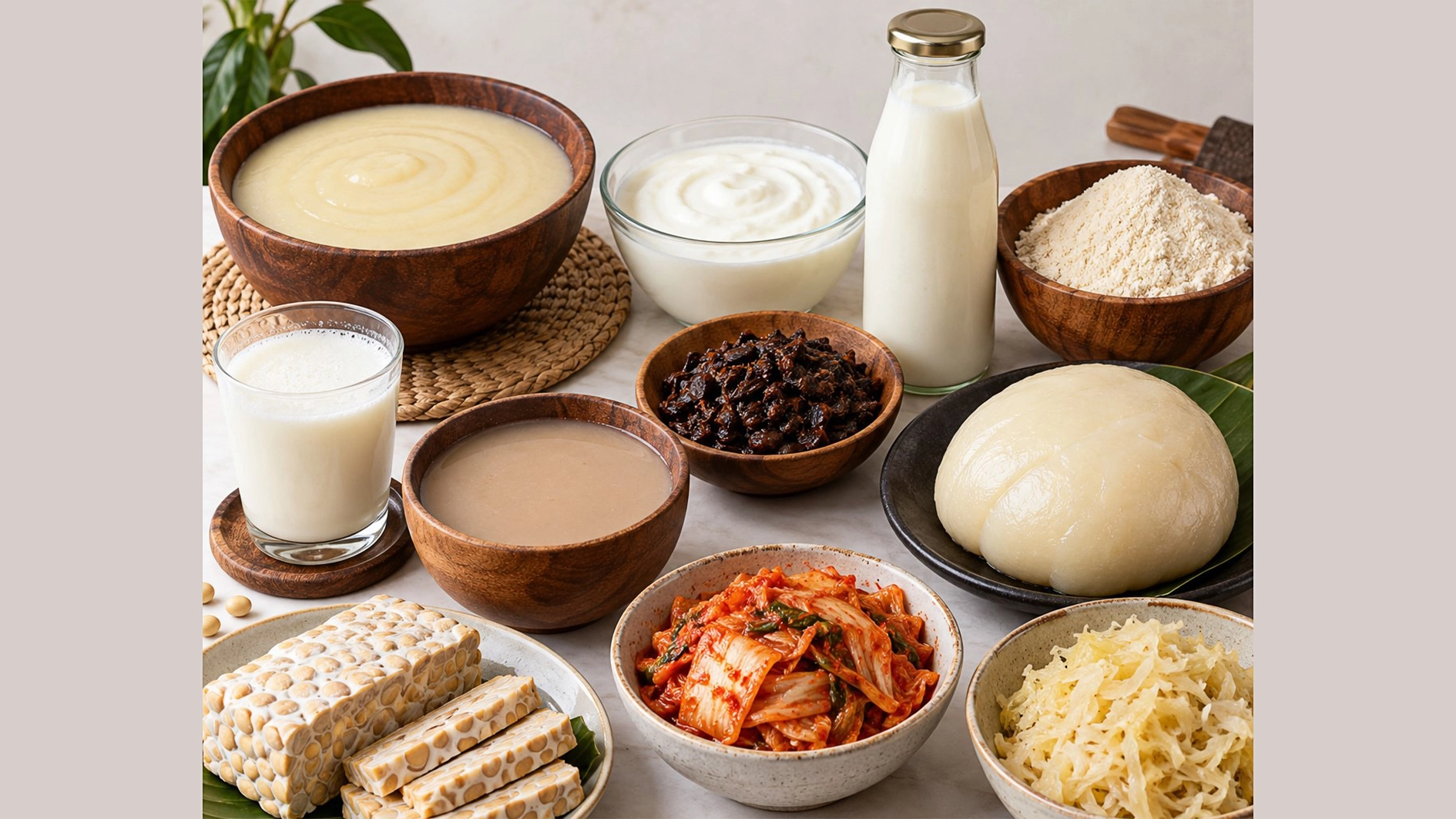
From the ogi (pap) in your breakfast bowl to the iru (locust bean) in your favourite soup, fermentation has been part of Nigerian food culture for generations. But beyond the familiar taste and aroma, what makes these foods worth keeping on the menu?
For many Nigerians who know the benefit of fermented food, breakfast is incomplete without a bowl of ogi. Some prefer it with akara, others with moi moi, while some enjoy it with a gen-erous sprinkling of sugar and slides of bread.
Elsewhere, iru does its job in a pot of egusi or ewedu soup, adding the distinct flavour that makes the meal feel complete. Then there is fufu, lafun, nono and kunu zaki, all of which have found a place in the country’s food culture through one process or another: fermentation.
Although many people consume these foods regularly without giving much thought to how they are made. Fermentation is one of the oldest ways of transforming food. Long before conversations about gut health and nutrition became popular, com-munities were already using the process to preserve food, improve its taste and make certain ingredients more suitable for consumption.
Today, those same foods are attracting attention. From traditional Nigerian foods to yoghurt, kefir and kimchi, fermented foods have become part of conversations about healthy eating. But what exactly happens to food when it ferments, and how does the process affect what eventually ends up on our plates?
According to Wasiu Awoyale, an Associate Professor in the Department of Food Science and Technology at Kwara State University, fermentation occurs when microorganisms act on food materials, producing substances such as organic acids, alcohol and other compounds.

In simpler terms, tiny living organisms, including certain bac-teria and yeasts, break down components of food and change its taste, texture, aroma and, in some cases, nutritional composi-tion.
“Fermented foods are foods that have been subjected to different levels of microbial activities, leading to the production of alcohol, organic acids and water,” he explained.
Awoyale, who is also a Visiting Associate Professor in the Department of Agricultural Engineering at Njala University in Sierra Leone, noted that fermentation could take place through different methods. Some foods are fermented in water, while others undergo the process in a relatively solid state.
One thing many fermented foods have in common is their distinctive taste. “Generally, fermented foods often have a sour taste because of the organic acids produced during fermentation,” he said.
That familiar tang in ogi or the sharpness of certain fermented dairy products is, in part, a result of the chemical changes that occur during the process.
But fermentation is not simply about giving food a different taste. It can also change the way the food behaves, from how it is digested to how some of its nutrients become available to the body.
More than a change in taste
HINK about the difference between fresh milk and yoghurt. Both begin with the same basic ingredient, but fermentation gives yoghurt a different texture, flavour and nutritional profile.
The same principle applies to many traditional Nigerian foods. Awoyale explained that fermentation could alter the nutrition-al composition of food, depending on the raw material and how the process was carried out.
“Microorganisms feed on the food materials during fermentation and produce metabolites that can influence the nutritional composition of the finished product,” he said.
During the process, microorganisms may break down complex carbohydrates into simpler sugars and other compounds. These changes can affect the food’s flavour, aroma, texture and digestibility.
However, Awoyale cautioned against assuming that every fermented food is automatically more nutritious than its unfer-mented counterpart.
“Different raw materials have different nutritional compositions, and fermented foods retain some of the characteristics of those raw materials,” he explained.
This is why yoghurt and cheese, which are made from milk, have a different nutritional profile from tofu, which is produced from soybeans.
The starting ingredient matters
FOOD made from a protein-rich raw material will naturally have a different nutritional composition from one made primarily from starch, regardless of whether fermentation is
involved.
This distinction is particularly important when discussing popular Nigerian staples. While foods such as ogi and lafun can be part of a balanced diet, they should not be treated as substitutes for protein-rich foods simply because they have undergone fermentation.
Ogi, for example, is commonly made from maize, millet or sorghum. These cereals can contribute energy to the diet, but a meal built around ogi may need additional foods, such as eggs, akara, moi moi or other protein sources, to make it more varied. The benefit of fermentation, therefore, lies in the changes it brings to a particular food, not in the assumption that it makes every food nutritionally superior.
When fermentation meets digestion
ONE of the reasons fermented foods have attracted attention is their potential effect on digestion.
Have you ever noticed that a glass of milk leaves you feeling uncomfortable, but yoghurt sits more easily in your stomach? For some people, the difference has to do with lactose, the nat-ural sugar found in milk.
People with lactose intolerance have difficulty digesting lactose because their bodies do not produce enough of the enzyme needed to break it down. This can result in bloating, stomach discomfort and other digestive symptoms after consuming dairy products.
According to Awoyale, fermentation can make certain dairy products easier for some people to tolerate.
“During yoghurt production, the microorganisms involved in fermentation break down some of the lactose in the milk, mak-ing it easier for some people to digest,” he explained.
This is one reason yoghurt may be better tolerated than regular milk by some individuals with lactose intolerance.
However, it is nota universal solution. Some people may still experience symp-toms, depending on their level of lactose intolerance and the type of yoghurt they consume.
The process of breaking down food components also occurs in the fermentation of certain plant-based foods.
Awoyale explained that beans contain carbohydrates such as raffinose and stachyose, which the human digestive system can-not completely break down. When these compounds reach the large intestine, gut microorganisms ferment them, producing gases that can cause flatulence.
This illustrates the role microorganisms play in digestion. Some compounds cannot be fully processed by human diges-tive enzymes and require the activity of microorganisms in the gut.
Fermentation can begin some of this work before food is con-sumed, although the extent of the benefit depends on the food, the microorganisms involved and the method used to process it.
Understanding the Probiotic conversation
F you have been paying attention to conversations about gut health, chances are you have come across the word probiotics. It appears on yoghurt labels, in discussions about digestive health and sometimes in advertisements for supplements. But what exactly does it mean?
Awoyale described probiotics as live microorganisms that provide health benefits when consumed in adequate amounts. Some of these microorganisms are bacteria, while others are yeasts.
The important distinction, however, is that not every ferment-ed food is a probiotic food.
Fermentation involves microorganisms, but the organisms present in a fermented food may not necessarily provide a demonstrated health benefit. A product may also lose its live cultures during heating, processing or storage.
This means that eating a food simply because it is fermented does not automatically guarantee improved gut health.
Some fermented foods, particularly those containing live cul-tures, may contribute beneficial microorganisms to the diet. Yoghurt made with live cultures is one familiar example.
Consumers should also be cautious when interpreting labels and marketing claims. The presence of the word “fer-mented” does not, on its own, establish that a product contains probiotics or that it will produce a specific health outcome.
According Awoyale, the lesson is that fermented foods should be understood according to their ingredients, processing methods and properties, rather than being treated as one uniform category.

