 Follow Us on Google News


 Follow Us on Google Discover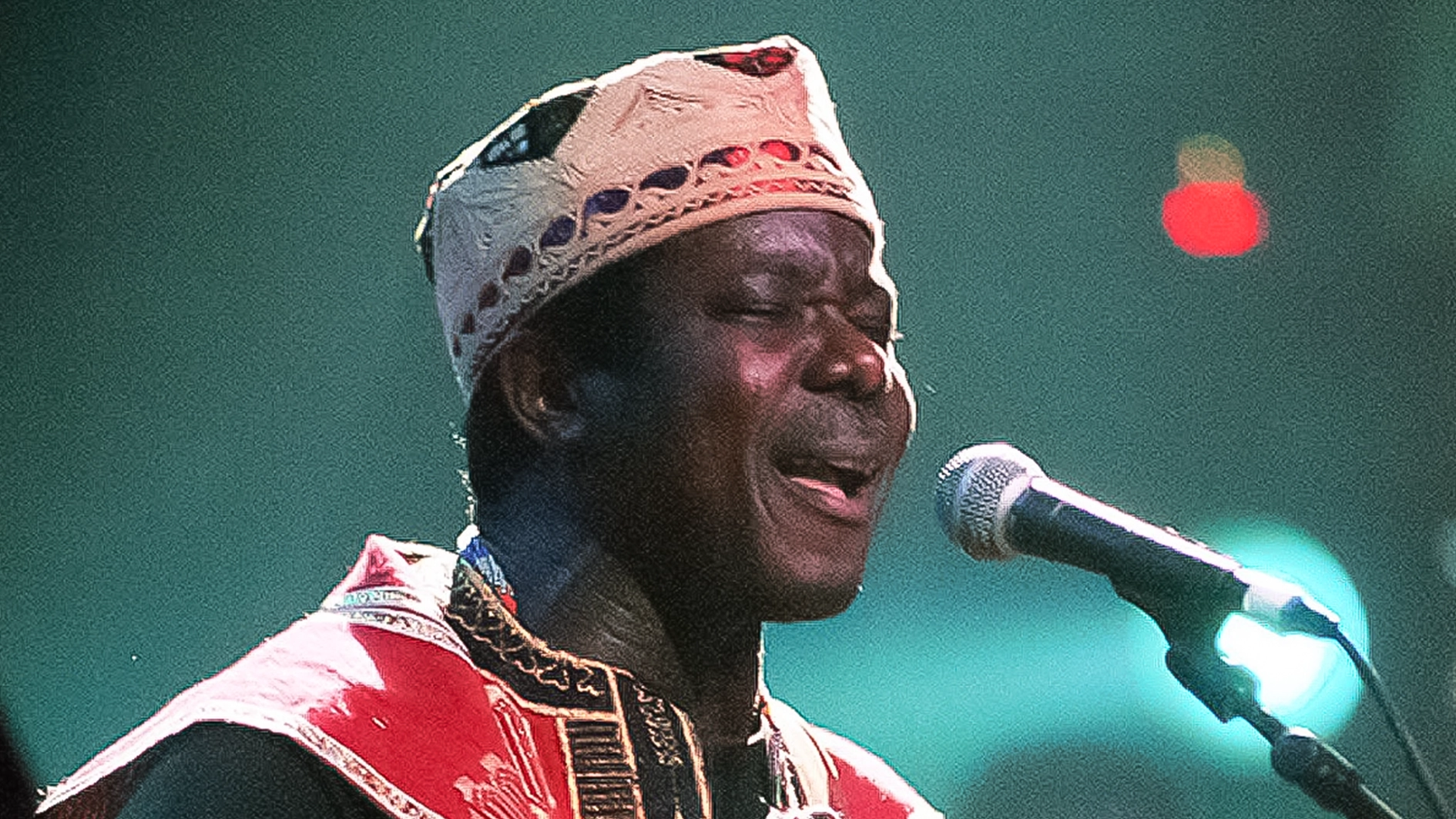
From live band to Grammy ballots, the story of Sunday Adeniyi Ishola Adegeye, the man Nigerians call King Sunny Ade or KSA, ‘Minister of Enjoyment’, King of Juju, tracks almost exactly alongside the story of the music genre, a popular genre that originated from Southwest Nigeria.
Long before Afrobeats carried Nigerian sound to a global audience through streaming platforms and viral algorithms, KSA had already proven, entirely on his own terms and largely in his native Yoruba, that it could be done.
Hence, on Tuesday, September 22, when he turned 80, it was a celebration that reads less like a personal milestone and more like a checkpoint in the story of modern Nigerian music itself, an industry he did not simply perform in but helped build, export and, in the process, made his own.
Born on September 22, 1946 to royal parentage — his father, from Ondo town, his mother from Akure — the master guitarist and cultural ambassador had spent over half a century as the definitive figure in Nigerian music.
His father, Samuel Adeniyi Adegeye, was a church organist in the Methodist Church; his mother, Maria Adegeye, a member of the Adesida dynasty of Akure, was a trader. Music was never absent from the household, but it was not intended to be his vocation.
Growing up in Osogbo, he was raised in a family that believed a prince belonged in a courtroom or a classroom, not in a bandstand, then regarded as a common trade. At home, his father’s gramophone nurtured his musical passion through records, both foreign and local.

His parents vehemently rejected his musical aspirations, which they viewed as an unserious pursuit, one likely to pull a child out of school, and in KSA’s case, it eventually did. Though his parents maintained their disapproval for decades, he followed his instincts.
According to him, at the age of seven, he would follow his mother to the Cherubim and Seraphim church, where percussion was played alongside traditional worship, and he liked nothing more than standing among the percussionists.
He later traced his love of music to those services. “In that church, Cherubim and Seraphim … you have so many enticing music there; music that would really entice you to dance. So that’s where my love started,” he said.
Knowing his mother disapproved, his friends kept watch whenever he played percussion so she would not catch him. “I always liked to be in between those people playing percussion. So what I did was make sure some people covered me, so when my mother looked back, I could dodge her,” KSA added with a smile.
Before leaving school around 1963 for Abeokuta and from there to Lagos in the mid-1960s, an escape, in effect into music, he attended African School, Methodist School, and St. Charles Grammar School Osogbo.
In Lagos, he joined a highlife band; though he was too young by the group’s reckoning – barely 17, he added a couple of years to his age and claimed to be 19 to be allowed in. He worked his way up from percussion to a self-taught command of the guitar and eventually from band member to bandleader.
His influences in those years included I.K. Dairo and American musicians: James Brown, Brook Benton, and Jim Reeves. He passed through the mentorship of music figures like Sanni Ariyo and Idowu Owoeye, and later joined Moses Adejumo Olaiya’s Federal Rhythm Dandies, a highlife outfit fronted by the man later known as the comedian Baba Sala.
Drawn by the music style of Juju pioneer Earnest Olatunde Thomas, popularly known as Tunde Nightingale or The Western Nightingale, from whom he borrowed stylistic elements from his ‘So wa nbe’ style, KSA moved from highlife toward Juju music.
Taking a cue from Bobby Benson, who encouraged him to perform standing rather than seated, as was customary at the time, he broke away from the traditional orchestration by moving his front line to their feet, introducing synchronised choreography across a 20-man band that transformed concerts into high-energy spectacles.
Commenting on the innovation, the newly minted Octogenarian said, “Before I put in anything or add anything, I will go back and do research. I make sure all kinds of music are in there. You can find any kind of music in the world in my music.
“The aim is to send this particular music to the whole world and let everybody have that feeling. So if you’re a fanatic fan of jazz, it’s within this music. If you’re a fanatic fan of rock and roll or R&B, you’ll find that in my music.”
Attesting to the innovation, the New York Times in 1984 wrote: “What Mr. Ade has achieved is the revitalisation of juju through a series of daring musical innovations. He has added synthesisers, a Hawaiian steel guitar and phalanxes of electric guitars and conga drums to the traditional juju ensemble.”
It needs to be noted that at KSA’s arrival, the jùjú genre already had its aristocracy with musicians like Ebenezer Obey, Dele Abiodun, Kayode Fashola and Emperor Pick Peters as the established names. Obey in particular had already begun modernising the sound with trap drums and a three-guitar format.
KSA’s response was to go further, layering in more guitars, more drums, and a theatrical flamboyance that turned jùjú concerts into full stage spectacles rather than sit-down performances. The template is visible today in live shows of Afrobeats heavyweights: Burna Boy, Wizkid, Adekunle Gold, and Asake, who has adopted it.
For generations of music lovers, KSA’s catalog is less a collection of songs and more a soundtrack to life’s most defining milestones. From high-society weddings and chieftaincy conferments to family gatherings, his music provided the emotional and celebratory backdrop for millions.
For older listeners, his music evokes particular moments in their lives. For younger musicians, it represents a library of ideas to study, reinterpret and sample. For cultural historians, it is part of the recorded history of Yoruba popular music.
One admirer, @Gods Son, recalled listening to music icon’s records as a child in his village and described him as a true legend. “KSA is the man I grew up listening to in my village as a child… these are the people I call true legends,” he wrote
Another fan called him a legend “not just in juju music but in music generally,” while others celebrated his longevity and contribution to Nigerian music. His career provides one of the clearest examples of a local musical identity travelling internationally without losing its roots.
For today’s producers, his recordings demonstrate how rhythm, percussion, guitar interplay, backing vocals and extended musical arrangements can create movement without depending on the production formulas that dominate contemporary pop.
Analysing the factors that have made the legend remain relevant, Christian Onyenji Elum, CEO of 9iza Records, a label based in Igando, Lagos, pointed to his reinvention. He noted that KSA has “repeatedly embraced new sounds and production approaches without abandoning the musical foundation that defined him.
“His career was built not only on records but on live musicianship and an ability to turn performances into communal experiences. His stagecraft helped make juju accessible as spectacle as well as sound.
“The third is cultural confidence. He did not have to discard his language (Yoruba), rhythms or traditions to gain international recognition. Instead, those elements became part of his international appeal. And fourth is catalogue depth. Six decades have given him a body of work that continues to provide material for listeners, musicians and producers,” 9iza added.
Speaking on the impact of his music,Sola Olumuyiwa, said: “King Sunny Ade is my best artiste. His music is impactful. He’s still agile at 80. He’s a role model I look up to in many ways.”
Martins Eje said: “He has stayed relevant for decades, he’s a living legend, an icon and master in the music industry. Many musicians that came after him are no more because they faded with time. His music educates and very nostalgic.”
On what young artistes can learn from him, he said: “Consistency is his hallmark and young artistes can learn that; the voice is still retained and maintained but young artistes now are more of vulgar and explicit. I wish him a long life and continue to reap the fruits of his labour.”
There are two juju musicians that have stayed relevant since they started their career, they are King Sunny Ade and Chief Ebenezer Obey. We can’t do without his music while I was young, no party without King Sunny Ade or his song. I lived in Ebute Metta, I knew him when I was young, I knew his manager then.
“I don’t think we have any other artiste that can meet up the standard set by King Sunny Ade and Ebenezer Obey.”
Young artistes have a lot to learn from him; King Sunny Ade grow stronger in instrumental. They don’t just have expensive cameras or go into studios to produce beats, they work. I don’t think the new musician can operate on his level or embrace his standard. Sunny Ade can play guitar with his eyes closed.
His music cut across tradition and religion that his music is played in the church.
Advising young artistes, the 65-year-old man, said: “Younger artistes should learn instruments; I am not against the use of digital in music production but they crack when it comes to real performance. King Sunny Ade is old and I’m afraid his type may not be replicated.”
Tony Joseph said, “for those of us that listened to King Sunny Ade when we were very young get the full meaning of life unlike what the youths are playing now. If you listen to the likes of King Sunny Ade, Orlando Owoh, Shina Peters, you will find out that there is deep meaning to their music. Unlike the music of of these days who are making noise without passing any message, King Sunny Ade music will remain relevant after his departure. I only hope that King Sunny Ade has raised men that will step into his shoes, and, that’s my fear. King Sunny songs are my good company when I’m driving. I’m still young at 43 but his music remains part of the ways to enjoy life. You appreciate being a Nigerian listening to his songs.”
On what young artistes can learn from him, he said: “Young artistes need to sit down and learn. I’m an architect and I know that no one can be a good architect without being creative so, young artistes need to be creative. You cannot be a good musician if you cannot sit down and think. Instead of buying music from people to produce, sit down and think. Music is spiritual, God gives the wisdom so, you need to sit down and think, then you will get results.”

