 Follow Us on Google News


 Follow Us on Google Discover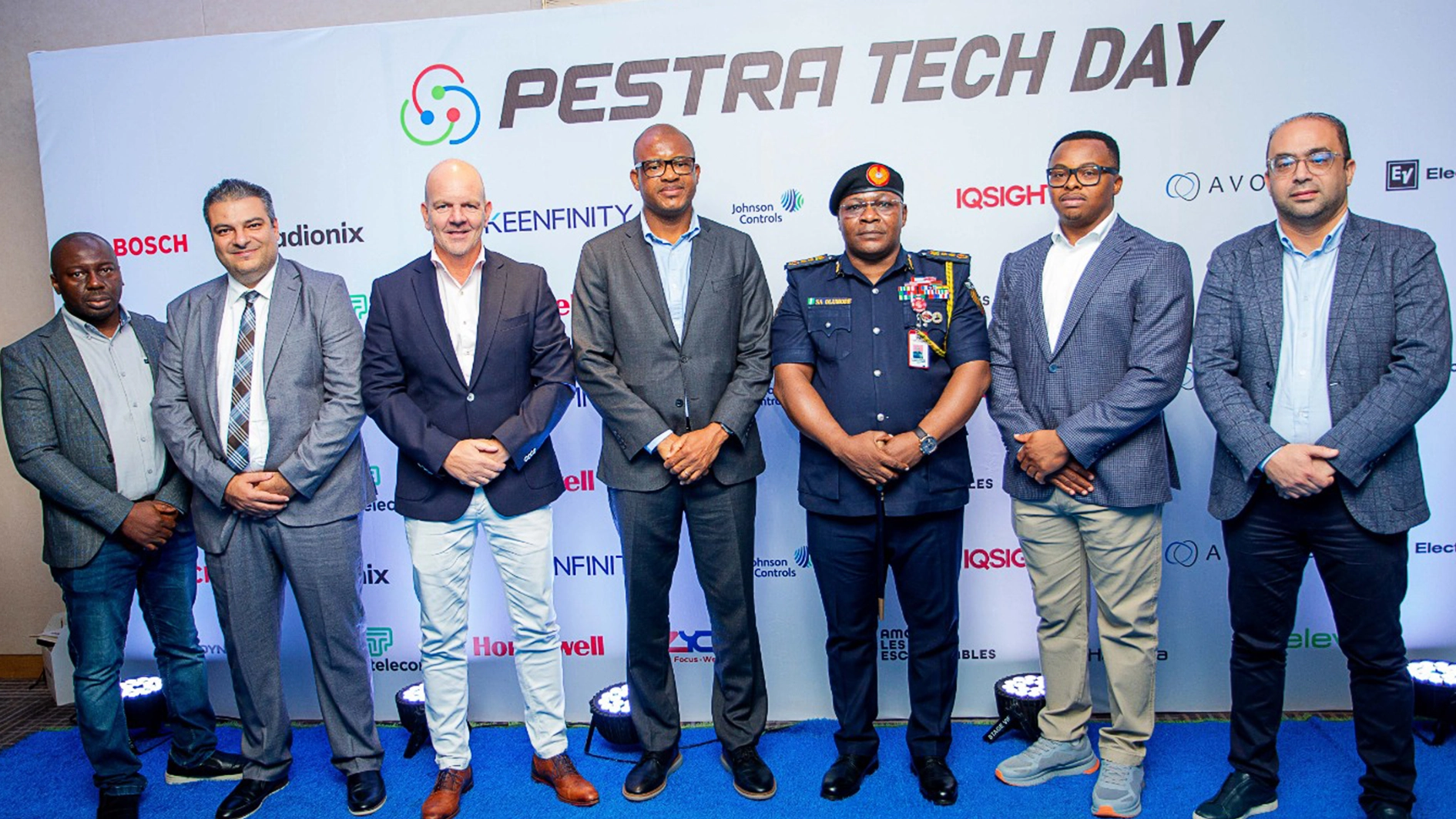
Pestra has called for stronger deployment and integration of emerging technologies to address fire and life-safety challenges in Nigeria’s built environment, saying modern buildings require intelligent systems capable of detecting threats early, supporting rapid response and improving overall resilience.
The Managing Director of Pestra, Paul Nwokolo, made the call at the fourth edition of Pestra Tech Day, held in Lagos, under the theme, ‘Closing the Fire Safety Gap in Nigeria’s Built Environment’.
Nwokolo said the yearly event was designed to bring technology manufacturers, consultants, system integrators, contractors, regulators and end users together to examine practical applications of technology in safety, security and communications.
He said Pestra Tech Day was not conceived merely as a platform for showcasing products, but as an opportunity for industry stakeholders to examine how emerging technologies could be adapted to Nigeria’s peculiar challenges.
He said the increasing convergence of fire protection, physical security, communications, information technology and building management systems made it necessary for stakeholders to adopt a more integrated approach to the design and management of facilities.
The Controller-General of the Federal Fire Service, S.A. Olumode, who delivered the keynote address, said closing the fire and life-safety gap required a fundamental shift from reacting to fire incidents to preventing them through proper planning, technology, enforcement and professional competence.
Speaking on ‘Closing the Fire and Life Safety Gap in Nigeria’s Built Environment’, Olumode said fire safety should be considered from the earliest stages of building design and construction, rather than introduced after a facility had been completed.
He stressed the importance of effective fire detection and alarm systems, appropriate fire protection installations, regular inspection and maintenance, as well as compliance with relevant standards and regulations.
According to him, the availability of fire safety equipment alone does not guarantee the protection of lives and property, as systems must be properly designed, installed, commissioned, maintained and operated by competent personnel.
On his part, Hanwha Vision’s Regional Manager for Africa, Abbassy Omar, focused on the growing role of artificial intelligence in security operations, highlighting advances in intelligent video surveillance, video analytics, licence plate recognition and thermal imaging.
Omar said the increasing sophistication of surveillance technologies was enabling organisations to move from simply recording security incidents to identifying potential threats and providing actionable information for faster response.
The event also examined the cybersecurity implications of increasingly connected buildings.
Specialist Adoption Architect at Red Hat, Francis Anyaegbu, in his presentation, “Intelligent Security & the Quantum Challenge,” said smart security cameras, digital access readers, edge telemetry nodes, video conferencing systems and other connected devices were becoming part of an expanding enterprise risk landscape.
Anyaegbu said data breaches now cost organisations an average of $5 million per incident, with exposure increasing by about $1,100 for every hour an adversary remained undetected.
He also cited a 1,500 per cent surge in deepfakes and the growing spread of unmonitored “Shadow AI”, warning that organisations must strengthen their ability to monitor and govern artificial intelligence systems deployed across their operations.
According to him, the rapid development of AI was changing both the tools available to defenders and the capabilities available to cyber attackers, requiring organisations to move beyond traditional perimeter-based security.
He advocated open, quantum-safe architectures built around digital trust, machine-speed defence and stronger visibility over connected devices and automated AI agents.
Anyaegbu identified post-quantum cryptography, digital sovereignty and stronger AI governance as important components of long-term cyber resilience as organisations increasingly connect physical infrastructure to digital systems.
Returning the focus to fire and life safety, Senior Territory Manager at Honeywell Technologies, Ziad Hafez, highlighted developments in Honeywell’s life-safety portfolio, including advanced fire detection, intelligent alarm systems and connected solutions designed to support earlier warning and faster emergency response.
Hafez also highlighted Honeywell’s collaboration with Pestra, which provides consultants, system integrators and end users in Nigeria with access to Honeywell fire, life-safety and security technologies through a local channel.

