
 Get Guardian on Google
• Headline inflation slows to 14% as core, food segments continue to diverge
• Poor logistics sustain high retail prices
• 34.7m Nigerians would face acute food insecurity this year
• Farmers’ effort poorly compensated by market, economist insists
Nigeria’s declining inflation rate is yet to translate into meaningful relief for households as food prices remain stubbornly high even as harvest seasonal impacts have failed to lead to significant market price reductions.
With millions of farmers yet to return to their communities, the sustained price pressure continues to expose deep-seated weaknesses in domestic agricultural production.
Despite the ongoing harvest, which ordinarily increases the availability of staples and moderates prices, food inflation remains elevated, reflecting lingering insecurity in major food-producing communities, rising farm input costs, high transportation costs and inadequate storage infrastructure.
The development is a stark contrast to the easing of headline inflation, which declined for the fourth consecutive month to 14.06 per cent in October 2026, as per the latest consumer price index (CPI) reading released by the National Bureau of Statistics (NBS) yesterday.
At 19.13 per cent, food inflation remained significantly higher than the headline figure, underscoring the difficulty of bringing down the cost of necessities, a challenge many economists attribute to supply-side rigidities.
Food inflation, which started the year at 8.89 per cent, climbed to 20.31 per cent in July before moderating to 19.57 per cent in August. It rose marginally to 19.59 per cent in September but eased to 19.13 per cent last month, underpinning the typical volatility associated with food and energy prices in recent times.
Although the October reading represents moderation from the July peak, food inflation remains substantially above the general inflation rate, indicating continued pressure on households and the cost of living.
The month-on-month figures, which show the current intensity of inflation, offer limited relief from the harvest.
Food inflation declined by 1.55 per cent in September. But the pace of decline weakened to 0.75 per cent in October.
This suggests that the seasonal improvement in food availability has not been strong enough to trigger sustained price reductions of food items.
The contrast is more pronounced when compared with core inflation, which excludes volatile agricultural produce and energy prices, and explains the proportion of inflation traceable to an increase in general aggregate consumption.
Core inflation declined by 0.53 per cent month-on-month in October from an increase of 1.11 per cent in September, giving a more improved pattern than the food segment. Yearly, the core inflation fell sharply to 10.78 per cent from 21.25 per cent in October 2025.
The divergence of food and headline or core inflation mimics the structural character of the country’s food inflation problem. While broader macroeconomic stabilisation seems to be moderating underlying price pressures, food crises remain constrained by supply-side challenges, including insecurity, poor access to funds, input constraints, inadequate fiscal support, among others.
ECONOMISTS said the failure of the harvest season to deliver more substantial relief reflects a fundamental problem – that the country is struggling to produce sufficient food at affordable costs, while insecurity and rising production expenses continue to undermine farmers’ capacity or willingness to expand cultivation.
Head of Research at Iron Capital, Abiodun Ogunniyi, identified rising energy and transportation costs, insecurity, inadequate storage infrastructure, seasonal supply shortages and expensive agricultural inputs as major factors sustaining food price pressures.
He explained that energy costs affected virtually every stage of agricultural production, from operating tractors and other farm machinery to processing and transporting harvested produce.
According to him, higher fuel and diesel prices caused by the Middle East conflict have increased the cost of moving food from farms and rural markets to urban centres, limiting the extent to which seasonal increases in supply can translate into lower retail prices.
“Energy costs fit into everything. Tractors, farm machinery and other equipment used in agriculture run on diesel. When the prices of these energy sources increase, farmers incur higher production costs, which eventually feed into the prices of food,” he said.
Ogunniyi also identified insecurity as a structural constraint, particularly in food-producing communities where farmers face displacement, restricted access to farmland and disruptions to agricultural activities.
eyond reducing the area available for cultivation, insecurity disrupts the movement of agricultural produce, increases the risks associated with farming and raises the cost of getting food from rural communities to major consumption centres.
The problem is compounded by inadequate cold storage facilities and other infrastructure needed to preserve harvested produce, increasing post-harvest losses and limiting the ability of farmers and traders to distribute food efficiently, he said.
He noted that agricultural production was also affected by seasonality, meaning the availability and prices of particular commodities depend on harvesting periods. Although the ongoing harvest could improve supplies of some staples, he warned that increased demand during the festive season could offset those gains.
He expressed concern that food inflation could remain elevated into 2027, particularly as households increase food purchases during December. He also identified the hoarding of agricultural produce by farmers and intermediaries seeking to maximise returns during periods of scarcity as another factor contributing to price increases.
Managing Director of Macrostat Nigeria Limited, Dr Justin Amase, argued that the more fundamental problem was declining production, driven largely by insecurity and rising farm input costs.
He said the quantity of food harvested this year had fallen short of expectations because many farmers were unable to cultivate their land, while others reduced production because the cost of farming had become increasingly difficult to recover through sales.
According to him, persistent attacks and displacement in parts of the North-West and Middle Belt have reduced cultivated farmland, weakening output from regions that traditionally supply substantial quantities of food to domestic markets.
“The percentage level of cultivation of land generally is lower, and there hasn’t been much done if you don’t curb that insecurity. A lot of the farmers have been heavily displaced, and the displacement is going on continuously. The consequence is the lower level of food production. And food prices, as a result, are going up,” he said.
Amase said his visits to Wuse Market in Abuja showed that prices of some basic food items had increased by more than 30 per cent within a month, highlighting the disconnect between improving national inflation figures and the experience of consumers.
He argued that the expected decline in food prices during the harvest season had not materialised because the volume of produce entering the market was insufficient to meet demand.
The economist, who is also a farmer, said he was discouraged from expanding his rice production this year because input costs remained high while the prices farmers received for their produce at the farm gate had declined.
He identified fertiliser, herbicides and insecticides as major cost pressures, arguing that government interventions had yet to make these inputs sufficiently affordable for many small-scale farmers.
“When you produce, when you pay more to produce and you end up having a negative net margin, there is no incentive for you to produce more again. So that is what is happening,” he said.
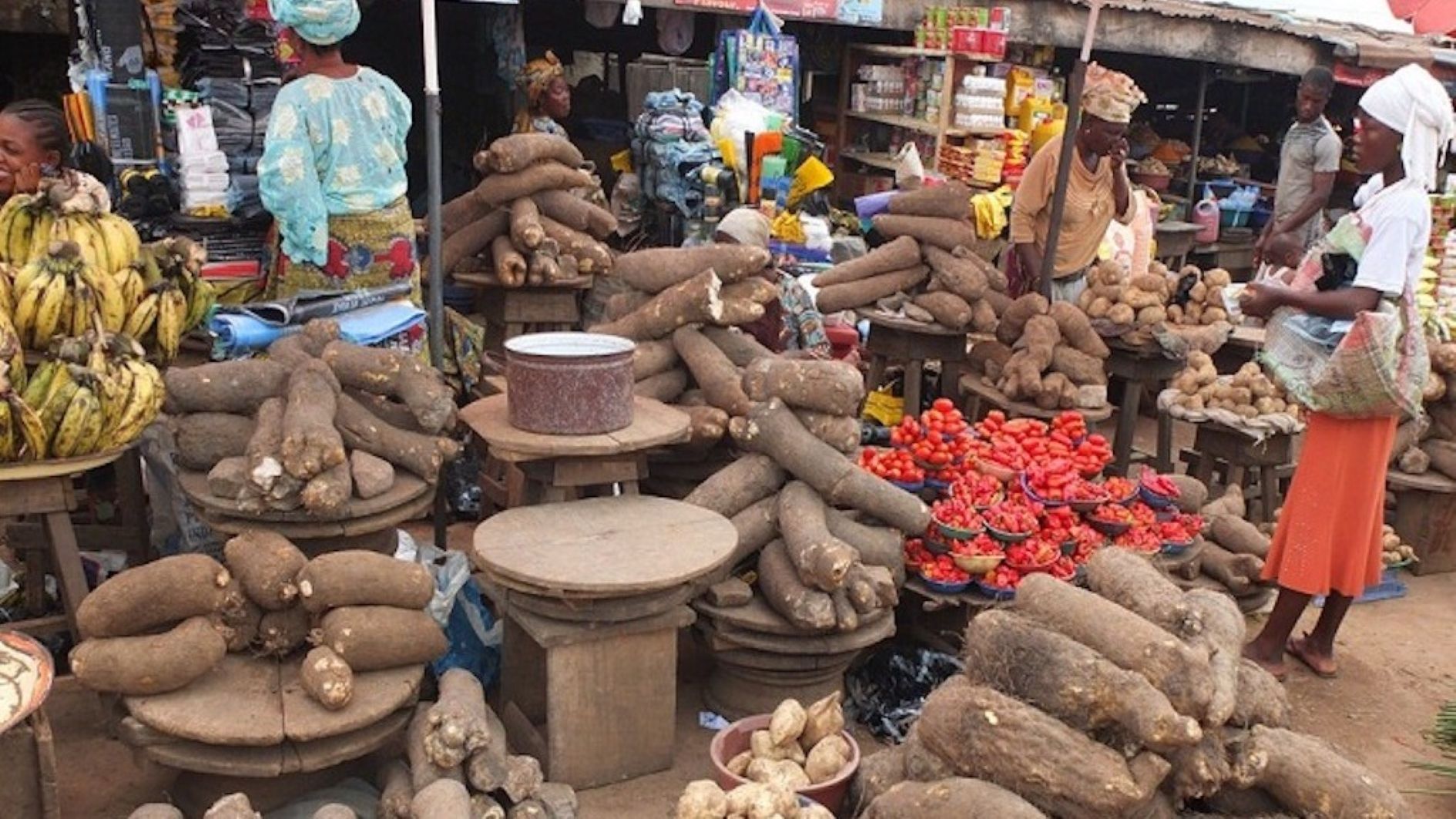
Amase added that the combination of expensive inputs and weak farm-gate prices was discouraging farmers from expanding output, further limiting market supply. The situation, he said, was reflected in the reduced availability of new yams in markets compared with previous harvest seasons.
THE economists’ concerns are consistent with warnings from international development and humanitarian organisations about Nigeria’s worsening food security challenges.
The Food and Agriculture Organisation (FAO) projected that 34.7 million Nigerians would face high levels of acute food insecurity in 2026, placing the country among those experiencing the world’s most severe food crises.
Its assessment identified armed conflict, particularly in the North-East, climate variability, displacement and disrupted livelihoods as major drivers of the crisis, stressing the need for targeted agricultural investments to restore production and strengthen vulnerable households’ livelihoods.
Similarly, the October 2026 food security outlook by the Famine Early Warning Systems Network (FEWS NET), covering October 2026 to May 2027, warned that limited harvest gains and persistent insecurity would continue to constrain food access, particularly in northern Nigeria.
The report projected that 16 million to 17 million people would require humanitarian food assistance as the country approaches the 2027 lean season, despite a temporary improvement in food availability during the current harvest.
It warned that elevated fuel, transportation and food costs would continue to erode household purchasing power, with poor households dependent on market purchases expected to face the greatest difficulties.
FEWS NET identified conflict as a major driver of acute food insecurity across northern Nigeria, noting that attacks by armed groups, banditry and farmer-herder violence were disrupting harvests, displacing households and restricting access to farmland.
It also warned that food production during the main harvest was expected to remain below average in many northern areas because of insecurity, high input costs, flooding and localised rainfall deficits.
The assessment projected that Emergency (IPC Phase 4) food insecurity conditions would persist through May 2027 in inaccessible parts of Borno State, including Abadam, Guzamala and Marte, where conflict-related restrictions prevent households from cultivating farmland and accessing markets.
The assessment further cited flooding that affected about 228,000 people across 15 states between September 1 and 23, while late-season floods in Taraba, Benue and Niger destroyed crops shortly before harvest. Rainfall deficits and prolonged dry spells in parts of the North-East and North-West also contributed to harvest losses estimated at between 30 and 50 per cent in affected areas.
ALSO, the World Bank, in its October 2026 Food and Nutrition Security Update, highlighted high transportation costs and logistical disruptions as sources of uncertainty in global agricultural markets, despite broadly adequate global food supplies.
The national food inflation figures also conceal significant regional differences, with some states experiencing much higher price pressures than others.
NBS state-level data showed that Ondo recorded the highest year-on-year food inflation in October at 31.74 per cent, followed by Lagos at 31.43 per cent and Imo at 29.75 per cent. In contrast, Nasarawa recorded 3.70 per cent, Bayelsa 7.11 per cent and Kano 7.13 per cent.
On a month-on-month basis, food inflation was highest in Yobe at 18.41 per cent, followed by Kebbi at 16.45 per cent and Borno at 13.96 per cent. Lagos, Plateau and Benue recorded declines of 5.93 per cent, 5.83 per cent and 5.49 per cent respectively.
The variations reflect differences in local supply conditions, distribution costs and consumption patterns, although the NBS cautioned that differences in state consumption weights make direct comparisons potentially misleading.