

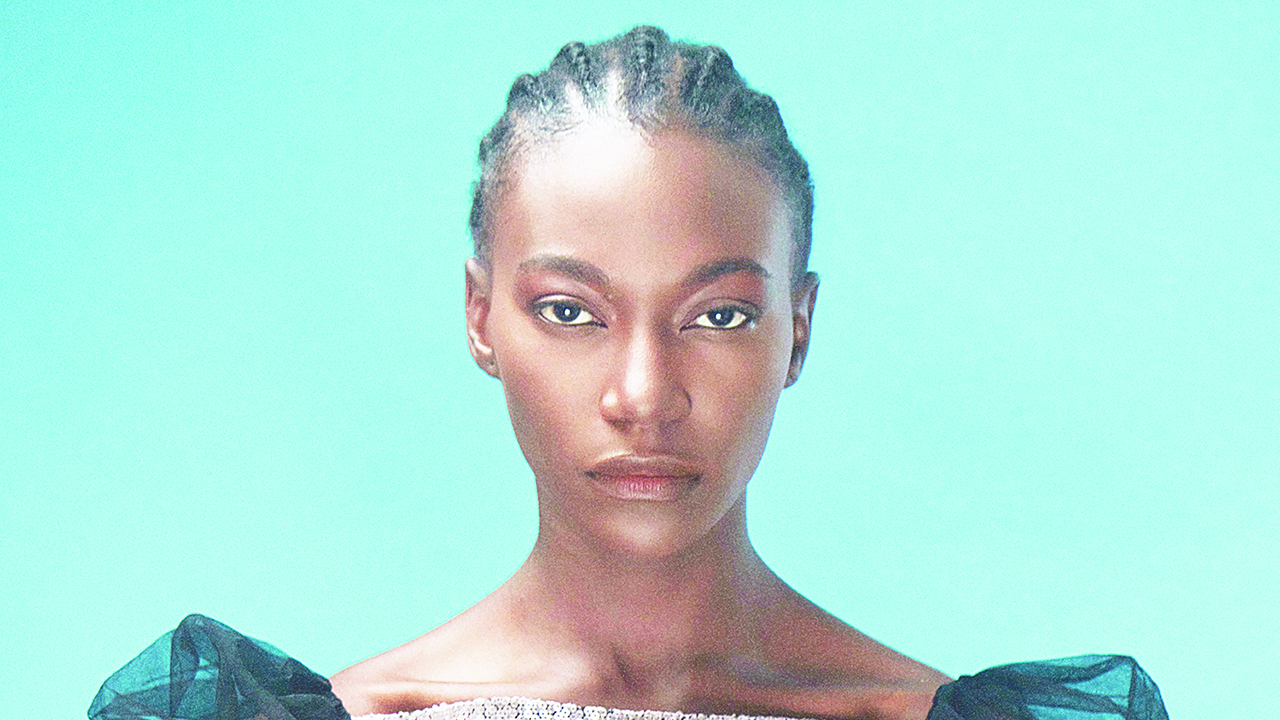

Dr. Muftiah Jokomba is a Nigerian-American, physical therapist and practising model. Known as The ModelPT, she expertly navigates these distinct worlds with her unwavering commitment to the wellbeing of her patients, involvement in leadership roles, community engagements, and modelling in multiple capacities. Jokomba holds a Doctor of Physical Therapy degree from the South College School of Physical Therapy in Knoxville, Tennessee, and a Bachelor of Science in Biology with a minor in Chemistry from Howard University in Washington D.C, United States of America, with Magna Cum Laude honours. She is highly skilled in diagnosing and treating musculoskeletal and neurological conditions, and her clinical experience proves her profound understanding of human anatomy, biomechanics, and the nuances of human movement.
Aside from being diligent in the conservative world of medicine, she perceives modelling as more than a profession but a form of self-expression that allows her to communicate stories and emotions without words. Dr Jokomba has collaborated with various creatives and brands, walked the runway for designers such as Louella by Ibtihaj and Haute Hijab, as well as in the New York Fashion Week, the DC Fashion Week, and most recently, the Los Angeles Fashion Week. She is deeply committed to giving back to the community by actively engaging in charitable work, supporting medical missions, and advocating for wellness and self-acceptance, leveraging her modelling career to challenge traditional beauty standards and inspire confidence in individuals of all backgrounds. In this interview with IJEOMA THOMAS-ODIA, she shares her passion for promoting a holistic and healthy lifestyle while navigating the conservative world of medicine and the glamorous life in fashion.
[ad]
You are known as ModelPT. Can you take us through your formation process?
My process has been a pretty linear one, thanks to God. I have always been one of those girls everyone tells me to model. At age 14/15, a modelling agency recruited me and explained how I would relocate to New York. But my mother was against it, hence, the initial shutdown of the plan to be a model. About one or two years after that, as I applied to colleges and the decision to choose a career became necessary, I initially wanted to be a chef. However, I knew I wanted to pursue a career that would help people. Around that time, my mum got into a work injury and needed physical therapy. On her first day back from the clinic, she told me about the stretches and exercises her doctor gave her, which were like the ones both of us did at home. She showed me her home exercise sheet and some things there looked similar to what I did at the yoga classes I took in the neighbourhood. My interest piqued, and I went with her to the next visit. I saw how the physical therapist helped my mother, and as time progressed, I knew at that instant being a physical therapist was what I wanted to do to help people, especially someone who does not like blood or needle. Modelling started during my first year in college. My friends convinced me to audition for a fashion show with them. I got in, had my first experience doing anything like that and immediately fell in love with modelling. Well, the rest is history.
How are you able to combine your distinct roles of being a Physical Therapist and a model?
Honestly, there is not much of a distinction. As a model, it is my responsibility to exude a certain level of confidence, calmness and self-assurance to sell whatever has been put on me using my natural abilities. As a physical therapist, I do the same thing, only with the addition of my acquired knowledge and expertise. Just like I have to figure out which poses or facial expressions will work best for a dress versus baggy pants, I have to find and decide what form of physical activity will interest my 74-year-old patient in chemotherapy for breast cancer versus the 24-year-old who injured themselves playing football with their friends. On days when I have to be both, I do realise how different the roles are, but those are by far my favourite types of days.
With your passion for advocating for wellness and challenging traditional beauty standards, how are you continually driving your cause?
I try to perpetually do this by embodying all that I say. When you believe and practice the cause you claim to be driving, it is easier to preach and live by example, as you will appear more sincere and genuine. In this vein, I tell people that little exercise is better than none. Ten minutes to meditate is more beneficial than almost anything else we can do for our brain and body, or I swear by my black soap and shea butter for anything skin-related. Online or in person, you can find me at the helm of such discussions because that is who I am.
[ad]
What has influenced your passion for philanthropy and volunteering?
I think my background influenced my passion for philanthropy. Before my move to the United States of America to meet my mother after my father passed, my siblings and I spent an amount of time moving from place to place and experiencing some rather unsavoury things in life. I believe this is true for most people who might have gone through a similar phase. I love helping people because I know what it is like to be helpless. Thanks to the realities of life, I try to do at least one thing a day to make the life of someone I meet easier. To me, that is all that matters.
Share with us some of your proud moments as The ModelPT.
Some of my proud moments as a model include when a designer or creative sees me in their piece and tells me it is what or better than they envisioned. This is how I have been privileged to work with designers at Los Angeles Fashion Week or New York Fashion Week and on independent projects with designers like Michael Cinco and others. As a Physical Therapist, it is any time patients tell me how they can do something better or when patients who have given up on themselves try and see the improvements in their own lives. A great instance of this was at a former assignment with an older patient. She was resolute on staying in bed all day, as she believed she had no reason to do anything else. In my time working with her, she went from needing help to move around in bed to walking in the therapy room. Moments like these are what do it for me.
What do you consider a high point of your career?
So, this might be a petty point, but it is probably still one of my favourites. It was my first year working, and I had started as a travel Physical Therapist out of school. This means I can work anywhere in America if I have a state licence and a clinic is hiring. At the time, I moved to LA because I wanted to pursue both modelling and physical therapy simultaneously as much as possible. It was at my second job in LA, and maybe my fourth overall, and it was at an outpatient clinic, what you would typically think of when you picture where a physio might work. The clinic director was a middle-aged man who ran the place like a military camp. No music, all the TV stations played sports channels on mute only, his way was the best, and he had his patients that he’d worked with for years.
In less than a month that I, the only female and black PT, worked there, several patients started to request to work with me as opposed to any other therapist in the clinic; he didn’t like that. The high point was the first time I worked with a patient he had known for a very long time, and at the end of the session, she went up to him exclaiming why he had never done what I did. She raved about how much better she felt, how she hadn’t felt that way for years in the clinic. On her next visit, when she tried to work with me again, he refused and told her that she was with him. I don’t know what he did or didn’t do, but in the end, she came to me and told me that my treatment method was better. I lasted at that clinic for maybe a month and a half before leaving and had several experiences, but this one was a highlight.

As an accomplished model and wellness doctor, what tips do you have for women seeking to define their niche?
I will say find the intersection between what you like and what you’re good at. When you can exist in a place where you enjoy what you do, then you can try to find what set of people or “niche” that best aligns with you. For me, being the ModelPT genuinely makes me happy; I love doing both on any scale it might present itself and creating space for myself in the world.
[ad]
What has been a significant challenge for you during your work?
As a model, it is the unfortunate reality of race that proves a challenge to most black models. It is either you are the token model or you are not there at all. Luckily, there are continuous and hopefully sustaining changes happening in the modelling industry, but it is a very present and noticeable culture at the moment. As a PT, it is a bit different. I don’t look like your typical Physical Therapist in America who is a white- older male. For this reason, I am often met with doubts and questioning looks when introduced as the PT in charge of someone’s care. Patients have told me I look too small or young to know my job. I once had a patient categorically told me that I needed to learn from my subordinates because I didn’t know what I was doing, simply because I refused to allow him to dictate what our sessions would look like based on what he wanted as opposed to what he needed as a result of the goals he wanted to achieve in physical therapy. This same patient later started insisting that other clinicians should do what I did. Having to prove myself to patients time and time again because of what they perceive of me is a persistent challenge.
Many young women struggle with building their careers due to stereotypes. How would you advise them?
I think the most important thing is to see yourself in whatever role or place you are. Most stereotypes are placed on us by other people based on their perception of us; this person looks or sounds like this, so they must be XYZ, without having an idea of the true abilities of that individual. You are the only person who knows and can get you anywhere you want; see yourself where you want to be, you might not know how to get there exactly, but you will have clarity on how to start. Please start, and if it fails at the initial stage, figure out what to do differently, try again and always pray to whatever higher power you believe in for guidance. Regardless of what you’re doing, people will talk and continue to place their ideals and stereotypes on you. You might as well be doing what makes you happy and give them a show.
How do you get inspiration and stay motivated?
I take breaks and prioritise enjoying my life. I travel, spend time with my family, or do whatever pleases my mood. I believe that you are what you put out, and I can confidently say that most of my inspiration and drive come from when I am pouring into my cup. When I can look around me from a good place internally, I can see different ways that I can help make things better. Honestly, most of the inspiration for the type of movement snack videos I put out to the topics I write about and discuss all stem from looking at the world as often as I can, taking note of the similarities, and finding ways to improve upon them, whether good or poor.
What is your life mantra?
“Continue your efforts without questioning yourself, and God will send helpers to you, sooner or later.” I got this from one of my favourite shows, “Ertugrul”. I strongly recommend the watch if you haven’t; it’s pretty long but with life lessons. That quote, which is pretty self-explanatory, has stuck with me since.
[ad]
