

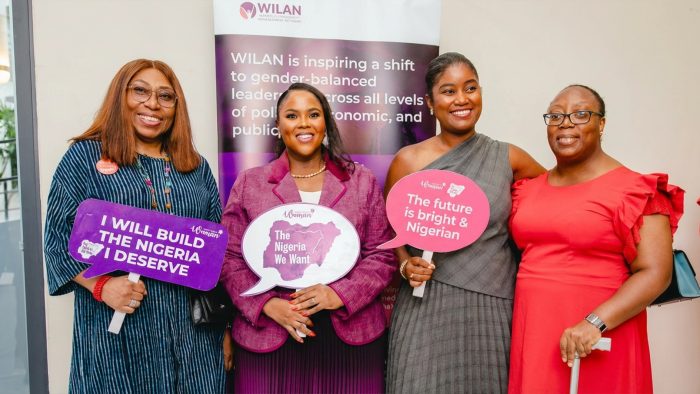
Women make up almost half of the nation’s population, hence the need to priortise Nigeria’s democratic future centering women’s leadership and citizen participation. This was the thrust at the premiere of The Leading Woman Show – Season 4, themed “The Nigeria We Want,” which positions itself within Nigeria’s current political and civic moment.
As the country edges closer to another election cycle, the show addresses responsibility, interrogating governance, policy, inclusion and national development through the lived experiences and ideas of Nigerian culture shapers across sectors.
The 13-episode season reflects diverse regional, gender and social perspectives, ensuring that aspirants for public office cannot claim ignorance of citizens’ expectations. It amplifies women’s voices not as symbolic participants, but as architects of nation-building.
The premiere brought together media professionals, civil society leaders and development actors for a private screening, speaking at the event, the Executive Director, Women in Leadership Advancement Network (WILAN), Abosede George-Ogan, said, “This show is deep and layered. Every time people come on set, they realise it takes an entire village. But we do it for one reason, to inspire a shift to gender-balanced leadership.”
She pointed to Nigeria’s persistent leadership gap, noting that while women make up nearly half of the population, their representation in political leadership remains in single digits. “The highest we’ve ever reached is 7.6 per cent. That is a problem, and we have to name it as a problem.”
According to George-Ogan, the show was created to challenge deeply ingrained perceptions about leadership. “We were not socialised to believe women should lead. So, we asked ourselves, where do Nigerians begin to support women as leaders, that’s what birthed The Leading Woman Show, taking private conversations and making them mainstream.”
Using a relatable analogy, she said, “If you can say your mother is the pillar of the home, why can’t that pillar be your governor? The skill set is the same – managing people, resources and complexity, that is governance.”
Season four builds on previous election, governance and policy-focused seasons, George-Ogan is however emphatic that the goal is not passive viewership. “Our hope is not that people watch and move on. We want them to take responsibility, one action at a time.”

Beyond gender inclusion, the season confronts voter apathy and misinformation head-on. “Nigeria has one of the largest voter registers, yet turnout barely crosses 20 per cent. That is a crisis. Voting becomes harder to rig when people actually show up, but people must also be informed because when you’re not informed, a bag of rice looks bigger than four years of suffering.”
For George-Ogan, the theme is about reclaiming agency. “Women are in a disadvantaged position oftentimes in terms of the role that they can play. So, what we’re hoping the show does is that it showcases that there are women who are competent, who are capable, but it also speaks to the issues on the benefits of having women in leadership positions, because whether it’s the economy, improving health or education outcomes, women have a unique role to play in improving those outcomes.
“Patriarchy is the foundation in which our society and our culture is defined, and patriarchy just means that men have a privileged position in society.”
She further noted that citizens deserve to define what happens in Nigeria. The office of the citizen is the highest office in the land. We have never had an elected female president or governor. Women are being heard, but we must do more through policy, quotas and intentional inclusion.
“That is why we’re pushing for the Reserved Seats for Women’s Bill; a gender quota for women in politics. We need that bill to pass so that we can see more women in the Senate, in the House of Reps, in the State House of Assemblies, and as governors,” she added.
Season four of The Leading Woman Show is currently airing weekly, positioning itself as an ongoing civic classroom ahead of a critical political season.
