

Education stakeholders have called for urgent, human reforms in Nigeria’s education system, stressing that the country’s widening gender gap in Science, Technology, Engineering and Mathematics (STEM) can only be solved by fixing education from early childhood.
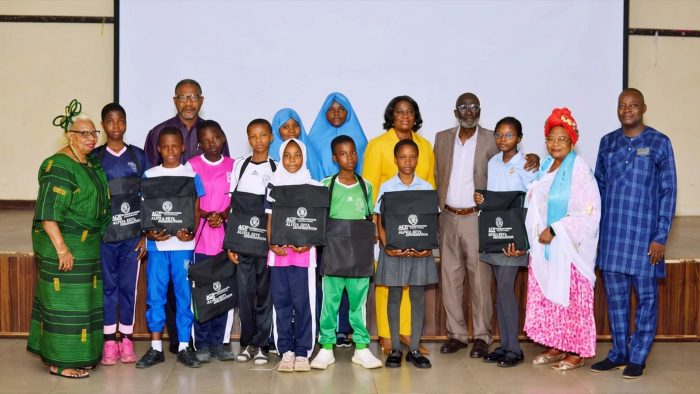
The call was made at the joint celebration of the International Day of Education and the International Day of Women and Girls in Science, with the theme “From Vision to Impact: Redefining STEM by Closing the Gender Gap,” organised in Lagos by the Association for Childhood Education Practitioners (ACEP).
National President of ACEP and education advocate, Haija Islamiat Oshodi, warned that Nigeria’s long-term development will remain fragile unless early learning structures are strengthened. According to her, the gender gap in STEM does not start at university, but from the foundations laid in childhood.
She noted that many Nigerian students show strong interest in science at secondary school, but later face discouragement due to limited university spaces. “Students who want to become engineers or doctors are often forced into courses they never wanted.
Oshodi rejected claims that girls lack interest in science, insisting that opportunity – not intelligence- is the real problem.
“Girls must be encouraged to see themselves as innovators and problem-solvers. If we set education right from the start, there will less unemployment and underdevelopment,” Oshodi added.

Speaking, Dr. Mrs. Iyabo Masha, Admin Director, G24 Countries, described Nigeria’s education system as far below global standards, citing weak learning outcomes, low enrolment rates and a high number of out-of-school children.
She explained that real development depends on human capital, not just financial investment.
She maintained that “people skills, knowledge and creativity are the real engines of progress,” she said.
While calling for increased funding, she cautioned that money alone would not fix the system. She urged government to strengthen monitoring, update outdated curricula and improve accountability.
“Many children are learning in unsafe and poorly equipped environments. This undermines even the best educational policies,” she stated.
Prof. Kayode Oguntuashe, Keynote speaker and former don of the University of Lagos, said Nigeria must deliberately redirect girls into STEM fields if it hopes to compete in the digital economy.
“Although access to education is almost equal, girls are largely missing in engineering, science and computing,” he said.
He cautioned that without deliberate action, Nigeria risks becoming a consumer nation in a world driven by artificial intelligence and technology.
“Children are not empty vessels. Education should be partnership, not hierarchy,” Oguntuashe added.
In his goodwill message, Dr. Hakeem Babatunde Shittu, Chairman of the Lagos State Universal Basic Education Board (LASUBEB), reaffirmed Lagos State’s commitment to ensuring that no girl is excluded from science and technology.
He urged stakeholders to break stereotypes, provide equal opportunities and invest consistently in girl-child education.
“The world needs the creativity of girls and women in innovation,” Shittu said.
John Raphael, a teacher at Maryland Nursery and Primary Inclusive School, said meaningful reform must begin with teachers’ mindset.
“No child is without potential. The role of the teacher is to help children discover what they already carry,” he said.
Raphael called for stronger collaboration between government and NGOs, especially for children outside the formal education system.
The practical impact of early STEM exposure was demonstrated by an SS3 student of Al Haleem International school, Abdulkabir Kareemah, who presented a solar-powered robotic vacuum cleaner that works independently using renewable energy. She also developed a motion-sensor security light, showcasing how innovation can begin at secondary school level.
The event also featured students’ performances, project presentations and cultural displays. Participants received bags donated by Alpha Zenta Organisation, exercise books and pens from ACEP, with additional support from partner organisations.
