

Every International Women’s Day, the conversation follows a familiar rhythm. We tally the statistics: the financing gap for women-led businesses now stands at $1.7 trillion. We count the policies passed, the funds launched, and the corporate pledges made. We usually end with the same lament: despite all this, progress is still too slow. This year, I want to ask a different question. What if the capital isn’t the only problem? What if the real barrier is what happens in the silence before a woman even applies for it?
For the past five years, my research at REAF Africa has focused on a phenomenon I call the “Shame Tax.” It is not a tax levied by governments or banks. It is an internal levy; one that women unknowingly impose on themselves. The Shame Tax is the cost of the inner voice that asks, “Who do you think you are?” when you consider asking for a raise.
It is the invisible weight of the fear that whispers, “What if they say no?” when you prepare to name your price. It is the accumulated toll of a lifetime of being told that a woman’s value is measured by her accommodation, not her ambition.
My doctoral research revealed a startling reality: 26% of qualified women self-select out of funding opportunities before they even apply. They aren’t getting rejected by the bank; they are rejecting themselves first.
The capital is often there, waiting. But the “Agency” to reach for it is missing. This is not theoretical for me. Recently, I found myself in two separate negotiations with organizations I deeply respect. In the first, I received an offer that required significantly more time than originally discussed. I could have simply accepted, swallowing the discomfort to avoid “rocking the boat.” Instead, I named the expanded scope clearly and proposed a rounded fee that reflected both my value and my commitment to their mission. The response came back within days: “We appreciate your clarity and are happy to confirm.”
In the second negotiation, I proposed a tiered rate structure to a potential partner. Their response was gracious but firm: the rates were above their current budget. But they added: “We want to emphasize how much we respect the clarity with which you’ve articulated your value.” Two outcomes. One “Yes,” one “No.” But in both cases, I walked away with something more valuable than a contract: my self-worth intact and the relationship preserved as a peer, not a supplicant.
Financial confidence is not a personality trait; it is a skill. And like any skill, it requires three things: belief deconstruction, a competence framework, and nervous system regulation. You must uncover the hidden stories you tell yourself about money and where you learned that “asking” was dangerous.
You need the scripts to navigate objections, the “no budget” deflection or the “we’ll circle back” stall without losing your power. Finally, because your body has been conditioned to associate “asking” with “threat,” you must retrain your system to speak your price with a steady voice and an unapologetic presence.
This International Women’s Day, I am not asking governments for another policy or banks for another fund. Those have their place. I am asking the woman reading this to consider a more radical act. I am asking you to choose yourself. Choose to sit with the discomfort of asking for more.
Choose to practice your value until it feels like your own. Choose to walk into your next negotiation not hoping to be “chosen,” but as a partner offering undeniable value. The $1.7 trillion is waiting. The question is: are you ready to claim your share?
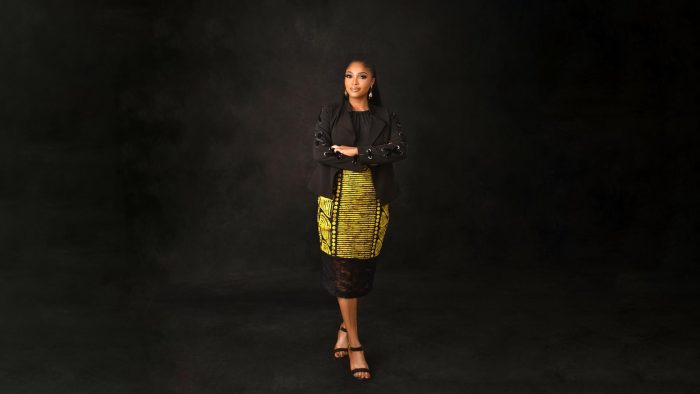
Dr. ‘Tale Alimi is the Founder of REAF Africa, a research-driven organization dismantling the psycho-social barriers to women’s economic inclusion.
