

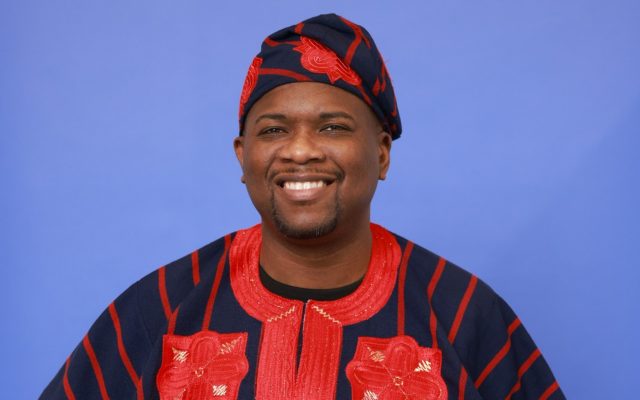
At the 70th session of the Commission on the Status of Women (CSW70), where governments, advocates and multilateral institutions gathered to debate the future of gender equality, one convening in New York shifted the focus from policy language to systems design.
Held at the United Nations Church Center, the Handshake Summit & Awards, convened by Chaste Inegbedion, brought together more than 200 leaders from artificial intelligence, fintech, SaaS, climate technology and global development in what participants described as a deliberately closed-door space built not merely for discussion, but for execution.
The summit, led by Inegbedion in his dual roles as Head of Happiness at ConcordeApp and Head of Failure and Social Experiments at Semaform Foundation, stood apart from the broader CSW70 landscape by positioning itself less as a forum for declarations and more as a room for deployment.
A significant share of those present were founders at pre-seed and early-stage levels, alongside operators, engineers and builders working on solutions spanning AI, digital platforms and financial infrastructure.
In that setting, the core question was not simply how to improve women’s access to opportunity, but how to design systems in which women are built into the infrastructure of value creation from the outset.
That framing gave the summit a distinctly technical edge, even as it responded to the wider urgency articulated during CSW70 by United Nations Secretary-General António Guterres and UN Women Executive Director Sima Bahous.

At the centre of the conversations was a rethinking of artificial intelligence itself. Rather than treating AI primarily as a tool for cutting costs, speakers at the summit argued for its use as an engine for creating opportunity, expanding access to capital and building prevention-oriented systems across healthcare, finance and public safety.
During the AI and Impact Showcase, Crystal Renouf, Chief Executive Officer of TheMothershp™, said the responsibility of builders today extends beyond innovation for its own sake.
“Across cultures and borders, families share the same hope for safety, opportunity, and belonging. TheMothershp was built to help the systems that serve them ethically rise to that responsibility.”
Inegbedion, who moderated the high-level panel, used the summit to introduce one of the defining ideas of the gathering: that professional relationships themselves can be translated into structured economic value.
“We are moving past the era of fleeting networking. To answer the UN’s call for dismantling systems of abuse, we must build new systems of value. At ConcordeApp, we are transforming professional relationships into verifiable, fundable capital. The handshake is now a data point that unlocks economic opportunity.”
His remarks captured the broader direction of the event, where speakers repeatedly returned to the argument that inclusion is no longer enough. What is required, they said, is architecture. Lisa Francoeur underscored the economic stakes of that shift, saying that as AI and digital systems continue to reshape the global economy, expanding access to both technology and financial infrastructure will be decisive for women’s advancement.
“The goal is not just participation, but enabling women to lead and build the systems shaping the future.”
For Kome Igbogidi, the real test lies in execution. He argued that conferences often fail not because they lack inspiration, but because they lack structured follow-through. “As enterprise AI leaders, the real value of a conference isn’t the conversations you start, it’s the follow-through you automate. The organisations that win are the ones that turn inspiration into intelligent workflows before momentum fades.”
That same systems-oriented logic was applied to climate and finance. Richard Ojuri told participants that capital allocation should be understood as a design challenge, not simply a scarcity issue. “Capital flows where trust and structure exist. Climate solutions are not a funding problem; they are a financial architecture problem.”
Charlene Nichols, reflecting on the mood in the room, said the summit’s significance also lay in the quality of alignment among those present. “Sometimes you just know when you’re in the right room. The most important part of inspiring change is surrounding yourself with others who hold the same desire to see the change they want to be in the world. It’s this collective vision that aligns our future with our full capabilities.”
Retired United Nations official and founder of the IBTK Foundation Hawa Taylor Kamara Diallo, offered a broader reminder about what implementation ultimately serves. “The most powerful resolutions are not written on paper, but in the lives we touch,” she said, reinforcing the summit’s message that execution must be measured across generations, not simply in immediate outputs.
