

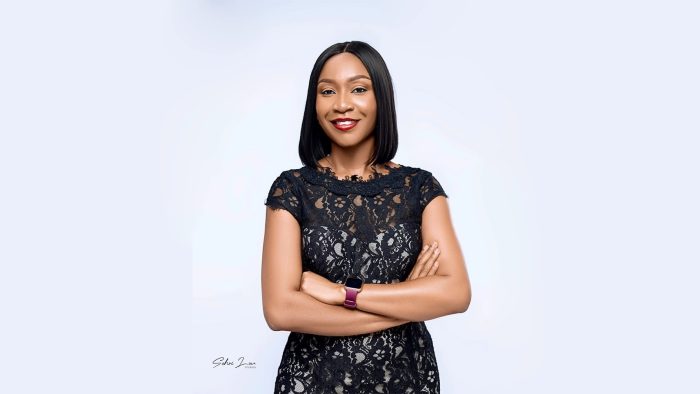
Dr. Amaka Patricia Ehighibe is a Consultant Plastic and Reconstructive Surgeon and Head of the Plastic Surgery Unit at Federal Medical Centre, Jabi, Abuja. A Fellow of the West African College of Surgeons, certified cleft surgeon, Global Surgery Fellow of the American Society of Plastic Surgeons and currently a hand fellow at the Kleinert Institute in Louisville Kentucky, her clinical practice spans the entire spectrum of reconstructive plastic surgery ranging from cleft lip and palate, congenital hand deformities and hand injuries, burn care, breast reconstruction amongst others, to aesthetic body procedures. In this interview, she speaks on her drive, passion and interests especially working in a male dominated space.
As a Consultant Plastic and Reconstructive Surgeon and Head of Unit at the Federal Medical Centre, Jabi, how would you describe your journey into a field where women are still significantly underrepresented?
I would describe my journey as interesting. During my training it was not so easy combining having kids with the rigorous schedule of a surgery resident. I was always very ill while pregnant, I remember clearly my second pregnancy was during my paediatric surgery rotation as a junior resident, it was so hectic I just could not cope so I had to take time off work and this meant I had less time off after the baby. I went back to work when she was barely two months old. Even though I stored as much breast milk as I could before going back, it ran out and somehow my milk production just declined once I was back on the grind. I felt a lot of mum guilt but after a while, I came to terms with the reality that exclusive breastfeeding was not for us at that time. She’s 10 now and she’s fine so yay! Lol.
I was lucky to have great colleagues who saw me as a surgeon and no less and so thankfully I didn’t have to fight the battle of mean superiors or condescending colleagues which some of my female surgeon friends have had to deal with. It was the patients who could never conceive a female surgeon. So, I was either referred to as the nurse, or the student doctor or the health assistant depending on the height of my heels. Lol. Even now as a consultant, I have patients come into my consulting room and they ask when they will see ‘my boss’. But I have learnt not to try to be a man.
You can’t be better at being a man than the men. So, I embraced being a woman in surgery by being competent and precise. Firm but compassionate. By finding other women who hold the same space and laughing together at those moments when you had to drop off your kid you were out with, with the nurse because you had to go in for an emergency. I must add, my journey has been made so much easier by a very supportive family and mentors. Every female surgeon needs a mentor that sees her. I have been blessed by some of the best and I have promised myself I will pay this forward. I literally am standing on the shoulders of giants.
What were some of the unspoken pressures or expectations that came with being the only woman in those spaces?
Oh, there was a constant expectation for you to prove yourself. The men could get upset but if you did, it was your hormones. So, I learnt to always think things through such that when I spoke, I was likely putting forward a superior argument that could not be linked to the state of my ovaries at that time.
Plastic and reconstructive surgery is often misunderstood as being purely cosmetic. Can you shed more light on the life-changing reconstructive work you do, especially around cleft surgery, burns, breast reconstruction and hand deformities?
Yes indeed, when people hear ‘plastic surgery’ their minds immediately go to cosmetic surgery but it’s a whole lot more than that. More than 90 percent of my practice I would say is reconstructive surgery which is what the average Nigerian will need access to a plastic surgeon for. I am quite passionate about burns especially its prevention because as I always say, I do not wish a burn on my worst enemy. At the Federal Medical Centre Abuja, I treat burns, lots of patients also come to me with chronic wounds. I treat a significant number of hand injuries too. I do not see so many clefts these days but cleft lip is one of the things that drew me to Plastic surgery. It was always rewarding and humbling to see the transformation a cleft repair had on a child and their entire family.

As a certified cleft surgeon and Global Surgery Fellow of the American Society of Plastic Surgeons, how important is access to reconstructive surgery in improving quality of life for underserved patients in Nigeria?
Access to reconstructive surgery is extremely important in improving Quality of life (QOL) of the Nigerian people. For patients with cleft lip and palate, burns, trauma, congenital anomalies, and cancer-related defects, reconstructive surgery is not cosmetic or optional; it is essential healthcare.
For cleft patients specifically, timely surgery improves feeding, speech, hearing, dentition, facial growth, psychosocial wellbeing, and social acceptance. In underserved communities, lack of access often means prolonged stigma, school exclusion, malnutrition, communication difficulties, and reduced economic opportunity. Providing reconstructive surgery restores function, dignity, and participation in society. The principle of health equity is particularly relevant in Nigeria, where geography, poverty, workforce shortages, and limited specialist services create barriers to care. Improving access to reconstructive surgery means bringing essential surgical care closer to the people through outreaches, primary health care integration, referral pathways, community education, and training of local teams.
As a cleft surgeon and global surgery advocate, I believe reconstructive surgery is a powerful tool for equity. It transforms not only appearance, but function, confidence, social inclusion, and long-term quality of life for patients who would otherwise remain marginalised.
You have earned international recognition, including the AAPS John Constable Award. What does global validation mean for African women in medicine and surgery?
Global validation for African women in medicine and surgery represents recognition that their expertise, leadership, research, and contributions are valuable on the international stage. For many African women, the journey through medical and surgical training occurs within systems that are often under-resourced and shaped by significant structural, cultural, and gender-related barriers. International recognition therefore carries meaning beyond personal achievement; it affirms competence, resilience, and the capacity to contribute meaningfully to global healthcare and academic surgery.
It also has broader implications for representation and equity. Visibility of African women in international surgical spaces helps challenge long-standing stereotypes about who can lead in medicine, conduct research, innovate, and influence policy. It creates pathways for mentorship and inspires younger women and girls to pursue careers in surgery and academic medicine, fields in which female representation remains limited in many parts of Africa.
From a global surgery perspective, validation should not simply mean recognition by high-income countries, but true inclusion in knowledge generation, leadership, collaboration, and decision-making. African women bring perspectives shaped by unique disease burdens, resource limitations, cultural realities, and healthcare delivery challenges.
These perspectives are essential to developing equitable and sustainable global health solutions.
Global validation should ultimately translate into stronger local health systems, increased investment in training and research, greater collaboration, and improved access to quality care for underserved populations. When African women in medicine and surgery are empowered and recognised globally, the impact extends beyond the individual to patients, institutions, and entire communities.
In your experience, what structural barriers continue to limit women’s advancement in surgical leadership positions across Nigeria and Africa?
One major challenge is underrepresentation and the lack of visible female role models in senior surgical and academic positions. Surgery has traditionally been male dominated, and leadership pathways are often shaped by longstanding institutional cultures and networks that may unintentionally exclude women from mentorship, sponsorship, and decision-making opportunities.
Work-life balance and societal expectations also play a significant role. In many African contexts, women continue to carry disproportionate responsibilities related to childcare, caregiving, and household management, even while pursuing demanding surgical careers. Surgical training and leadership tracks are often inflexible, making it difficult to balance professional advancement with family responsibilities.
Implicit bias and gender stereotypes remain important obstacles. Female surgeons may face questions about competence, leadership style, commitment, or suitability for technically demanding specialties. In some environments, assertiveness in women may be judged differently than in men, I have experienced this so many times and have had to change my approach when I saw the situation sliding down hill.
Another important issue is the limited incorporation of gender equity into health workforce policy and surgical system strengthening efforts. Discussions around global surgery and healthcare development in Africa have historically focused on infrastructure and workforce shortages, sometimes without adequately addressing gender disparities within the workforce itself.
Advancing women into surgical leadership is therefore not only a gender issue, but also a healthcare systems issue. Diverse leadership improves mentorship, workforce sustainability, advocacy, patient care, and policy development. Addressing these barriers will require institutional reforms, intentional mentorship and sponsorship, flexible training structures, equitable research opportunities, and a cultural shift toward recognising leadership potential based on merit and gender.
You have been involved in numerous surgical outreach programmes across Nigeria. What realities have these outreaches exposed you to about healthcare inequality, especially for women and children?
That patients are not limited by the absence of treatable conditions but by lack of access, low health literacy and poverty. Among women, I have seen how limited financial autonomy and sociocultural factors affect their decision making. I clearly remember a child who had perineal burns that I suspected abuse, once my questions began to sound probing, the father threatened he will abandon the mother and child in hospital. I remember being livid, I pulled the mother aside who had come to trust me during their short hospital stay and promised I will pool the funds together that will be required to treat her daughter if she elected to stay.
Her response stopped me dead in my tracks. She said ‘Dr after you pay and we leave the hospital, where will I go? We eventually were able to get help for her and her baby but there are so many more out there whose story is the same but end result is different. For children, the inequalities are particularly heartbreaking because many conditions are highly treatable if identified and managed early. During outreaches, I have encountered children with cleft deformities, burns, congenital hand anomalies, and preventable complications that have affected speech, nutrition, education, social integration, and psychological well-being. In many cases, families simply did not know help existed or could not reach the few available specialist centers.
These experiences reinforced for me that healthcare inequality is not only about infrastructure, but also about equity, education, and system organisation. Outreach work demonstrates the importance of bringing services closer to communities, strengthening referral systems, improving awareness, and building sustainable local capacity by empowering and training local health care workers rather than relying solely on episodic intervention.
Beyond your achievements in medicine, who is Dr. Amaka Patricia Ehighibe outside the operating theatre?
I am from a family with 4 siblings, and believe it or not, I’m the last. Over and over again, I have heard people say I behave like a first child.
I am sorry, I don’t have a story of struggle and rise to fame here. LOL. I had a fantastic childhood full of warmth and love. My parents were very involved. My father was kind, funny, but firm. I have one big brother who is a big brother in every sense of the word. With him, I always feel like that kid who runs behind him when I’m being chased by the neighbour’s dog. And 3 older sisters who are almost a part of my everyday. They are my sisters by chance but my friends by choice. My parents did a solid job raising us
I am now married to the most fantastic man in the galaxy. He is my friend, confidante, teammate, greatest cheerleader and support system. He understands his assignment as a husband and father to our 3 lovely girls. My training and work required I travel quite a bit, and between him and my mum, there have literally been no gaps felt. My mum, that woman, deserves a special mention. All I have to do is say the word, and she drops everything and shows up for us. I don’t know what I would have done without her. And then I have the 3 most beautiful, smart and thoughtful daughters the world has seen. Each is uniquely different, and being their mother has taught me so much more than I have taught them. These roles fill me with so much joy, purpose and peace.
Last but not least, I’m a Christian girl trying to live her best life. I stumble and struggle, then stand tall and smile. Some days are great, some not so much. But in all things, God is interwoven into my everyday life and I give credit for all I am and all I have to Him.
