 Follow Us on Google News
 Follow Us on Google Discover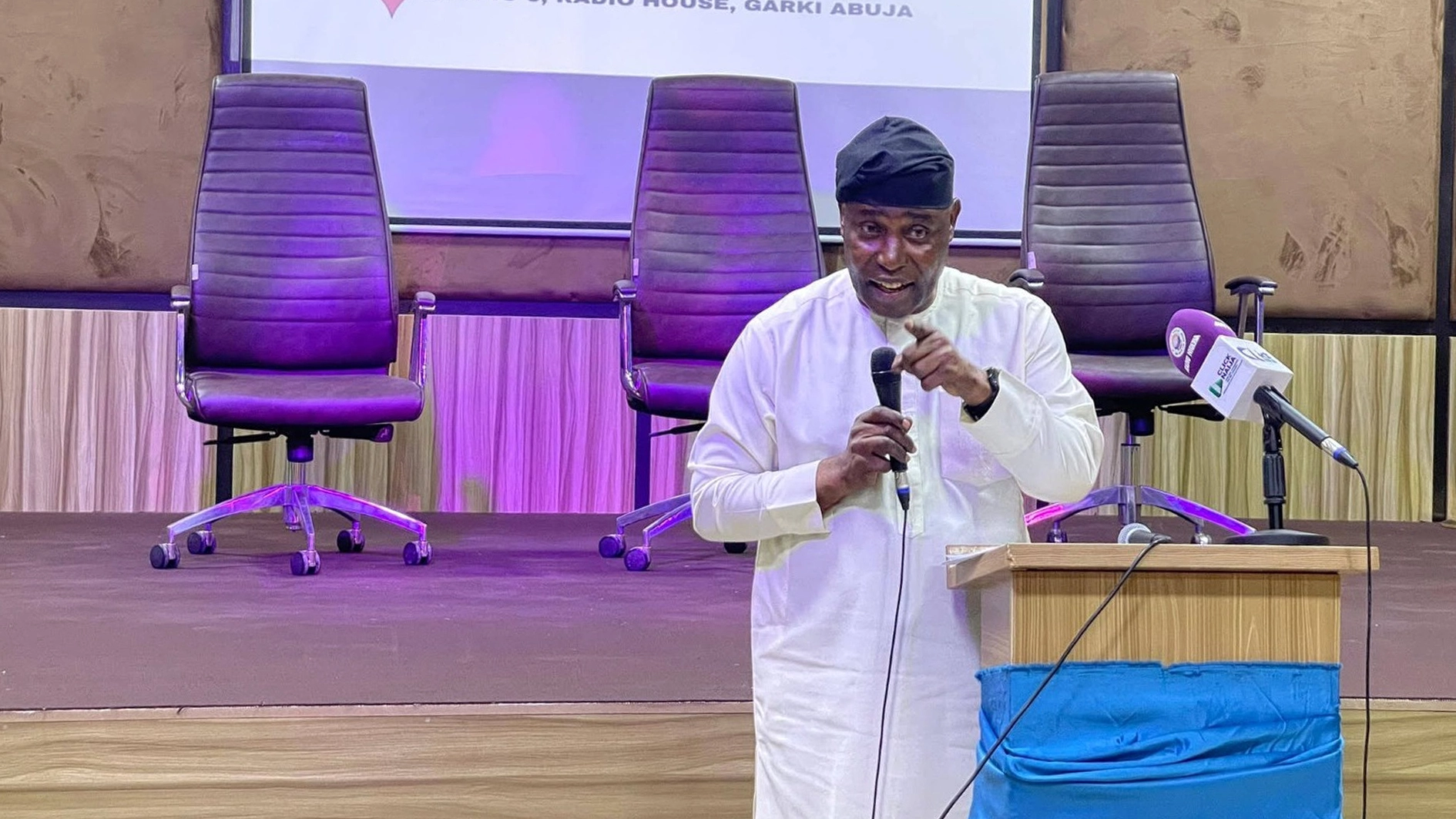
Former Managing Director and Editor-in-Chief of The Guardian, Martins Oloja, has urged Nigerians to deepen their understanding of the Constitution and Electoral Act, warning that poor knowledge of the country’s legal and electoral framework often fuels misinformation, unrealistic political expectations and unnecessary controversies.
Oloja gave the charge on Thursday while speaking at the 4th Lateef Jakande Memorial Lecture organised by the Nigerian Guild of Editors (NGE) in Lagos.
He expressed concern that many Nigerians, including political actors, commentators and media practitioners, engage in debates on governance and elections without adequately studying the laws that govern the country’s democratic process.
According to him, a better understanding of the Constitution and electoral laws would enable citizens to make informed contributions to national discourse and appreciate the realities of Nigeria’s political system.
“I discovered that many of us are not reading the Constitution of Nigeria. Many of us have not even read the current Electoral Act, yet we are talking about electoral matters,” Oloja said.
The veteran journalist noted that several amendments have been made to electoral laws over the years, including provisions relating to political parties, party primaries and candidate nominations, but many Nigerians remain unaware of such changes.

He said the lack of familiarity with these provisions often leads to misconceptions about electoral processes and political developments.
Oloja stressed that regardless of differing political opinions, laws passed by the National Assembly and assented to by the President remain binding and should be properly understood by citizens.
He therefore urged Nigerians, particularly young people, to cultivate a stronger reading culture and pay greater attention to institutions of governance.
“I want to advise younger Nigerians to read the Constitution, read the Electoral Act and take reading very seriously because facts are sacred,” he said.
The former Guardian chief also underscored the importance of factual information in public discourse, insisting that truth and accuracy remain indispensable despite the growing influence of social media.
According to him, while digital platforms have expanded access to information, they should not replace critical thinking, fact-checking and knowledge of the legal framework guiding governance.
“Good journalism still matters. Truth is at the heart of journalism. Facts are sacred and will continue to be sacred,” he said.
Oloja further urged citizens to focus more on institutions than personalities, noting that political parties and other democratic institutions play critical roles in shaping electoral outcomes.
He cautioned against relying solely on social media narratives to understand political developments, arguing that informed civic engagement requires a proper grasp of the laws and structures that underpin democracy.
The veteran journalist also encouraged young Nigerians to move beyond online activism and participate actively in the democratic process through voter registration and voting.
“There is no polling unit on social media,” he said, stressing the need for citizens to translate political opinions into meaningful civic participation.
Oloja maintained that a more informed citizenry would strengthen democracy, improve public accountability and contribute to more constructive political engagement ahead of future elections.

