

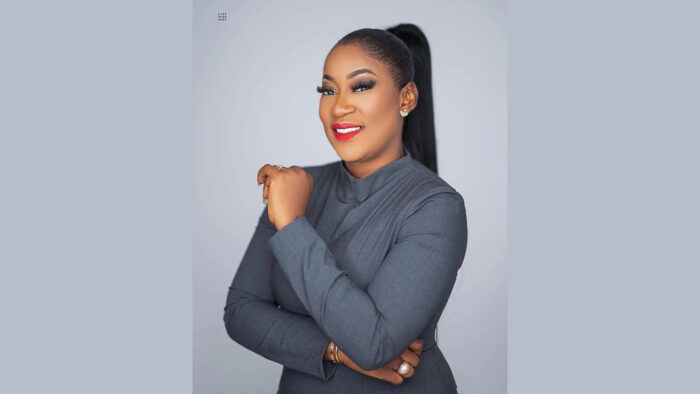
Yejide Taiwo is a business growth strategist, transformational leader and corporate executive with over two decades of experience across construction, energy, oil and gas, hospitality, real estate and infrastructure. She currently leads Business Development at Craneburg Construction Limited, driving strategic growth, commercial expansion and partnerships, and serves on corporate boards. A former General Manager, Business Development at Jagal/Nigerdock Group, she holds an MBA from the University of Liverpool and has completed executive programmes at Harvard Business School and the University of Oxford. A passionate advocate for women and youth development, she supports social-impact initiatives and serves as Vice Captain of Cycology Cycling Club. In this interview, she speaks on her career and leadership growth.
You have spent more than two decades navigating construction, oil and gas, energy, real estate, and infrastructure, industries traditionally dominated by men. What did you have to unlearn, prove, or do differently to establish yourself and rise into leadership?
I had to unlearn the idea that I needed to prove myself every single day. When you work in industries that are traditionally male-dominated, especially in environments where you may sometimes be the only woman at the table, there can be a tendency to feel that you have to work harder, speak louder or be tougher just to establish your credibility. Over time, I realised that my greatest strength was not trying to compete by becoming someone else. It was becoming very good at what I do, understanding the business deeply, and being confident enough to bring my own perspective to the table. I learned to let my competence speak. And perhaps most importantly, I learned that you don’t have to choose between being a strong leader and being an empathetic woman. You can be commercially tough and still be human. For me, leadership became less about proving myself and more about helping to redefine what leadership in that world could look like.
Your career has moved across several industries and leadership roles. What has been the biggest turning point in your professional journey?
I stopped thinking about my career as a series of jobs and started thinking about it as a journey of building value. Moving across construction, oil and gas, energy, real estate and infrastructure exposed me to very different businesses, but I began to see the connections between them. I realised that infrastructure isn’t just about concrete and steel. It is about people, capital, energy, cities, businesses and ultimately the quality of life we create. That broader perspective changed me. I became much more interested in understanding the bigger picture, where the market was going, what problems needed solving and where I could make the greatest contribution. I also became more comfortable with change. Some of the biggest opportunities in my career came when I stepped into unfamiliar territory. Looking back, I think that has been one of the defining lessons of my career: sometimes the next chapter of your growth begins where your comfort zone ends.
Business development is ultimately about seeing possibilities before they become obvious. How do you identify opportunities in Nigeria’s rapidly changing infrastructure, construction and energy landscape, and what separates a promising opportunity from a viable one?
I start with a very simple question: What problem are we solving? Nigeria has no shortage of opportunities. We have enormous infrastructure gaps and significant demand across energy, housing, transportation, industrial development and urbanisation. But a need is not automatically a business opportunity. I look at the fundamentals. Is the need real? Is there a market? Who is the customer? What is the commercial model? What are the regulatory and execution risks? Who are the right partners? And, perhaps most importantly, can we actually deliver? I’ve learned not to fall in love with an idea simply because it sounds exciting. A good opportunity has to survive scrutiny. You also have to understand timing. Sometimes the opportunity has existed for years, but a change in technology, regulation, demographics, financing or consumer behaviour suddenly makes it viable. That is where business development becomes interesting to me, the ability to connect the dots before they become obvious to everyone else.
What does effective leadership look like to you today, and how has your leadership philosophy evolved over the years?
Earlier in my career, I thought leadership meant having the answers. Today, I believe leadership is much more about asking the right questions. Experience has taught me that you don’t build great organisations by being the smartest person in every room. You build them by surrounding yourself with capable people, giving them clarity, trusting them and holding them accountable. I have also become much more comfortable with vulnerability. You can say, “I don’t know. Let’s figure it out.” That doesn’t make you a weaker leader. In fact, sometimes it creates a much stronger team because people know they are allowed to think, challenge and contribute. For me, leadership today is about three things: clarity, accountability and people. The older I get, the more I believe that leadership is ultimately about what you leave behind in people.
You have invested significantly in executive education, including programmes at Harvard and Oxford. At this stage of your career, what does continuous learning mean to you, and what is one leadership lesson from those experiences that has fundamentally changed how you operate?
For me, continuous learning is about remaining curious. One of the dangers of becoming experienced is that you can start believing you’ve seen everything before. You haven’t. The world changes. Markets change. Technology changes. People change. And the way we lead has to change with them. My experiences at Harvard and Oxford were valuable not simply because of the academic content, but because of the exposure to people from different industries, countries and backgrounds. You realise very quickly that there are many ways of approaching the same problem. One lesson that has stayed with me is the importance of stepping back. As executives, we can become consumed by the urgent meetings, deadlines, problems, targets. But sometimes you need to step away from the noise and ask: Are we solving the right problem? That question has changed how I think. I now deliberately create space to reflect, learn and challenge my own assumptions. I don’t want experience to make me rigid. I want it to make me wiser.

What do you believe women need to understand about boardroom influence, and how can more women position themselves for meaningful representation at the highest levels of corporate decision-making?
I think women need to understand that getting a seat at the table is only the beginning. Once you’re there, you need to be able to contribute. Boardroom influence comes from preparation, commercial understanding, sound judgement and the courage to speak when your perspective matters. I’ve also learned that you don’t have to speak the most to have influence. Sometimes the most powerful contribution is one thoughtful question that changes the direction of the conversation. Women should also stop waiting to feel 100 percent ready before putting themselves forward. Very few people ever feel completely ready for the next level. Build your expertise. Understand the numbers. Understand governance. Build relationships. Find mentors and, importantly, sponsors people who will advocate for you when you aren’t in the room. And when you get there, don’t just occupy the seat. Use the seat.
Despite increasing conversations around women in STEM, energy, infrastructure and construction, female representation remains a challenge. From your experience, where are we getting it wrong, and what must businesses do differently to create a stronger pipeline of women leaders?
I think we’re sometimes having the conversation too late. We talk about wanting more women on boards, but by then the pipeline has already narrowed significantly. We need to start much earlier. Women need access to technical roles, commercial roles, major projects and leadership responsibilities. They need mentors, but even more importantly, they need sponsors who will actively advocate for them. Businesses also need to examine some of the unconscious assumptions around leadership. For example, the same assertiveness that may be described as confidence in a man can sometimes be described differently when it comes from a woman. We have to challenge those biases. But I also think we need to stop treating women as a diversity statistic. Women are not a box to tick. They represent talent, perspectives, experiences and commercial value. If we genuinely want more women at the top, we have to build the pipeline deliberately and consistently, not simply celebrate the few who make it through.
What are the biggest career mistakes you see talented women making, and what would you tell a young woman who is ambitious but struggling to find her voice in a competitive corporate environment?
The first is waiting to be discovered- You can be brilliant and still be overlooked if nobody knows what you want or what you bring to the table. The second is trying to be perfect- I see very capable women waiting until they have mastered everything before they put themselves forward. But growth doesn’t happen that way. Sometimes you have to take the opportunity and learn while you’re doing it. And the third is confusing humility with silence. There is absolutely nothing wrong with saying, “I did this. I delivered this. I would like to take on this responsibility.” That isn’t arrogance. That’s professional self-awareness. To a young woman who is struggling to find her voice, I would say: your voice doesn’t have to sound like anyone else’s. You don’t have to become the loudest person in the room. You have to become confident in the value of your contribution. Prepare. Speak. Ask questions. Take risks. And don’t allow the fear of being judged to become bigger than your ambition.
You are a senior executive, board member, entrepreneur, wife and mother, while also making time for social impact through initiatives such as Cycology. What has balancing these different identities taught you about ambition, boundaries, and defining success on your own terms?
It has taught me that balance is not a destination. There are days when I feel like I’m doing brilliantly at everything, and there are other days when I know something has to give. I’ve learned to accept that. As women, we sometimes put enormous pressure on ourselves to be excellent everywhere, excellent executives, excellent mothers, excellent wives, excellent friends, excellent community members. But we are human. I’ve learned the importance of boundaries and the importance of being intentional about where I spend my time and energy. I’ve also learned that ambition doesn’t have to look the same throughout your life. There were seasons when professional achievement was my primary focus. There are now other things that matter just as deeply to me – family, impact, mentoring, community and creating opportunities for others.
Looking at the next decade of Nigeria’s business and infrastructure landscape, where do you see the biggest opportunities for women, and what legacy do you want your own career to leave for the women coming behind you?
I am very optimistic about the opportunities ahead. Nigeria’s infrastructure needs are enormous, and that means there will be opportunities across energy, construction, real estate, transportation, digital infrastructure, technology, sustainable development and innovative financing. I would especially encourage women not to think only about participating in these sectors. Think about owning, building and leading in these sectors. Be the developer. Be the investor. Be the engineer. Be the entrepreneur. Be the CEO. Be the board chair. There is a huge amount of work to be done, and we need all the talent we can get. I want to be remembered as a woman who helped make it possible for many more women to make it.
