 Follow Us on Google News
 Follow Us on Google Discover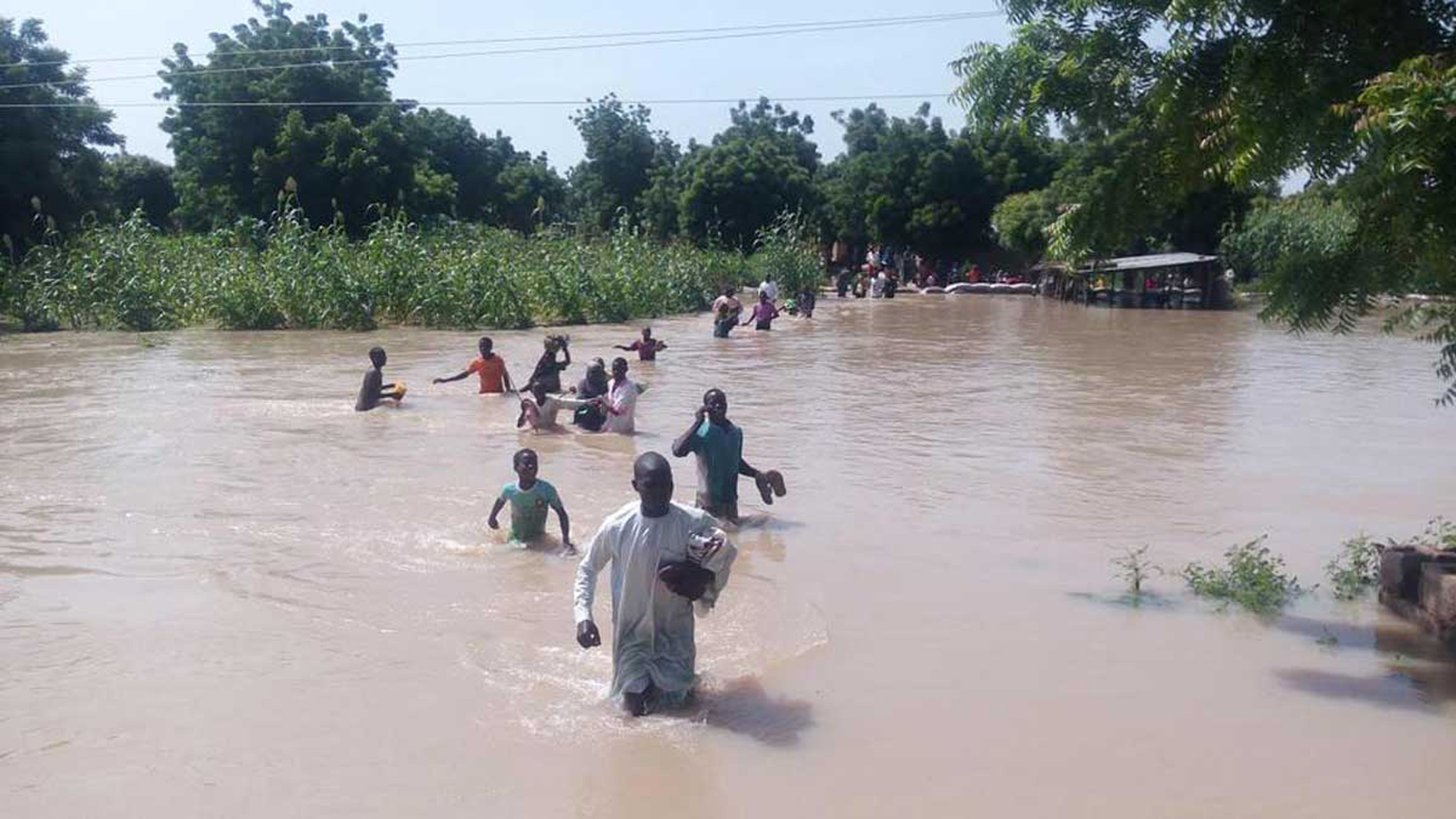
In November 2021, Nigeria took a significant step by signing the Climate Change Act, the country’s first comprehensive climate legislation. The law established the National Council on Climate Change and set out a framework to help the country respond to climate change by identifying climate risks, strengthening adaptation measures and building resilience in vulnerable communities.
Climate change refers to long-term shifts in global temperatures and weather patterns, primarily driven by human activities such as burning fossil fuels and deforestation. It results in sea-level rise, extreme rainfall, droughts, and temperature changes. These global shifts can increase the frequency and intensity of weather-related events, including flooding.
Driven by melting ice and thermal expansion (as warm water takes up more space), global sea levels have risen approximately 8-9 inches since 1880, owing to global heating. As sea levels continue to rise, it’s estimated that 2.5 million Americans will be at risk from a severe coastal flood by 2050.
Every year, the Nigeria Hydrological Services Agency (NIHSA) also publishes its Annual Flood Outlook, identifying states and communities likely to experience flooding and encouraging governments and residents to prepare ahead of the rainy season.
Yet, despite these forecasts, many residents say they still find themselves reacting to disasters rather than preventing them.
Sea level rise’s impact extends beyond just high tide flooding, as higher background water levels can also amplify coinciding flood events: from a storm’s deluge amplified by a warmer atmosphere to more deadly and destructive storm surge from a hurricane supercharged by record-warmth in the Atlantic.

Rather than focusing solely on reducing greenhouse gas emissions, the Act also recognises that climate change is already affecting Nigerians through flooding, extreme weather condition, drought and rising temperatures. It, therefore, aims to strengthen adaptation by helping communities prepare for these impacts instead of merely responding after disasters occur.
Flooding remains Nigeria’s most common and recurring natural disaster, according to the United Nations Development Programme (UNDP). In its assessment of the 2022 floods, the organisation described the disaster as even more devastating than the one recorded in 2012, with severe consequences for households, agriculture, infrastructure, businesses and food security across several states.
Four years after, however, many communities continue to experience devastating floods every rainy season, prompting questions about how far climate adaptation measures have translated into visible protection on the ground.
However, many believe that the flood crisis is primarily a legal and governance challenge rather than a purely infrastructural one.
Findings show that despite multiple policy instruments, enforcement remains weak, institutional mandates are fragmented, and dredging, sandfilling, and reclamation activities continue to heighten flood risk.
But while climate change plays a role, it’s not the main culprit. The deeper, more immediate cause lies in the country’s broken systems—infrastructure decay, poor planning and governance failures.
For residents of Ayinke Street in Shogunle, Oshodi, Lagos, that gap between policy and reality became painfully clear when floodwater swept through their community after heavy rainfall, destroying homes, household belongings, vehicles and important personal documents.
When floodwater broke through a collapsed fence bordering the Nigerian Air Force premises, it rushed into surrounding houses with a force many residents said they had never witnessed.
Among those affected was Ebesuwa Olaodupe, who was at work when the incident occurred. At home were his wife, their four-year-old daughter and their three-week-old baby.
“My wife called me while she was at home with our children. Nobody expected the water to come with such force,” he recalled.
According to him, the floodwater rose rapidly, reaching chest level inside his apartment and leaving little time for residents to salvage their belongings.
“The flood was so high that it collapsed the fence. The water flowed into neighbouring houses. This house was the first target before it spread to other houses,” he said.
By the time he returned, the damage had already been done.“Our electronics are already damaged. Chairs, wardrobes, mattresses and many valuable items have been destroyed. We cannot even quantify what we have lost. Certificates have been carried away. Important documents are nowhere to be found.”
The destruction extended beyond his own household. Vehicles parked within the community were submerged, while neighbouring homes suffered similar losses as floodwater swept through the area.
For many residents, the ordeal did not end after the water receded. Olaodupe said they had yet to receive any form of government assistance or compensation despite the scale of the destruction.
“We need people to come to our aid. Let them come and assess what has been damaged and assist those who have lost their properties.”
While compensation would provide temporary relief, he believes preventing a recurrence should be the priority. He pointed to poor road infrastructure, weak drainage systems and the deteriorating condition of the fence as factors that worsened the flooding.
“The road is not well tarred and we are paying taxes. There should be a proper canal that can channel this water so that what happened will not happen again.”
Scenes like those in Shogunle have become increasingly familiar across Nigeria during the rainy season.
From Niger and Kogi to Benue, Bayelsa, Anambra and parts of Lagos, communities continue to count losses after heavy rainfall triggers flooding that destroys homes, farmlands, businesses and public infrastructure.
While the causes may differ from one location to another, residents often tell a similar story of inadequate drainage, weak infrastructure, poor planning and limited preparedness.
For Dr Oghenerukevwe, another Lagos resident, the rainy season turned what should have been an ordinary journey to work into a frightening experience.
After a night of persistent rainfall, she booked a ride as usual for her morning commute. Several Uber and Bolt drivers cancelled the request because her neighbourhood was already flooded. Eventually, one driver accepted.
“When he arrived, I honestly thought he was driving an SUV,” she said. “Instead, I met him scooping water out of his back seat because floodwater had already entered the car.”
Hoping to avoid the worst of the flooding, they abandoned the usual route and chose another road that appeared safer. The decision proved costly. “As we approached Kunsela Road in Ikate, the car suddenly dropped into an open drainage hidden beneath the floodwater.”
Within seconds, water rushed into the vehicle. The water got to the back seat “and I had to stand on the seats, so, I wouldn’t get soaked.”
The engine stopped almost immediately, leaving them stranded in rising floodwater.
A group of young men soon approached and offered to help, but only after demanding ₦25,000 before they would push the vehicle out of the flooded drainage.
“Once I agreed, they pushed us all the way to safety. After I paid them, they immediately moved on to help other cars and people who had also fallen into the same drainage or become trapped in the flood.”
Having lived in Lagos for two years, she believes flooding has become noticeably worse. “It wasn’t this bad last year,” she said.
While residents point to damaged homes, submerged vehicles and lost livelihoods as evidence of the growing flood challenge, experts say the problem extends beyond heavy rainfall. They argue that although climate change has increased the intensity and frequency of rainfall, the scale of destruction seen in many communities is also linked to poor urban planning, blocked drainage systems, unchecked development and weak climate adaptation measures.
Ecotoxicologist and pollution management specialist, Dr Temitope Sogbamu, said Lagos geographical location makes it particularly vulnerable to flooding, but stressed that natural factors alone do not explain what many communities experience today.
She explained that Lagos is a coastal city bordered by the Atlantic Ocean and the Lagos Lagoon, making communities along the coastline and lagoon naturally susceptible to flooding. However, years of rapid urbanisation and human activities have significantly increased that vulnerability.
According to her, many of the areas now occupied by residential estates and communities were originally wetlands or water bodies that have since been reclaimed through sand filling.
“Lagos is a coastal city and so communities that are often most vulnerable are those living along the coastline, along the Lagos Lagoon and on the fringes of the Atlantic Ocean,” she said.
“Because of the strong urbanisation, we have experienced in recent years, some of these areas are either sand-filled or reclaimed from the water. Already there is a lot of pressure on the lagoon, and areas that ordinarily should not have settlements now have people living there.”
While low-income settlements are often identified as flood hotspots, Sogbamu noted that recent flooding has shown that even planned neighbourhoods are no longer immune.
She cited parts of Lekki and Ibeju-Lekki, where expensive residential developments have also experienced severe flooding after heavy rainfall. “Some people assume flooding only affects informal settlements, but that is no longer the case. The Lekki and Ibeju-Lekki areas that have experienced flooding recently are not slums. They are planned communities, but the flood management systems that existed when many of those developments were built are no longer sufficient.”
She attributed this to changing rainfall patterns associated with climate change. According to her, rainfall has become heavier, more intense and more frequent than in previous years, placing enormous pressure on drainage infrastructure that was designed for different weather conditions. However, she cautioned against blaming climate change alone.
Sogbamu said blocked drainage channels, indiscriminate waste disposal and construction on natural waterways have compounded the problem in many parts of the country.
“There are places where drainage channels exist, but they are clogged with plastics and other solid waste,” she said.
“When rain falls, the water has nowhere to go because the drains are blocked. In some places, people have even built structures directly on drainage channels that should allow stormwater to flow freely.”
She noted that the consequences are particularly severe in low-lying communities where floodwater from different parts of Lagos eventually converges.
“In communities like Ilaje and Iwaya, the problem is not only that rain enters people’s homes. These communities also receive runoff from many other parts of Lagos because the drainage channels eventually discharge into the lagoon through those areas.” She noted.
“The floodwater carries plastics, refuse and even feces. So residents are not just dealing with floodwater; they are exposed to serious public health risks.”
She said such conditions often increase the likelihood of disease outbreaks.
“When floodwater mixes with waste and sewage, you begin to see health emergencies such as cholera and other water-borne diseases. That is one of the realities many of these communities face every rainy season.”
According to her, repeated flooding has forced some residents to relocate entirely.
“I know people who have moved away because they simply could not continue living with the flooding every year,” she said.
She added that some communities also contend with seasonal tidal flooding caused by rising water levels from the Atlantic Ocean flowing into the Lagos Lagoon.
“It is not only rainfall. There is also what residents call Omiyo, when water from the Atlantic flows into the lagoon. Because many of these communities are very low-lying, they are affected from both directions.”
Asked whether governments were doing enough to prepare vulnerable communities before floods occur, Sogbamu said there had been some interventions but insisted much more remained to be done.
“I don’t think it is enough,” she said.
At the same time, she argued that addressing flooding should not be seen as the responsibility of government alone.
According to her, some government agencies have attempted to remove structures built on drainage channels and have undertaken drainage improvement projects in parts of Lagos, but enforcement has not been consistent.
“There have been efforts to remove illegal structures, but there are still many buildings obstructing drainage channels.”
She also called for greater attention to waste management, especially before and during the rainy season.
Sogbamu acknowledged that residents themselves also contribute to the problem through indiscriminate dumping of refuse. Interestingly, she said some communities admit this.“Some residents told us they resort to dumping waste in drainage channels because waste collectors do not reach the inner parts of their communities regularly.
“But they have also realised that the consequences come back to them.”
She said some Community Development Associations have responded by organising regular sanitation exercises and monitoring illegal dumping.
“They have even set up local monitoring groups that identify people who dump refuse at night because they understand that blocked drainage eventually affects everyone.”
While she commended such community efforts, she maintained that they could not replace the large-scale infrastructure needed to reduce flood risks.
“These are projects that require government intervention. Some work has been done, for example around the UNILAG-Bariga axis, but people living in the inner parts of Ilaje still face major challenges.”
Beyond physical infrastructure, Sogbamu believes communication is equally important.
She said climate information and flood warnings should be communicated in languages residents understand rather than relying mainly on English.
“There needs to be more community engagement and environmental risk communication in local languages such as Yoruba, Hausa, Igbo and Nigerian Pidgin so that everyone understands the risks and what actions to take.”
She also stressed that communication should include persons living with disabilities to ensure no group is excluded from early warning systems.
While Sogbamu focused on the environmental and social factors driving flooding, environmental expert Dr Godwin Ojo turned attention to the implementation of Nigeria’s Climate Change Act.
According to him, the legislation itself provides an important foundation, but translating its objectives into tangible improvements for vulnerable communities remains a work in progress.
“The law itself is good,” he said. “The Climate Change Act is a starting point.”
He explained that assessing the success of the Act requires looking beyond its existence to its impact across different sectors of the economy.
“We have to ask what impact it has had in agriculture, energy, education and other sectors. Ultimately, all of these should improve people’s quality of life.”
By that measure, he believes Nigeria still has considerable work to do.
“There is neither significant improvement in environmental protection nor in the standard of living of many people who are supposed to benefit.”
Ojo said the Climate Change Act was designed to mainstream climate considerations into national development by building resilience not only within the environment but also across sectors such as agriculture, where changing weather patterns increasingly threaten food production.
“I think Nigeria has done well by enacting the Climate Change Act, but improvement leaves much to be desired.”
He identified implementation rather than legislation as the major challenge.
According to him, government efforts have yet to adequately reach the grassroots, where climate impacts are often most severe.
“We need more targeted actions that focus on rural and vulnerable communities,” he said.
He argued that climate policies should go beyond awareness campaigns to practical investments that help communities adapt to changing environmental conditions.
“There should be stronger community engagement and collaboration. Communities need to be involved because they are the people living with these impacts every day.”
Asked whether Nigeria was investing enough in climate adaptation and flood prevention, Ojo said financing remains one of the biggest obstacles.
“In fairness, government is working through different ministries and sectors, but there is still not enough commitment to financing climate adaptation.”
He said communities require greater investment in projects that strengthen resilience before disasters occur rather than relying almost entirely on emergency responses after floods have already caused destruction.
“Emergency response is important, but preventive measures are equally part of emergency management, and those preventive measures are still lacking.”
He called for increased funding to support adaptation projects, particularly in rural communities where livelihoods often depend on agriculture.
According to him, climate financing should include mechanisms that help farmers recover when floods destroy crops and farmlands.
Beyond funding, Ojo identified coordination among government institutions and public awareness as other significant challenges affecting implementation of the Climate Change Act.
“The biggest obstacles remain financing, coordination among ministries and public awareness,” he said.
He believes stronger collaboration between government agencies, local communities and civil society organisations would improve implementation and ensure that climate policies translate into practical action.
Looking ahead, Ojo said Nigeria’s response should place greater emphasis on building infrastructure that protects communities before disasters occur.
He suggested measures such as embankments and other flood-control infrastructure alongside better support systems for affected farmers.
“We should be building infrastructure that protects communities and providing support, including insurance for crops and farmlands that are inundated by floods,” he said.

