
 Get Guardian on Google
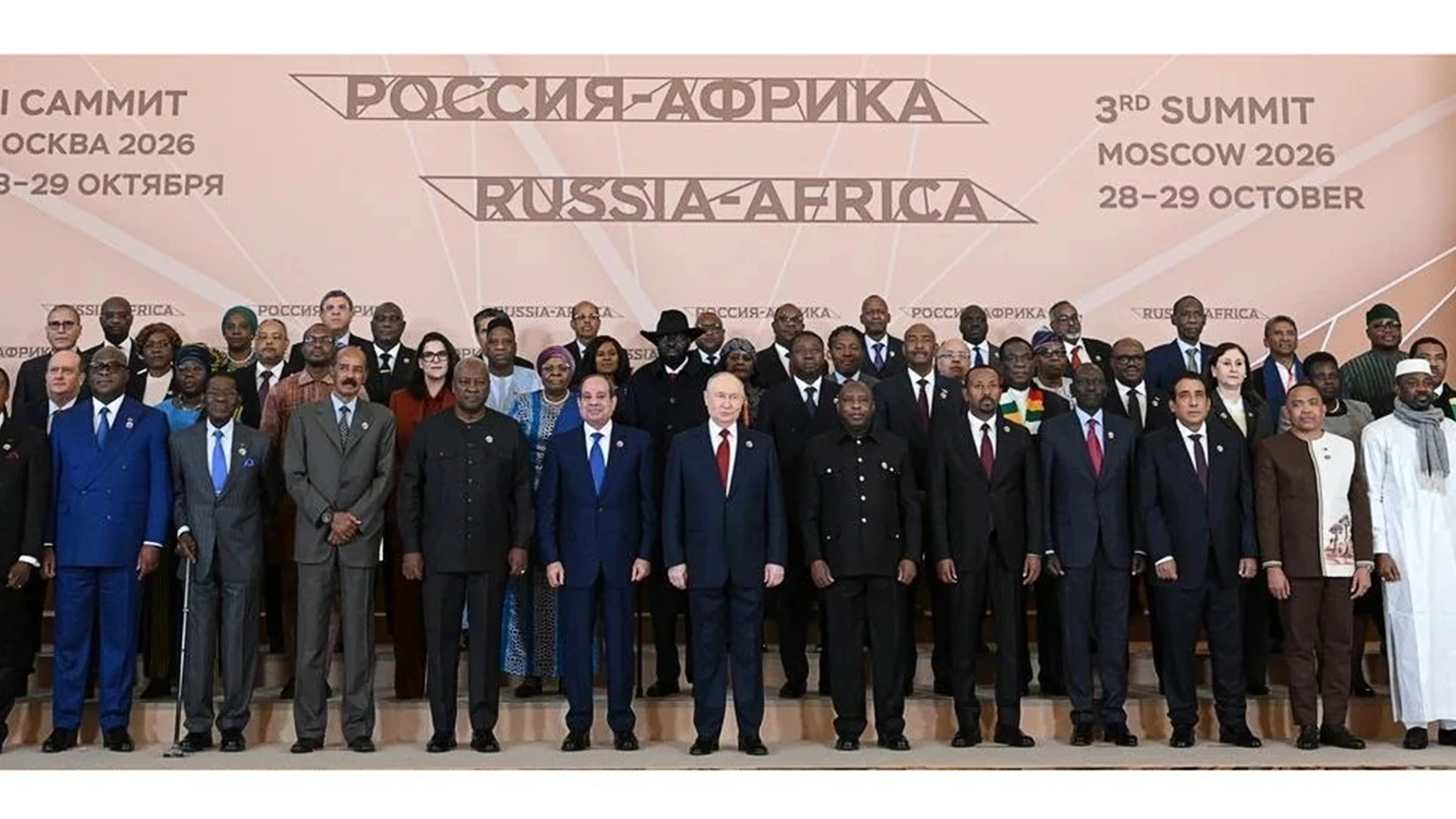
Photo Source: Photo hosting agency of the Russia–Africa summit and forum
On October 28-29, Moscow has successfully hosted the Third Russia-Africa Summit and Economic and Humanitarian Forum, bringing together over 3,500 participants from 48 African countries, including representatives of approximately 630 companies. More than 60 agreements were signed. The leaders adopted its Final Declaration, the Declaration on AI Cooperation and the Russia-Africa Partnership Forum Action Plan for 2027-2029.
The agenda focused on multipolarity, African sovereignty and reform of international institutions. Addressing the October 29 plenary session, President V. Putin emphasized the equal dialogue between Russia and Africa and concurrence of opinions on major international issues.
Russia reaffirmed its support for greater African representation on the UN Security Council and cooperation in regional security. President V.Putin noted that Russia has signed military and military-technical cooperation agreements with 45 African countries and expanded its diplomatic presence to 48 embassies across the continent.
Economic discussions centred on manufacturing localisation, technology transfer, infrastructure, logistics and payments. Russia–Africa trade exceeded USD 27 billion in 2025, with a future target of USD 50 billion. President Putin also noted that 47 African countries are eligible for EAEU tariff preferences, with relevant customs duties reduced to zero for 32 of them. 85% of payments for commercial transactions with the Continent partners are now made in national currencies, including the Russian ruble.
Russia supplied over 18 million tonnes of grain to Africa in 2025 and another 13 million tonnes in the first nine months of 2026. Russian fertiliser exports also increased from approximately 1.5 million tonnes in 2025 to over 2.2 million tonnes in 2026.

Industrial agreements have also been signed at the Forum, with RUSAL and Ghana’s state-owned GIADEC concluding MOU on bauxite processing. The proposed joint ventures envisage annual production of 5 million tons of bauxite and 1.2 million tons of alumina. Ghana also announced ongoing negotiations with Rosatom on its first nuclear power plant.
Foreign Minister S.Lavrov signed memoranda with the East African Community, the Common Market for Eastern and Southern Africa and the African Continental Free Trade Area Secretariat. Action plans were also signed with the African Union Commission and other regional organisations.
The Forum also marked the establishment of the Russian–African Youth Union at MGIMO University. Nearly 40,000 young Africans study at Russian universities, while more than 300,000 have graduated from them over the years. Russian universities are also expanding their educational presence across the continent.
Ahead of the Summit, S.Lavrov described Nigeria as one of Russia’s key partners in Africa, citing friendly ties dating back to the Soviet era. 2,481 Nigerian students enrolled in Russian universities in 2025/26 and 220 Russian government scholarship are allocated every year.
Nigeria’s delegation was headed by the Minister of State for Foreign Affairs Amb. S. Enikanolaiye. During the Summit, Russian Federal Customs and Nigeria Customs Service signed the agreement on customs cooperation and mutual assistance, covering information exchange, combating customs violations and professional training. The parties also discussed EAEU tariff preferences for Nigerian exporters.
The Roscongress Foundation signed a separate agreement with Nigeria’s Abia State Ministry of Sports and Youth Development on youth exchanges and educational initiatives. Russian organisations Synergy and Innopraktika announced plans to establish ten educational centres across Africa by the end of 2028, identifying Nigeria among the prospective locations.
The Summit highlighted a growing emphasis on industrial partnerships and expanding bilateral trade. As one of Russia’s major trading partners in Sub Saharan Africa, Nigeria has considerable potential to participate more actively in joint manufacturing and infrastructure projects
Author: Alexander Kryazhe