 Get Guardian on Google
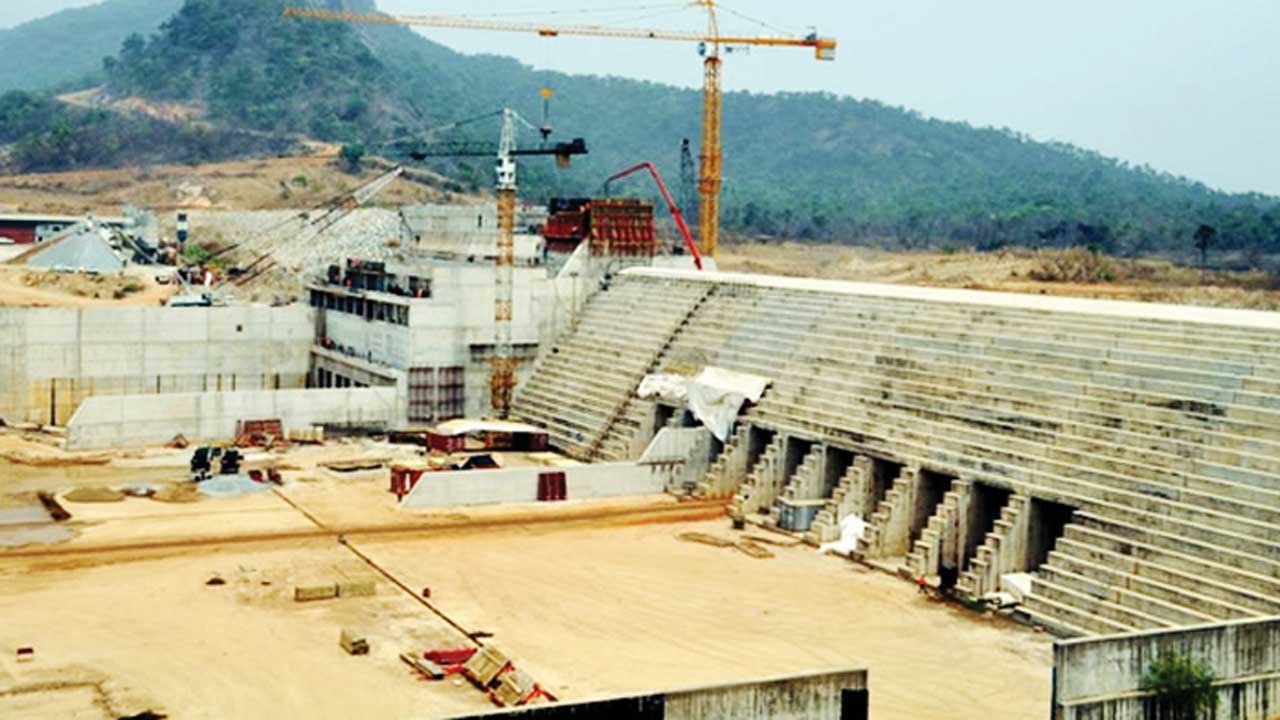
Nigeria’s recent legal victory over the controversial Mambilla Hydroelectric Power Project is significant not only because it saved the country a substantial sum for the public good; it is even more significant because it reveals a terrifying reality of systemic rot in the public procurement process. The dispute raises broader questions about transparency and accountability in awarding government contracts.
The victory came after an International Chamber of Commerce (ICC) Arbitration Tribunal in Paris dismissed a $2.35 billion breach-of-contract claim filed by Sunrise Power and Transmission Company Limited (SPTCL).
Praising Nigeria’s legal team’s outstanding performance, President Bola Tinubu said: “This latest decision affirms the Nigerian State’s determination not to succumb to predatory and exploitative claims by corrupt local and international entities and their enablers and funders.”
The dispute arose from a 2003 contract awarded by the then Minister of Power, Olu Agunloye, to SPTCL for the construction of a hydroelectric power plant in Taraba State under a Build-Operate-Transfer arrangement, without approval from the Federal Executive Council (FEC). Given the controversy surrounding the project, the Buhari administration revoked the contract. Aggrieved by this action, SPTCL instituted arbitration proceedings against the Federal Government, seeking $680 million in damages, and broader compensation exceeding $2.7 billion in a related arbitration claim.
However, Nigeria argued that the contract was void ab initio, and hence unenforceable against the government. It contended that the contract award was inconsistent with established procedure because it lacked the mandatory FEC approval. The arbitration tribunal upheld Nigeria’s argument and dismissed the claims of the company accordingly.
The tribunal’s decision reflects the principle that failure of the former Minister to obtain FEC’s prior approval before executing the contract was fatal. A contract entered into by a public officer on behalf of the government without required approval or outside the scope of their legal authority is generally considered null and void, or unenforceable against the government, even if the other contracting party was completely unaware of the lack of approval. The ruling potentially saved the country substantial costs.
Beyond that, the dispute indicates that despite the enactment of the Public Procurement Act in 2007, contract awards across all tiers of government remain opaque. The process has largely become a conduit through which the country’s commonwealth is siphoned by corrupt public officeholders in connivance with their co-conspirators, the contractors. In outright abuse of power, these government officials circumvent established procedures and subject the country to potentially problematic contractual arrangements at public expense.
Many public officers execute complex contracts with questionable terms on behalf of the country without following due process. The bidding and award process is shrouded in obscurity to avoid public scrutiny and fair competition. Also, there is often little regard for due diligence or merit, competence, and national interests, as personal gratification is the overriding factor.
Contractual terms are deliberately lopsided in favour of contractors, thereby exposing Nigeria to significant legal and economic risks in the event of default. At face value, many public contracts are entered into with no actual performance expectations from either party. The underlying intent seemingly is to extract public funds by means of litigation, arbitration, or corrupt settlement.
The process can be described as an institutionalised economic sabotage orchestrated by some public officers in connivance with their cronies. Ironically, public lawyers, duty-bound to protect state interests, are sometimes complicit either by direct involvement or negligence.
Several instances highlight the entrenched predatory procurement culture in the public sector. In 2010, Nigeria signed a Gas Supply and Processing Agreement with a British Virgin Islands-based company, Process & Industries Developments Ltd (PID). Neither party reportedly performed its obligations under the contract, but PID subsequently sued Nigeria for breach of contract. The arbitration tribunal ruled in favour of the company and ordered Nigeria to pay over US$11 billion as damages.
Following Nigeria’s appeal, the award was set aside by a UK Court on findings of fraud and corruption in the arbitration process. Nigeria accused PID of procuring the contract and the arbitral award via bribery and corrupt practices, including bribing some of its (Nigeria’s) lawyers during arbitration.
Allowing Nigeria’s appeal, Justice Robin Knowles CBE held inter alia: “However, in my judgment … there is an overall fraudulent enterprise or plan from the start to procure an award. Here the contract is a first or early step in carrying out that overall fraudulent enterprise or plan, but the result is the award.” This decision was recently reaffirmed by the UK Supreme Court.
The Ajaokuta Steel civil works contract is another example of a “fraudulent enterprise”. The Federal Government awarded the contract to a French joint venture known as Fougerolle Nigeria Ltd and French Firm Fougerolle SA in 1981. The contract was terminated in 2004, and the contractor sought additional payments totalling N3.85 billion and €185 million.
Nigeria paid N3.89 billion through Federal Government bonds in 2006, and the contractor signed an indemnity relinquishing further claims. Surprisingly, in 2022, the company attempted to seek additional multi-billion-naira compensation via arbitration. Fortunately, this gold-digging ploy became a misadventure!
Dismissing the claim, the arbitration panel held that the company failed to establish its case, had waived its rights to further claims after the 2006 bond settlement, and improperly brought the arbitration nearly 18 years after the contract was terminated. The above cases disclose a common pattern: none of the projects for which the contracts were awarded eventually materialise.
The current government appears caught in the grave error of its predecessors. As an instance, the Lagos-Calabar Coastal Highway contract award followed the tradition of opacity and favouritism. There was no prior budgetary provision or public bidding.
Justifying the procurement process, the Minister of Works, David Umahi, claimed the contract is a direct procurement – an exception to public bidding permitted by law. Yet, the contract does not meet any of the conditions precedent for direct procurement prescribed by Section 42 of the Public Procurement Act. This demonstrates a lack of transparency in awarding the contract, which may become complicated when a different administration takes office.
Government at all levels should imbibe the culture of due diligence in public procurement. Before finalising any deal, the relevant questions should be raised. How crucial is the proposed project to the people? Does the government have the financial or technical capacity to fulfil its part of the bargain? Does the contractor possess the requisite expertise and experience?
Similarly, every public contract should have a performance review clause. The government should be able to track, measure, and evaluate the contractor’s performance. No public contract should run its full term without proof of actual work being done. Additionally, project or developmental milestones should be clearly specified, and if consistently missed, the government should be at liberty to terminate the contract without incurring any pecuniary liabilities.
Importantly, complex public contracts involving large sums of money should be drafted or reviewed by the office of the Attorney-General. In addition, the professionals representing the government during the formation and execution should take an indemnity insurance policy in favour of the government. Public authorities should block the systemic channels through which the country’s limited resources are being funnelled illegally.
Mambilla hydroelectric project: Reforming contract awards for public good
Nigeria’s recent legal victory over the controversial Mambilla Hydroelectric Power Project is significant