 Get Guardian on Google
Governor of Enugu State, Peter Mbah, has said Nigeria would have suffered total economic collapse but for President Bola Tinubu’s courageous reforms, arguing that the removal of the fuel subsidy and floating of the naira only waited until the President assumed office in 2023 because the nation delayed the ‘evil day’ and lived on borrowed time.
Meanwhile, Imo State Governor, Hope Uzodimma, said economic growth would be sustainable only when it is built on stronger local economies, with the government providing the foundations and private investors turning them into productive enterprises, jobs and prosperity.
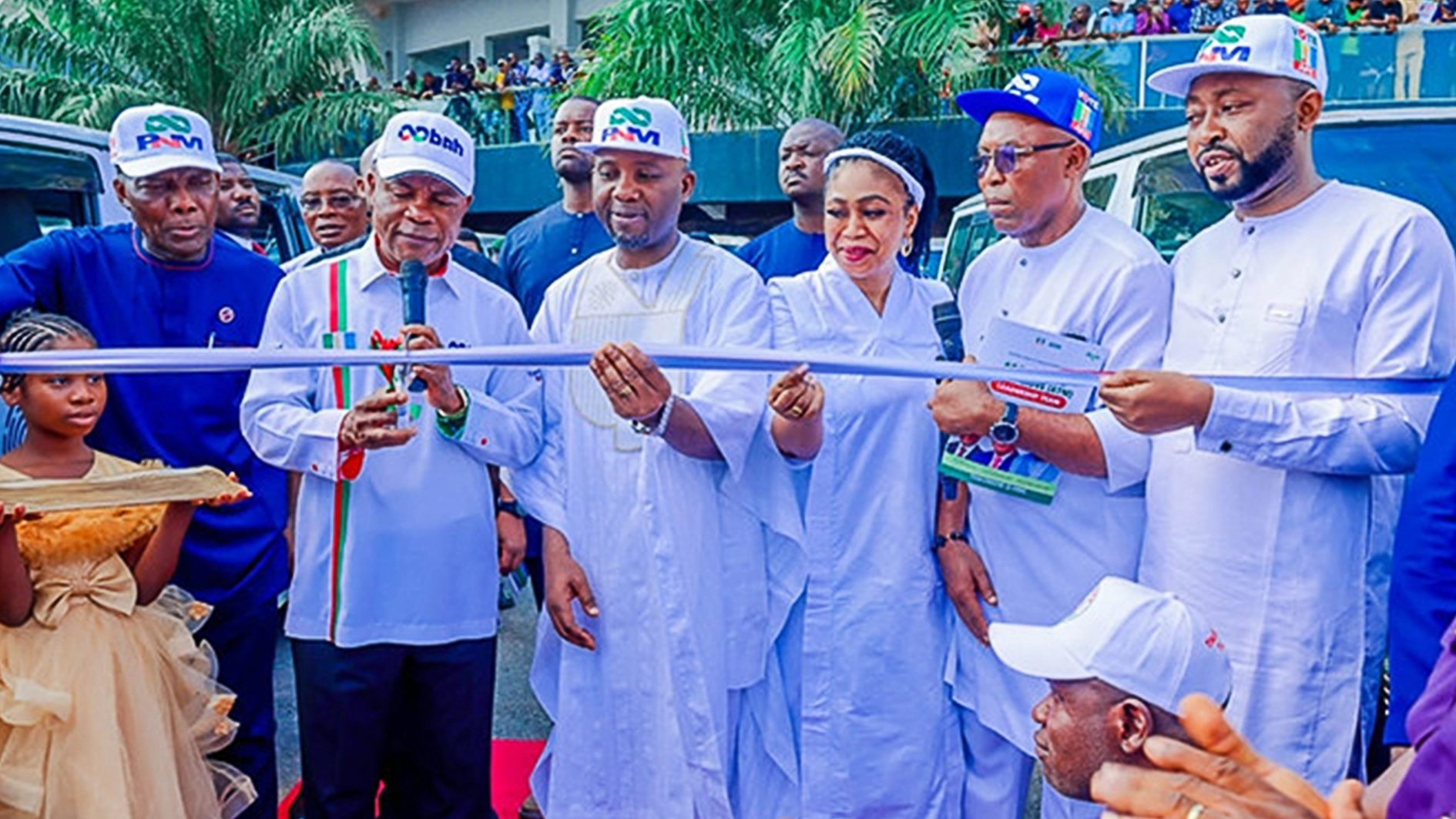
Mbah gave the insights at the weekend during the launch of As Tinubu Mbah Moves (ATM), a support group convened by the Minister of Innovation, Science and Technology, Dr Kingsley Udeh, SAN, and dedicated to the re-election of President Tinubu and Governor Mbah in Enugu.
He told the crowd: “It would have been a lot easier for any leader to just continue with the status quo and continue with business as usual. But for Tinubu, it was business unusual that led to the bold initiatives.
Mbah said: “As a person who had played very actively in the oil and gas sector, I had written quite a lot of features and articles arguing against the fuel subsidy regime long before now, for it was clear to me, even from the point of view of a major player in that sector, that the subsidy regime was not sustainable because of the economic devastation it was causing to us as Nigerians. We were just basically postponing the evil day.
“We were just digging our poverty pits continually. It would have taken a very courageous leader in his first term to say, ‘Look, if we have to build for the future, if we have to think about our children, then we must take out the subsidy, and we must also unify the exchange rate regime.’”
The Enugu governor took a swipe at the foreign exchange regime before the floating of the naira by Tinubu, describing it as a cesspool of corruption.
“We got to a point in this country where even salary earners, once they get paid, would run to the bureau de change to change it rather than hold their salary in naira. Confidence was completely eroded in the naira. Nobody wanted to touch it with the tip of their finger. And that was the recipe for a failed nation.
Uzodimma cited a survey conducted by his research team in which 85 per cent of respondents did not believe Nigeria offered citizens equal opportunities to thrive, arguing that the country’s next phase of growth depended on developing communities beyond major commercial centres.
The Imo governor, who spoke at the weekend at the inaugural Lagos Country Club Policy Dialogue with Government Leaders, held under the theme, ‘The Future Is Local: Stimulating Grassroots Economies for Inclusive Growth’, cited figures showing that 72 per cent of rural Nigerians were poor, compared with 42 per cent in urban areas.
He said his administration had constructed more than 130 roads since taking office in 2020, connecting communities and improving trade between towns.
On employment, he said more than 65,000 young people had been trained through Skill-UpImo in software development, cybersecurity, artificial intelligence and related fields, with digital skills centres across the state.