
 Get Guardian on Google
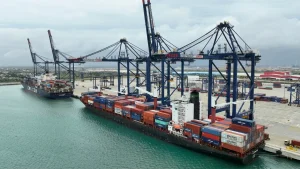
The International Monetary Fund (IMF) has warned that the ongoing war in the Middle East could worsen inflationary pressures and disrupt global trade as damage to energy production, shipping routes and supply chains pushes up food and energy prices.
In its October 2026 Regional Economic Outlook for the Middle East and Central Asia, titled “Steering Through Uncertainty: Strengthening Resilience in Challenging Times”, the Fund said the economic impact of the conflict has been uneven, with oil-exporting countries directly affected by the war facing the greatest pressure.
The conflict, which began on February 28, 2026, involving the United States, Israel and Iran, has disrupted energy production and shipping through the Strait of Hormuz, a major route for global oil trade.
The IMF projected that the economies of the Middle East, North Africa and Pakistan would contract by 1.3 per cent in 2026, before recovering to 6.6 per cent growth in 2027, assuming the conflict eases. However, growth in the Caucasus and Central Asia is expected to reach 5.2 per cent this year.
The Fund said businesses and households had adapted to the disruptions, while resilient financial markets, government support and the rerouting of supplies had helped limit the economic damage.
It noted that the ability of countries to withstand the shocks depended largely on their exposure to the conflict, economic structures and the strength of policy frameworks.
On inflation, the IMF warned that supply disruptions could drive prices higher and sustain inflationary pressures for longer in some countries, depending on the effectiveness of their policy responses.
It urged governments to strengthen their policy frameworks to prevent external supply shocks from translating into persistent domestic price increases.
The report also identified trade diversification as an important safeguard against future disruptions, noting that countries with a wider range of products, trading partners, transport options and shipping routes were better positioned to withstand supply shocks.
To strengthen resilience, the IMF advised governments to rebuild fiscal and external buffers, improve policy frameworks and expand trade links to reduce exposure to future disruptions.
It also urged countries to position their economies to take advantage of opportunities in artificial intelligence.