
 Get Guardian on Google
…Yiaga moves to check conflicting election results projections
The Independent National Electoral Commission (INEC) has insisted that independent election results tabulation must complement, rather than replace, the statutory collation process ahead of the 2027 general elections.
The commission said unofficial projections and privately aggregated figures must not be presented or communicated as officially declared election results.
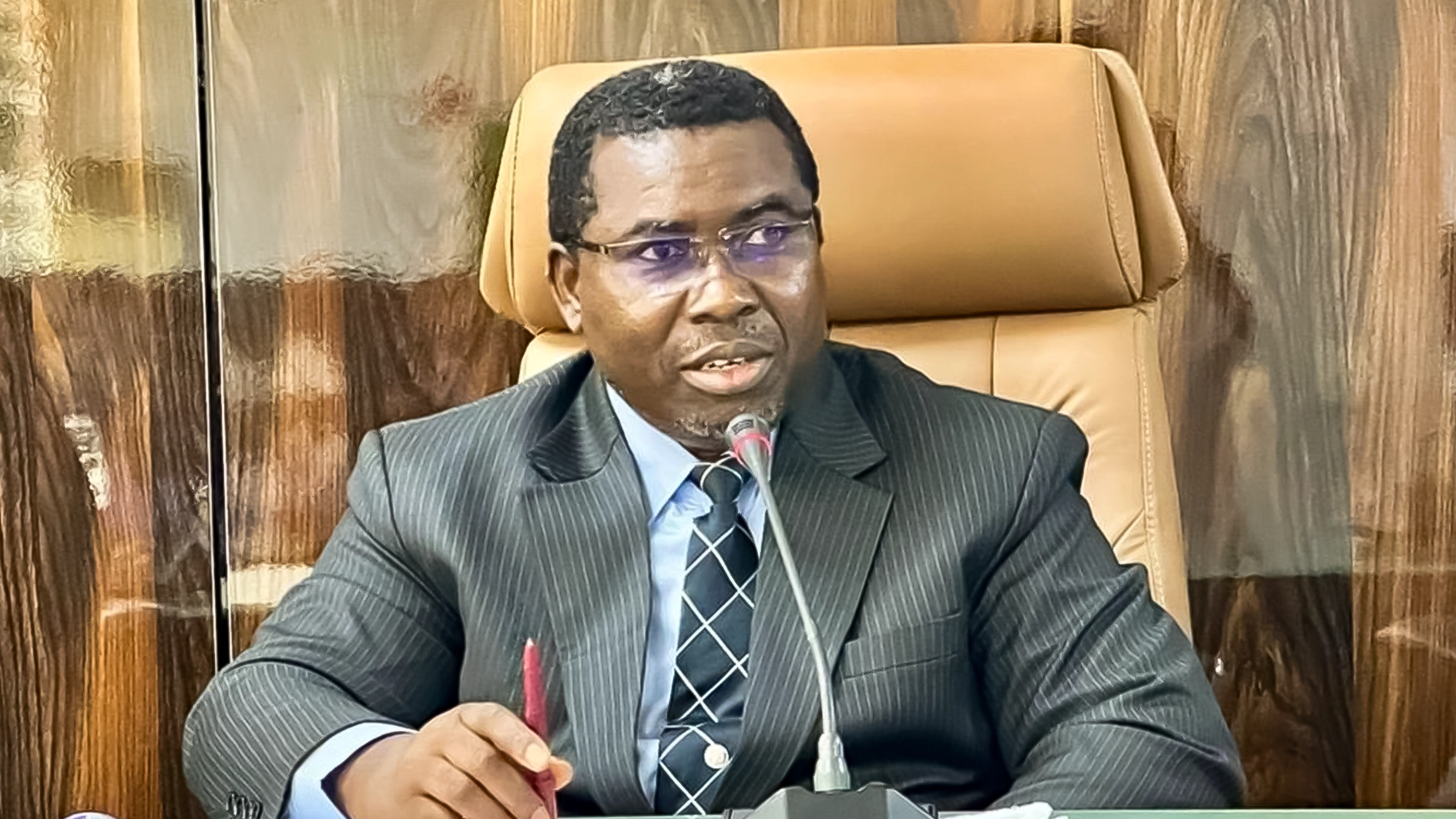
INEC Chairman, Prof. Joash Amupitan, stated this on Tuesday in Abuja at a stakeholders’ roundtable organised by Yiaga Africa to develop a Code of Conduct for Independent Election Results Tabulation ahead of the 2027 general elections.
Amupitan, who was represented by the commission’s Director of Information and Communication Technology, Bayo Boyode, said the proposed code would strengthen electoral transparency, promote responsible information management and reinforce public confidence in election outcomes.
He stressed that the commission remained the only constitutionally recognised authority responsible for declaring election results.
“Independent tabulation must not be presented as a substitute for the statutory collation process, nor should unofficial projections or privately aggregated figures be communicated as officially declared election results.
“The Commission’s position is clear: Independent verification should complement electoral accountability, not create competing centres of statutory authority,” he said.
The INEC chairman said the credibility of elections depended not only on the integrity of voting but also on the accuracy, transparency and public acceptance of the processes through which votes were counted, collated and declared.
He disclosed that the commission was strengthening the Bimodal Voter Accreditation System (BVAS), the INEC Result Viewing Portal (IReV) and its validation checks to improve the traceability of election results.
Amupitan, however, noted that technology alone could not guarantee credible elections without sound procedures and responsible political conduct.
Former INEC National Commissioner and spokesperson, Festus Okoye, called on the commission to explain the legal framework governing electronic transmission of results and the functions of the IReV portal to Nigerians ahead of the elections.
Okoye said there was a need to distinguish between the electronic upload of polling unit results to IReV and the transmission of results to the next level of collation.
He explained that Section 60(3) of the Electoral Act provided for the electronic upload of results from polling units to the IReV portal, which, according to him, was designed to allow Nigerians to follow proceedings at polling units.
He, however, said the results used for collation at the registration area level were governed by Section 60(5) of the Act, which provided for the transmission of results by presiding officers to the next level of collation.
According to him, Section 155 of the Act defines transmission as either manual or electronic, while giving INEC the responsibility to determine the procedure to be adopted.
“As of today, the electoral management body transmits that particular result manually. So, at the end of polling, what the presiding officer takes to the next level of collation, which is now the 8,038 registration areas, is the EC8A as captured at the level of the polling unit,” he said.
Okoye explained that where discrepancies were observed during collation or complaints were raised by political parties, collation officers were expected to verify the results using the EC8A forms and the physical devices deployed at polling units.
“I think that the electoral management body must clearly explain to Nigerians this particular procedure,” he said.
Chairman of the Board of Yiaga Africa, Dr Hussaini Abdu, said the initiative was necessitated by growing interest among citizens and organisations in independent election results tabulation.
He said parallel vote tabulation could strengthen electoral accountability and help verify results declared by INEC, but warned that the proliferation of organisations adopting different methodologies could create opportunities for abuse.
“When you have too many people doing it, using different methodologies, different approaches, in this age of AI and all that, we are very concerned that some of those things could be abused.
“They could have a very devastating implication for the country in terms of security, integrity of the electoral commission and so many things,” he said.
In his keynote address, Chairman of the Editorial Board of THISDAY Newspapers, Olusegun Adeniyi, said the 2027 elections required a voluntary code addressing methodology, sampling, artificial intelligence and electoral violence.
Speaking on the theme, “Navigating the Promise, Perils and Politics of Independent Result Tabulation in 2027 Election”, Adeniyi said transparency in independent results tabulation was essential to preventing conflicting figures from creating confusion.
He cited the 2022 Kenyan general elections, where different organisations adopted different sampling methods and produced varying results, as an example of the challenges associated with independent election projections.
He identified clear disclosure of methodologies, advance publication of sampling procedures, proper labelling of unofficial results and verification of information before amplification as necessary safeguards.
Director-General of the Inter-Party Advisory Council (IPAC) and National Chairman of the National Rescue Movement, Chinedu Obi, commended Yiaga Africa for initiating the independent results tabulation framework.
Obi said the initiative could help rebuild public confidence following concerns surrounding the 2023 general elections, while acknowledging INEC’s statutory responsibility to announce election results.
He, however, expressed concern over electoral violence, citing a report which indicated that 126 people had been killed across the country within 60 days of the general elections.
He called on political parties, their supporters and other stakeholders to reject violence and work towards peaceful elections.
Meanwhile, Director-General of the Institute for Peace and Conflict Resolution (IPCR), Dr Joseph Ochogwu, called for stronger enforcement of laws against electoral violence, warning that failure to prosecute offenders could encourage impunity.
Ochogwu said incidents of violence recorded during political campaigns showed the need for security agencies and other stakeholders to take preventive measures ahead of the 2027 elections.
He advocated the establishment of a dedicated electoral offences tribunal to provide a specialised judicial mechanism for prosecuting election-related crimes and political violence.
He maintained that perpetrators must be held accountable, warning that political violence could ultimately affect even those who encouraged it.