 Follow Us on Google News
 Follow Us on Google Discover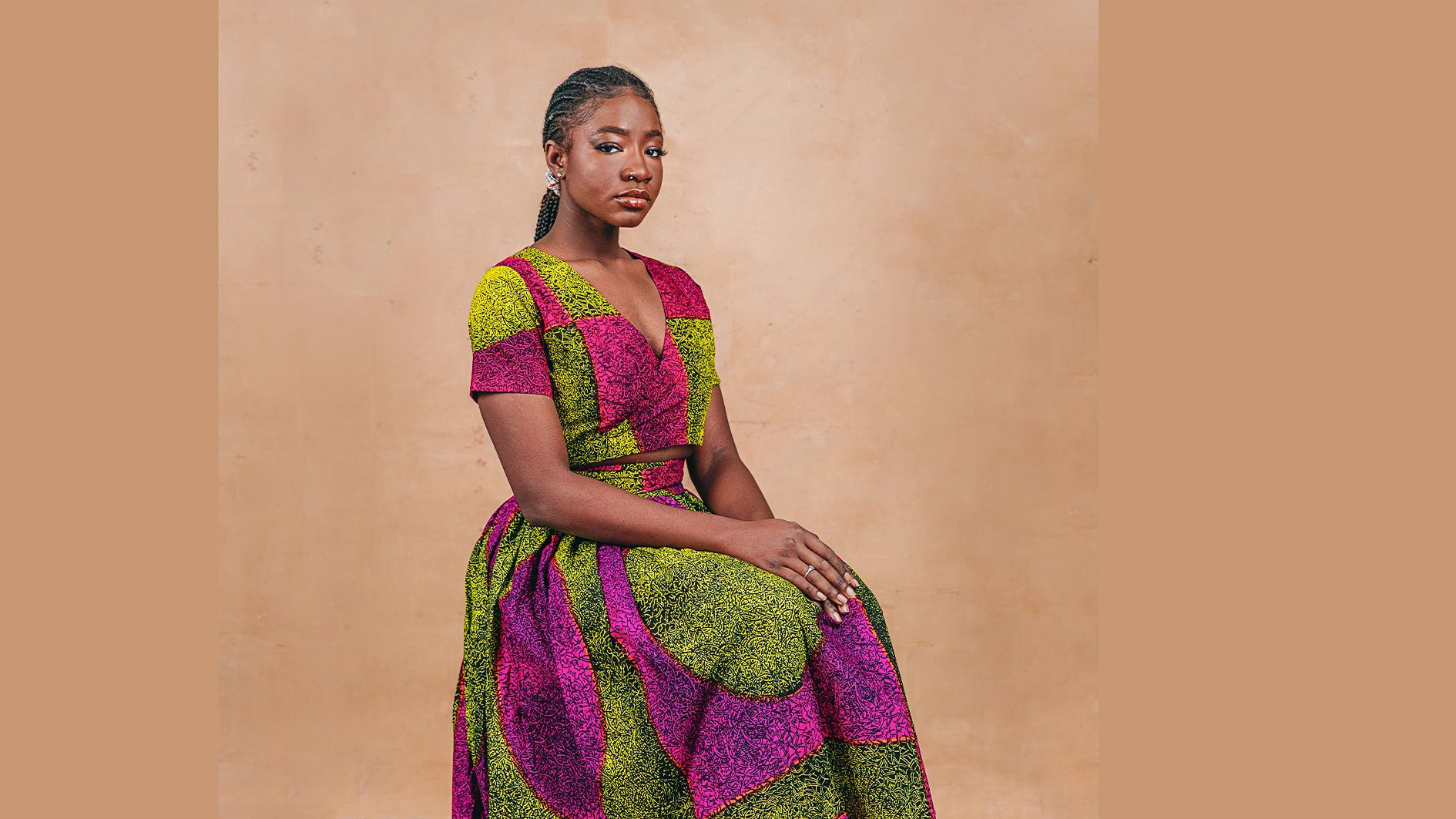
One of, if not the most enduring quality of art over the years has been culture exchange. While art is first and foremost a personal encounter, it usually takes the form of one’s environment and influences. Who you are, where you are from, and how exposed one is usually play a huge role in the final product. British based Nigerian visual artist, Aderopo Afolabi wears his influences and culture on his sleeves, playing the role of a cultural ambassador bridging Nigeria and the UK, with images carefully curated to highlight the quiet overlaps between two cultures often placed at a distance from each other.
Two projects in particular capture this bridging role, and looking at them side by side, a visual signature starts to emerge, one built as much on restraint as on colour. The first is called ‘African Textile’ which explores African identity through fashion and portraiture, investigating the cultural significance of African textile, particularly Ankara fabric, while highlighting the growing presence of African fashion within Britain and across the global cultural landscape.
Through ‘Hijab Women,’ Aderopo examines identity, representation, and belonging among hijab wearing Muslim women in Britain. He challenges appearance based discrimination and the stereotypes that continue to shape public perception. African Textile on the other hand explores the intersection between fashion and identity. Using his subject as a conduit for a representation of confidence in oneself in a place that might, purposefully, or inadvertently challenge them everyday. This is very much in line with his practice of using his art to advocate for underrepresented communities and women whose stories are often overlooked or misrepresented.
One of the key images in ‘African Textile’ shows a young woman seated against a warm, sun-baked terracotta backdrop, her posture relaxed yet composed, one hand resting easily over her knee. She wears a two-piece Ankara ensemble, a wrap-style crop top and full skirt, in a bold combination of chartreuse yellow, magenta, and deep purple patterning. Her jewellery is deliberately understated, delicate gold earrings, a nose ring, a single subtle ring, small enough that the Ankara print itself remains the loudest thing in the frame. As Aderopo explains, the project educates the Western audience on African fashion, bringing its beauty into the limelight, a revival that this project helps celebrate and spotlight. The image was selected as a Portrait of Britain Winner in 2023 and chosen as the front cover of Portrait of Britain Vol. 5.
That same instinct, bold pattern paired with quiet accessorising, reappears in ‘Hijab Women,’ though here it extends further into the clothing itself. In one frame, two women share an easy exchange on a wooden bench, one in warm brown, caught mid-laugh, the other in slate blue, listening with a composed smile, her hands folded over a crocodile-embossed bag, her only visible adornment. Elsewhere, a lone woman stands framed between weathered stone columns, her black hijab and olive abaya, embroidered along one sleeve in shimmering teal and gold, the sole flourish against an otherwise covered, unbroken silhouette. The project, Aderopo says, challenges stereotypes and appearance based discrimination, presenting hijab wearing women as stylish and self-possessed.
What stands out across both projects is that Aderopo’s idea of glamour rarely reaches for excess. Whether it is a nose ring left to stand alone against a busy Ankara print, or an entire look built around a single embroidered sleeve against an otherwise covered silhouette, his images seem drawn to modesty as its own kind of statement, confidence expressed through what is withheld as much as what is shown. Some of that restraint surely belongs to the women themselves, hijab already carries its own grammar of modesty, and it is worth asking how much of this quality is Aderopo’s eye and how much is simply the community’s existing practice, captured rather than composed. But the consistency of it, showing up again in a project as different as Ankara portraiture, suggests a deliberate sensibility at work, dignity read through restraint rather than display, carried into a British setting where that same restraint reads as something quietly novel. It may be part of why his work has resonated as strongly as it has in the UK.

Aderopo’s work in this space has been widely recognised. His Black Women and Afrocentric Fashion series won 1854 (British Journal of Photography)’s Portrait of Britain 2022, and was later chosen by 1854 and Hoxton Mini Press as the front cover of Portrait of Britain Vol. 5. The series was also shortlisted for The Royal Photographic Society’s IPE 164 in 2022.

