Get Guardian on Google
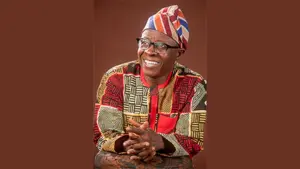
By Mahfouz A. Adedimeji
On Friday, October 30, 2026, I had the opportunity of delivering the keynote address to the 45th International Convention of the Association of Nigerian Authors (ANA) in Abuja. The convention, aptly themed “Literature, National Security and the Place of Nigeria in the World”, was a remarkable platform for cross-fertilising ideas with the creme-de-la-creme of the Nigerian literati, those who I referred to as “academic avatars and literary legends”, including Professors Emeriti Olu Obafemi and Femi Osofisan.
The invitation jogged my memory back to the publication of my first collection of poems, “The Word or the Sword?” in 1998, publishing more poems between 1999 and 2000 in READ mini-magazine, serving on the ANA Editorial Board and publishing poems in the ANA Review of 2002, publishing my second volume of poems, “Five Alive and 55 Other Poems”, in 2003 before attending the 23rd International Convention of ANA in Lokoja in 2004, where I presented a paper on “Nigerian Pidgin as a National Language: A Thematic Appraisal of Segun Oyekunle’s Katakata for Sofahead and Ola Rotimi’s Grip Am”.
As literature is life, I reminisced that I lived it fully as the page editor of “Sweet Arts” in the National Pilot newspaper, where my, and others’, literary pieces were published; teaching Creative Writing to generations of undergraduate students in the noughties and exposing them to new works and emergent writers, including a future President of ANA, Dr Usman Oladipo Akanbi; being a Chief Judge of a poetry competition on radio and publishing more entries in literary volumes afterwards. I reminded myself that all these were foundational to the eventual gravitation towards media practice, public relations, peace research and peacebuilding activities, apart from reviewing literary and non-literary works all along.
Diving Inwards
A casual glance at the theme would suggest having three disparate elements of the contemplative world of literature, the operational domain of the military, intelligence and law enforcement agencies and the permutations of foreign policy and international relations. Yet, a closer look would reveal the inter-connection of the power of imagination, the security of the state and the destiny of a nation. While knowledge is needed in all these and other domains of life, imagination is more critical. And as Albert Enstein said, “imagination is more important than knowledge; for knowledge is limited to all we know and understand, while imagination embraces the entire world.” Imagination is the bedrock of literary creativity.
Therefore, literature is not merely an ornament of civilisation or a form of entertainment; it is an instrument of evoking national consciousness, an early-warning system against social instability, a repository of national memory, an advocate of justice and an indispensable resource for global influence as well as an engager with the human condition in which insecurity emerges. It is through literature that Nigeria has won the Noble Prize courtesy of Wole Soyinka, the only Nobel prize we can lay claim to, and it is through it that we can avoid the Adichiean danger of a single story.
That writers can be prophets is not a theoretical postulation but a historical reality. When Chinua Achebe wrote his “A Man of the People” and he gave its advance copy to his colleague, John Pepper Clark, the latter was thrilled by what he read, remarking that everything Achebe wrote about in the novel had happened, except the coup. The following day, the January 1966 coup happened and literature served as an early warning. Paying attention to literature would allow leaders to navigate the complexity of human mind and the psychological dimensions to insecurity, a point I reiterated during the panel discussion.
As literature is language in action, literature forms, informs, reforms and transforms societies.
Literature also remembers, questions, warns, humanises and heals. Nations are ultimately held together not only by laws and coercive institutions but also by shared and contested narratives of ideology and identity, the essence of who “we” are and where “we” belong.
Moving Forward
What do we need to do? First, I think we must deliberately integrate literature into national security and peacebuilding policies. The creative industry and the arts, which translate into cinematic and film productions, should be channelled towards building a peaceful and safe country, not just attracting views, winning awards and making profit. Collaborations should be forged in such a way that our understanding of (in)security incorporates the narratives, grievances, cultural contexts and social experiences of affected communities.
Second, reading, writing, critical thinking, ethical reasoning, civic consciousness and intercultural understanding should be made central to the development of responsible citizens. A major reason for which the world is in turmoil today is that we over-glorify the quantitative aspects of science and technology at the expense of the qualitative nourishing of human heart and creating environments that improve the intrinsic human condition.
Then, we must strengthen the publishing and reading ecosystem while encouraging writers with more awards and encouragements. As a matter of fact, books and authors should be accorded respect in a country that aspires to thrive in a global knowledge economy while we must deploy literature to peace education, social cohesion and national security. Our schools and institutions should encourage students to read works from different Nigerian communities and African societies. Literary festivals, drama competitions and cultural exchanges should be promoted.
Furthermore, government at all levels must invest in the globalisation of Nigerian cultural products. International literary exchanges, publishing partnerships, digital distribution and cultural diplomacy should become deliberate elements of our foreign policy. Besides, our universities must lead interdisciplinary research and create platforms where literature, security studies, international relations, political science, communication, psychology and development studies intersect. There is no doubt that the days of living in academic silos are gone and scholars need to explore how narratives influence radicalisation, how language shapes conflict, how literature promotes reconciliation and how cultural diplomacy strengthens international influence.
Prof. Adedimeji is the Vice Chancellor of the African School of Economics (The Pan-African University of Excellence), Abuja, and a Distinguished Ambassador of the University of Ilorin.
It is equally important that government recognise that good governance is itself a security strategy. Leaders at all levels must demonstrate through their actions that every Nigerian has dignity, value and a stake in the national project. The human security approach that allows catering for people’s economic, food, health, environmental, personal, community and political domains of security is particularly significant.
Lastly, Nigerians must re-embrace reading and appreciate that reading makes a full man, conference a ready man and writing an exact man, a point stressed by Francis Bacon as far back as 1597. A reading country is a leading country and groups, associations and societies should revive reading clubs to broaden horizons and deepen insights beyond the chatter of the social media.
In essence, the 45th International ANA Convention might have ended but its message remains resonant, thanks to the Usman Akanbi-led Administration. The message is that achieving national security is protecting more than territory. It involves protecting the conditions under which people can live meaningful lives together. As insecurity originates from the mismanagement of minds and human relationships, overcoming it requires leveraging imagination, creativity, ideation and the compelling power of words to make humans more humane and converting literacy and literature to building a peace haven and security infrastructure for Nigeria as a microcosm of Africa.
Prof. Adedimeji is the Vice Chancellor of the African School of Economics (The Pan-African University of Excellence), Abuja, and a Distinguished Ambassador of the University of Ilorin.