 Follow Us on Google News


 Follow Us on Google Discover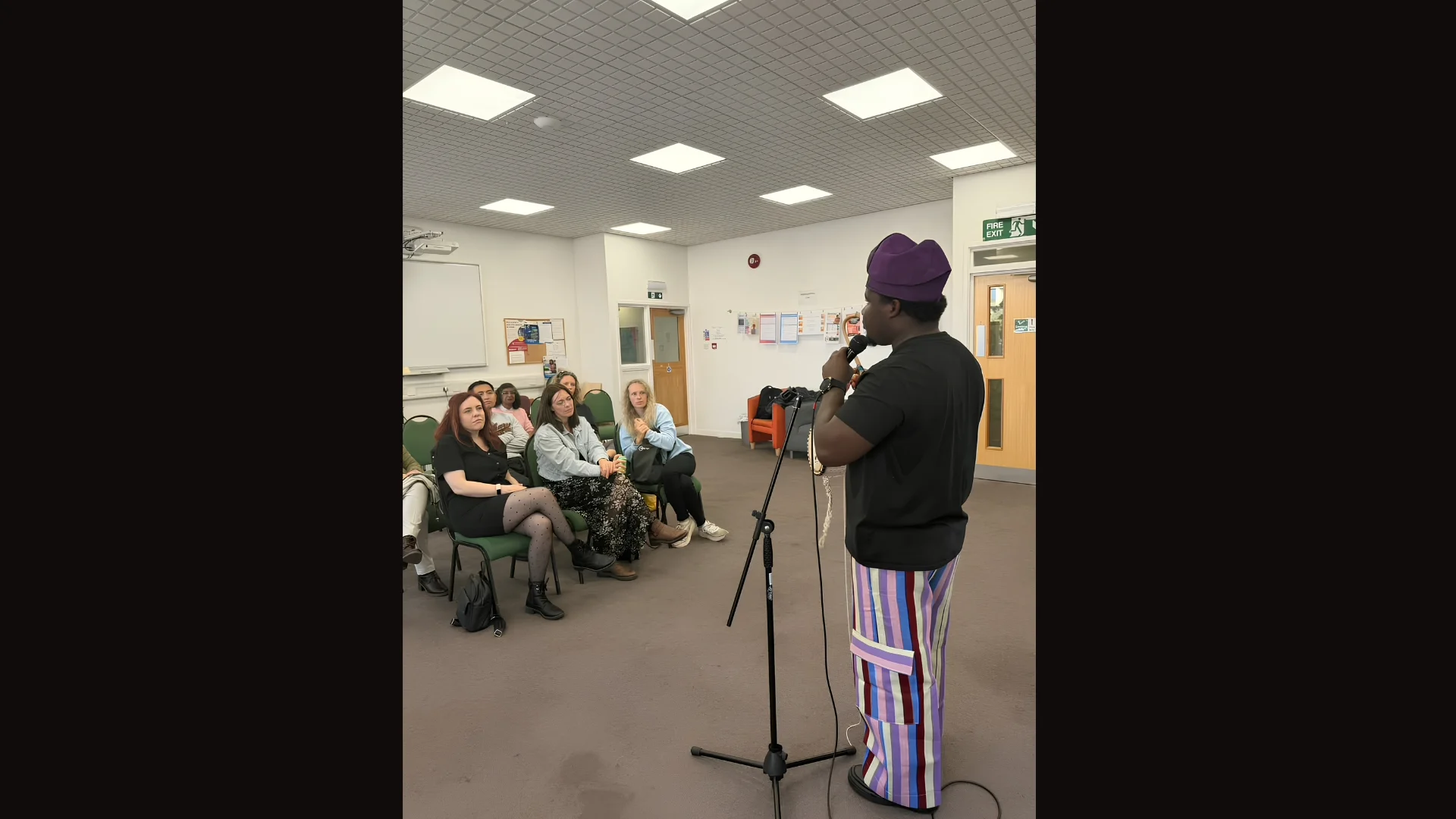
Oluwafemi Adeosun’s talking drum performance at the SADACCA Castlegate Festival was a performance that spoke for itself. In a festival with different forms of creative expression, the talking drum gave the audience something that was both musical and cultural. Oluwafemi, whose stage name is “ObanlaFeranmi”, appeared onto the stage with his finely weaved drum and quickly established that this was going to be more than just a simple drumming performance.
One noticeable aspect of the performance was ObanlaFeranmi’s confidence in handling the instrument. Before getting fully into the drumming, he gave some background story about how talking drum came about, he also explained its importance as a traditionally used drum and different ways it could be used. This brief story and explanation make the session both educational and entertaining, helping the audience understand the cultural significance for an otherwise unfamiliar instrument.
ObanlaFeranmi appeared confident and comfortable throughout the performance. He handed the talking drum naturally, using his hands and the curved drum stick to create different sounds and rhythms. His presentation made it clear that he is familiar with the instrument and understood how to use it to hold the audience’s attention. What made the performance interesting was the way he combined the drum with his own presence. He did not simply stand still and play from beginning to end. He used his voice facial, facial expressions and hand movements to interact with the audience.
The talking drum was itself the strongest part of his performance, as it produced different pitches which allows it to imitate the sound and rhythm of speech. ObanlaFeranmi showed good control of the talking drum, bringing out its different sounds with confidence. A steady rhythmic loop played in the background provided a base for the performance and helped maintain the flow as he played. However, the backing rhythm did not take away the shine of the talking drum. Instead, it supported the performance and allowed the drum remain the main focus. The instrument almost seems to have a voice of its own, giving the performance a distinct character that would have been difficult to achieve with some other percussion instrument.
The performance also showed the cultural side of the performance. ObanlaFeranmi’s traditional clothing and the talking drum worked together naturally. It did not feel as though the cultural elements had simply been added for appearance. They were part of the performance itself. Seeing a traditional Yoruba instrument being played in Sheffield before people of different works of life gave the performance a wider meaning. It showed how music and culture can travel from one place to another and still connect with people.
However, it is important to note that the performance was not without its weaknesses. There were moments when the energy seemed to drop, and this suggests that the performance could have built towards a stronger ending. The talking drum is capable of creating a lot of excitement, so a clear build-up towards a final high point could have left a bigger impression on the audience.

Despite this, the intimate setting worked well for the performance. The audience was close enough to observe ObanlaFeranmi playing and appreciate the skill involved. The intimate performance suited the music style, making the audience feel connected to the performer. It also added a strong African cultural element to Castlegate Festival beyond entertainment.
Overall, Oluwafemi Adeosun delivered an engaging talking drum performance. From his introduction to his skilled control of the drum and interaction with audience, the performance was beautiful to watch. His performance gave the audience an enjoyable experience while introducing them to an important aspect of Yoruba culture.

