 Follow Us on Google News
 Follow Us on Google Discover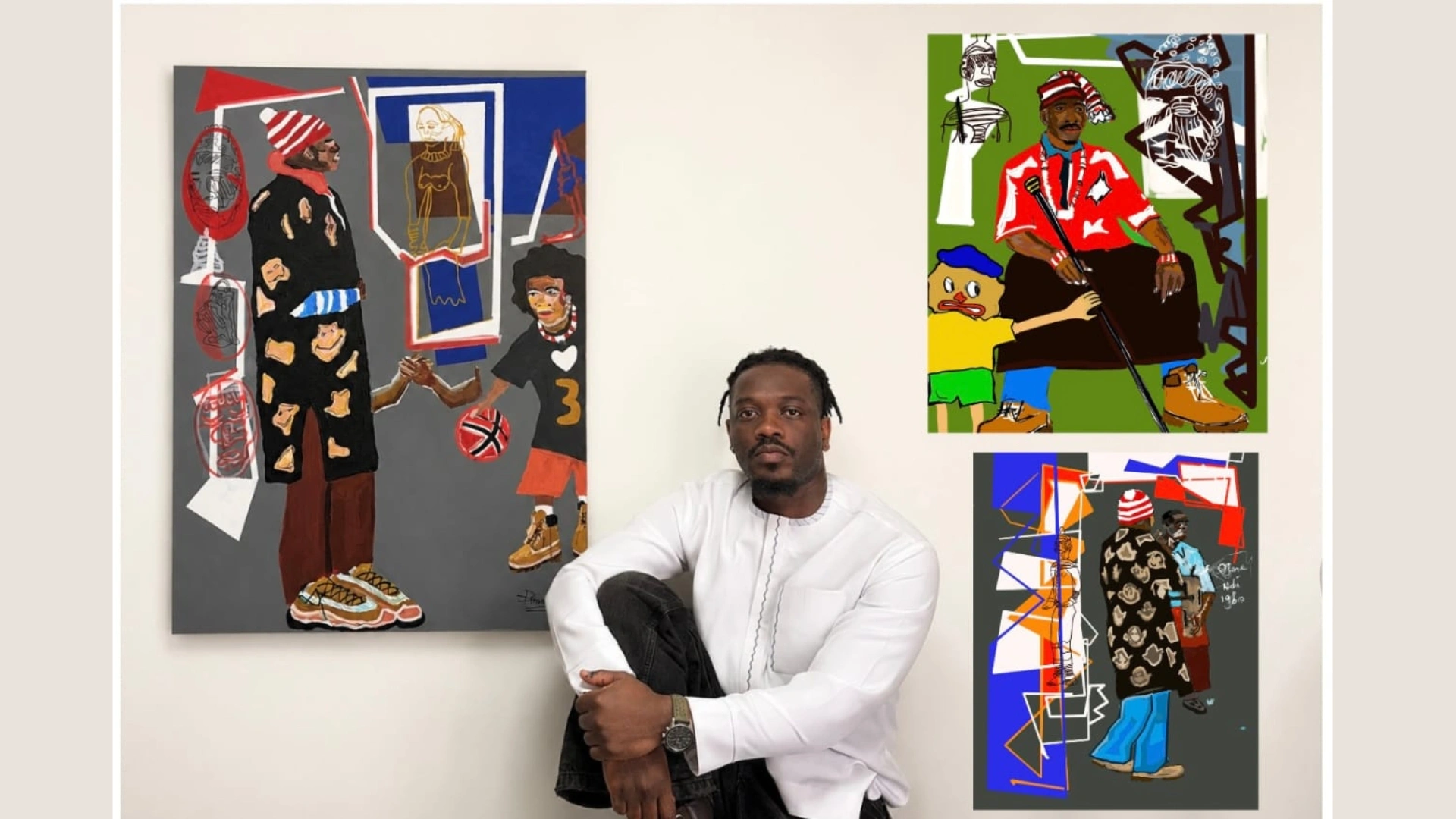
In Between Memory & Modernity, Merenini Chiaka presents an exhibition that is less concerned with preserving culture than with examining how culture quietly changes. Rather than portraying Igbo identity as something under threat of extinction, the artist explores how it is continually reshaped through everyday choices, language, fashion, ceremonies and shifting social values.
It is this understated approach that gives the exhibition its strength. Chiaka avoids nostalgia and refuses to romanticise the past. Instead, he focuses on the subtle moments through which cultural transformation takes place: a child responding in English rather than Igbo, champagne replacing palm wine at a traditional wedding, or indigenous attire sharing space with Western fashion. These scenes are more than carefully composed paintings. They become visual records of a society negotiating its place between inherited traditions and contemporary realities.
Among the exhibition’s most striking ideas is its exploration of the phrase, “You sound too Igbotic.” Once dismissed as harmless banter, Chiaka reframes it as evidence of a deeper cultural tension. The expression becomes a metaphor for the complex pressures surrounding language, identity and belonging, particularly for younger generations navigating modern aspirations without entirely abandoning their roots.
What distinguishes Between Memory & Modernity is its refusal to reduce this conversation to a simple choice between tradition and progress. Chiaka recognises that culture has never been static. Instead of advocating cultural purity, he asks whether societies can embrace change without losing the values that once defined them.
That question resonates even more strongly because of the exhibition’s context. Its presentation at the Igbo Arts Festival UK and the Bradford African Festival places these conversations within diaspora communities, where language, heritage and identity often become even more significant across generations. In that setting, the works function not simply as artistic representations of Igbo life but as catalysts for dialogue between parents, children and communities negotiating multiple identities.
The exhibition also succeeds because it resists offering easy answers. Rather than mourning cultural change or celebrating modernity uncritically, Chiaka invites viewers into a space of reflection. His paintings ask difficult questions that linger long after the exhibition ends. Which aspects of culture deserve preservation? Which changes represent healthy evolution? At what point does adaptation become cultural amnesia?

In contemporary African art, discussions of identity are often framed as a contest between authenticity and globalisation. Chiaka rejects that binary. His work suggests that culture survives not by resisting change but by making conscious decisions about what should be carried into the future.
Between Memory & Modernity ultimately reminds us that memory is not an obstacle to progress. It is the foundation upon which meaningful progress is built.
It is a quiet exhibition, but one that speaks with remarkable clarity about one of the defining questions facing contemporary African societies: how to embrace the future without forgetting who we are.

