 Follow Us on Google News


 Follow Us on Google Discover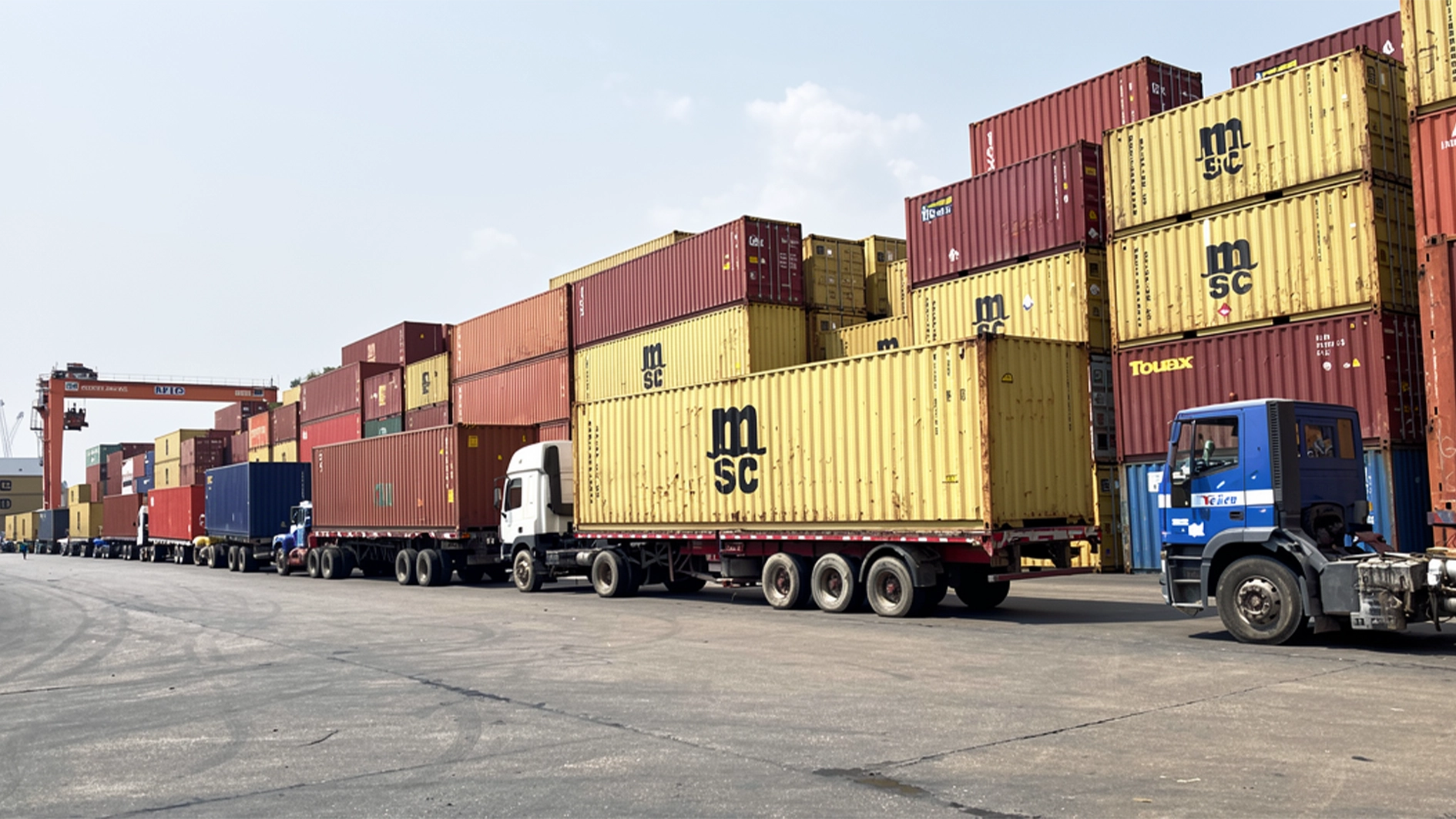
Stakeholders said the Federal Government’s open border policy for transit goods to the Niger Republic through the Benin Republic and Kebbi state, would increase cargo volumes at Nigeria’s ports, create jobs for freight forwarders and increase revenue generation for the government.
They also said Nigeria would begin to benefit from transit fees, shipping charges, terminal handling charges and other port-related revenues, adding that the Federal Government’s directive would reposition the country as a regional logistics and trade hub in West Africa.
Reopening of the Tsamiya–Sagbana border crossing between Kebbi state and the Republic of Benin is aimed at improving facilitation of goods movement, supporting legitimate trade and the passage of about 2,000 trucks that had been stranded at the border for several months.
This was disclosed by the Controller General of Customs, Dr Bashir Adeniyi.
The border closure had put about $1.3 billion worth of trade at risk along the trans-Saharan corridor, which connects all landlocked neighbours in the Sahel region and six African countries.
Chief Executive Officer of the Centre for the Promotion of Private Enterprise (CPPE), Dr Muda Yusuf, said the directive is expected to enhance activity and increase cargo throughput at the ports and boost government revenue.
Yusuf said the policy would also strengthen Nigeria’s maritime sector by increasing the volume of transit cargo handled at the ports, which he described as more accessible for goods destined for Niger than other countries’ alternative routes.
“Transit cargo to the Niger Republic is easier from Nigerian ports than from other countries’ ports. This will increase the volume of activities in our ports because we handle the transit cargo,” Yusuf said.

Yusuf explained that higher cargo throughput would translate into more business and income for operators across the port ecosystem, including shipping companies, freight forwarders, clearing agents and other service providers, with positive spillovers for government revenue through the regulatory agencies.
Deputy Chairman, Clearing and Forwarding Trade Group at the Lagos Chamber of Commerce and Industry (LCCI),
Dr Ikenna Nwosu, explained that Nigeria had previously lost its transit status to neighbouring countries following years of congestion at the Apapa ports and poor road infrastructure.
Nwosu said in the past, landlocked countries used Nigerian ports as entry points for their imports before moving the goods by road across the country’s borders.
He said the directive would also stimulate trade across the sub-region and create more business opportunities for Nigerian clearing agents and freight forwarders, who would handle the documentation and processing of the transit goods.
Chairman of Widescope Logistics International Group, Dr Segun Musa, described the directive as a positive step for regional trade and economic integration, adding that it would serve as a form of trade facilitation within West Africa and strengthen cross-border commerce among countries in the sub-region.
Musa also noted that the directive aligns with ongoing efforts to promote economic cooperation and improve the flow of goods across borders, particularly enhancing the Africa Continental Free Trade Agreement (AfCFTA).
According to him, the decision would create new opportunities for business integration, particularly in the exchange of goods among West African states, while also opening up more job opportunities along the logistics and supply chain corridors.
President of the National Council of Managing Directors of Licensed Customs Agents (NCMDLCA), Lucky Amiwero, stressed that the movement of transit cargo through approved routes is a normal international trade practice that should never have been disrupted by the Federal Government in the first place.
According to the maritime expert, the decision to reopen the route should have been taken much earlier, as the closure disrupted the Economic Community of West African States (ECOWAS) trade arrangements, AfCFTA and undermined Nigeria’s obligations within the regional bloc.

