 Follow Us on Google News


 Follow Us on Google Discover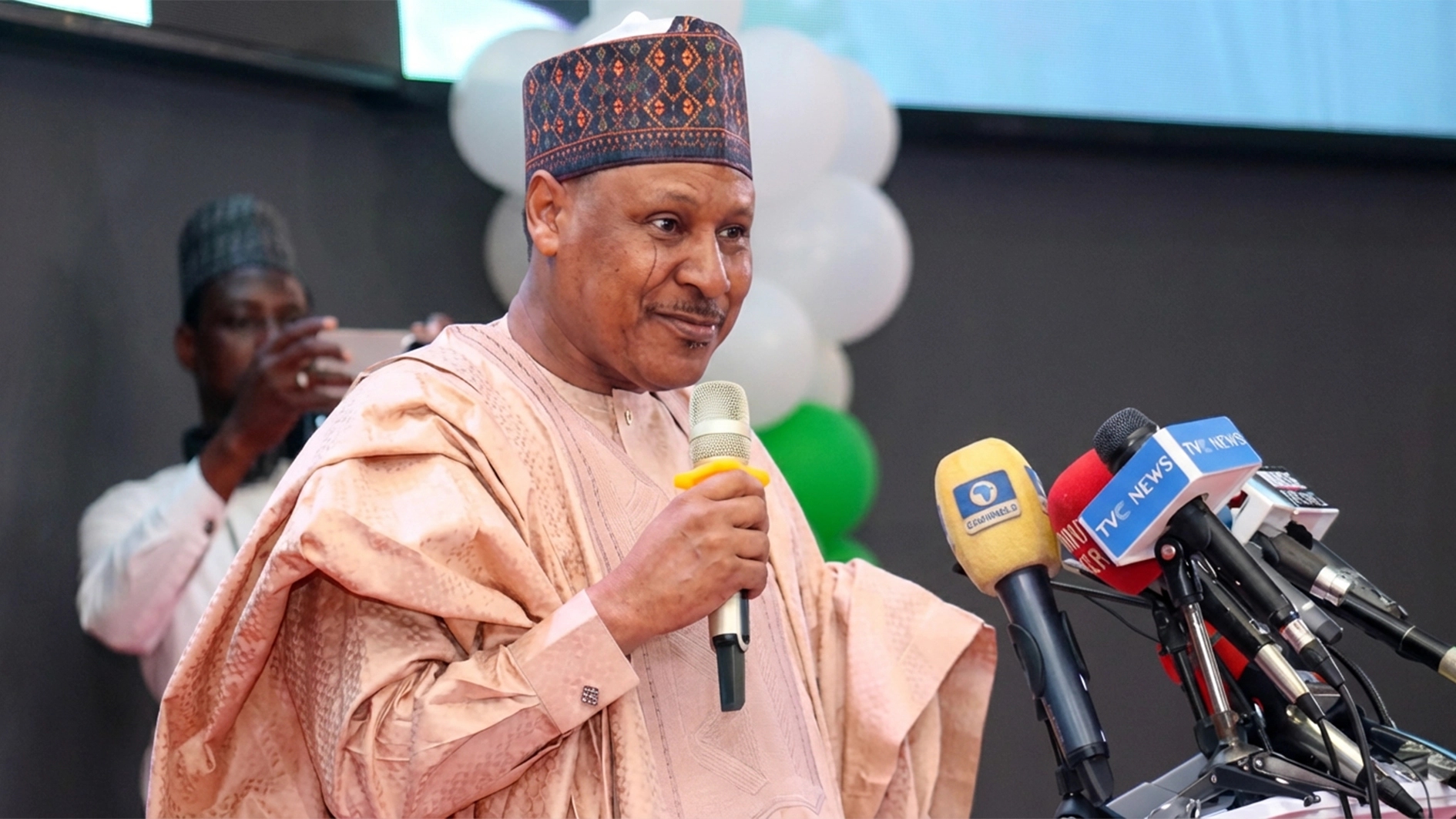
The Federal Government has challenged universities and other tertiary institutions in the North Central to intensify research, innovation and industry collaboration to unlock the region’s economic potential.
Minister of Information and National Orientation, Mohammed Idris, gave the charge on Thursday at the 2026 Tertiary Education Trust Fund (TETFund) North Central Zonal Town Hall Meeting held in Lokoja, Kogi State.
Idris said tertiary institutions could no longer focus solely on producing graduates but must become centres for solving economic and social challenges through research and innovation.
He noted that the North Central, with its vast agricultural resources, mineral deposits, energy potential and strategic location, required institutions capable of producing the expertise needed to transform those resources into jobs, businesses and sustainable development.
According to him, universities, polytechnics and colleges of education in the region must align their academic programmes and research with opportunities in agriculture, agro-processing, mining, energy, manufacturing, tourism and other sectors.
The minister stated that the region’s institutions should work closely with the North Central Development Commission and other stakeholders to ensure that research and skills development contributed directly to regional development.

He said, “Our universities, polytechnics and colleges of education must therefore be closely connected to these opportunities, producing the scientists, engineers, agricultural experts, technicians, entrepreneurs and other professionals required to unlock them.”
Idris stressed that the Renewed Hope Administration of President Bola Ahmed Tinubu had placed human capital development at the centre of its development agenda, with the Tertiary Education Trust Fund (TETFund) serving as one of the major instruments for delivering the commitment.
He disclosed that TETFund had approved approximately N2.53 billion for each public university, N1.87 billion for each polytechnic and N2.06 billion for each college of education under its 2026 intervention.
He said the allocations should translate into improved learning and research facilities, including laboratories, lecture halls, libraries and other infrastructure, rather than remain as mere budgetary figures.
The minister cited the commissioning of TETFund-funded projects across the country as evidence of the government’s investment in tertiary education, including a new School of Science Complex at the Nasarawa State College of Education, Akwanga.
Idris, however, noted that the infrastructure alone could not address the challenges facing Nigeria’s tertiary education system, stressing the need to focus on what happens inside the facilities.
“The challenge before Nigerian tertiary education today is no longer simply about constructing buildings. We must ask what happens inside those buildings,” he said.
He questioned whether institutions were producing graduates with the skills required by employers, solving problems in agriculture, healthcare, energy, technology and manufacturing, and successfully commercialising research and innovations.
The minister also called for stronger partnerships between tertiary institutions and the private sector, saying industry should be involved in curriculum development, research, technical training and innovation rather than making occasional appearances on campuses.
He said the country’s agricultural sector needed research into improved seeds, irrigation, mechanisation, food processing and storage, while the mining sector required scientific research, responsible extraction and local value addition.
He added that the development of growing cities in the region also required expertise in construction, transportation, technology, environmental management and urban planning.
Idris said the government was expanding access to tertiary education through the Nigerian Education Loan Fund (NELFUND), while also promoting technical and vocational education, digital skills and entrepreneurship.
He emphasised that education policy must evolve with technological changes, particularly as artificial intelligence, automation, digital platforms and emerging technologies reshape the workplace.
According to him, Nigerian institutions must prepare graduates to participate in the emerging digital economy rather than risk being displaced by technological advancement.
The minister further linked investment in education to national security, saying young Nigerians equipped with quality education, relevant skills and opportunities would be less vulnerable to criminality, extremism and hopelessness.
He urged TETFund to ensure that the recommendations from the town hall meetings resulted in practical priorities, clear responsibilities and measurable outcomes.
He urged institutions in the North Central to use the town hall to speak frankly about the challenges confronting them and identify areas requiring urgent intervention.
The minister said the ultimate objective should be to ensure that tertiary education became a stronger driver of research, innovation, employment and economic development across the region.

