 Follow Us on Google News
 Follow Us on Google Discover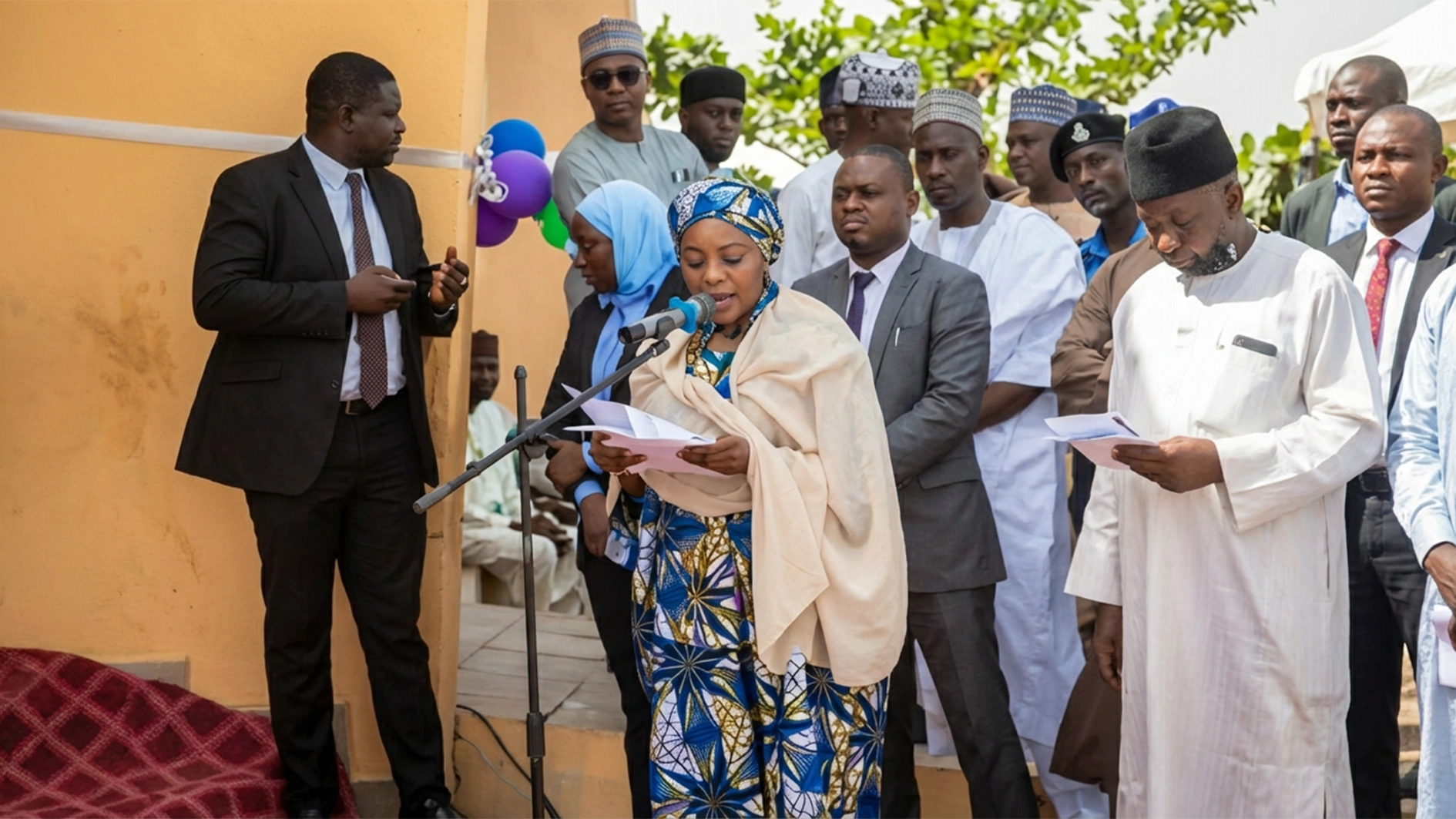
The Federal Government has reiterated its commitment to advancing education in the country through digital technology.
The Executive Secretary of the Universal Basic Education Commission (UBEC), Dr Aisha Garba, gave the assurance while inaugurating a multi-million naira Smart School in Hadejia, Jigawa State.
Speaking during the commissioning ceremony and handover of the Smart School to the Jigawa State government on Wednesday, Garba said the event represents another significant milestone in the Federal Government’s ongoing efforts to reposition basic education as a strong foundation for national development.
The Smart School integrates ICT-enabled classrooms, digital learning resources, modern laboratories, e-libraries, robotics and innovation hubs, and inclusive facilities for learners with special needs.
The Guardian reports that the Hadejia Smart School brings the number of UBEC Smart Schools to 30.
Garba disclosed that the UBEC Smart School Programme is a flagship reform initiative designed to transform teaching and learning within the basic education sub-sector through the strategic deployment of modern infrastructure, digital technology, and innovative pedagogy.
She reaffirmed UBEC’s commitment to equipping the Nigerian child with the knowledge, skills, and values required to thrive in the 21st century, adding that the smart education programme reflects the Federal Government’s resolve to ensure that Nigerian children, irrespective of location or background, have access to quality, inclusive, and future-ready education.
She highlighted the imperative of smart education, saying the conception of the UBEC Smart School Initiative was informed by the urgent need to change the narrative of learning outcomes in public basic education schools.
She added that the schools were intended to serve as a benchmark of excellence, providing a model that states can replicate to improve the quality of education delivery nationwide.
The Executive Secretary explained that through this initiative, the Commission, in collaboration with State Universal Basic Education Boards and with the support of the Federal Ministry of Education, is laying a solid foundation for technology-driven learning at the formative stages of education.
She expressed gratitude to the Ministers of Education, Dr Maruf Tunji Alausa and Professor Suwaiba Sa’id Ahmad, for their outstanding leadership and guidance in the education sector, especially their support for the implementation of the smart education programme in basic education.
“These schools are designed to promote creativity, critical thinking, collaboration, and the acquisition of relevant skills in Science, Technology, Engineering, Arts, and Mathematics (STEAM), thereby preparing learners for a rapidly evolving global environment.
“The UBEC Smart School commissioned today in Hadejia is a State Model Smart School (Model II), thoughtfully designed to cater for learners at the pre-primary, primary, and junior secondary levels, including children with special needs.
“The school is equipped with well-structured administrative and academic blocks, smart classrooms, e-libraries, science and introductory technology laboratories, robotics and vocational laboratories, health facilities, play areas, water and power infrastructure, and a secure learning environment. These facilities collectively provide a conducive atmosphere for effective teaching and meaningful learning,” she stated.
Garba noted that beyond infrastructure, the Smart School Programme places strong emphasis on quality teaching and effective school management.
According to her, while the responsibility for staffing rests with the states, UBEC remains committed to supporting capacity building through training, ICT skills development, and professional guidance to ensure that only qualified and competent personnel are engaged in managing and delivering instruction in these schools.
She lauded the Governor of Jigawa State, Umar Namadi, for his unwavering support for basic education and the strong collaborative partnership that facilitated the establishment of this Smart School, expressing hope that the school would serve as a model of excellence and a catalyst for educational transformation in Jigawa State and beyond.

“The provision of land, security, and effective coordination by the State Government clearly demonstrates its firm commitment to improving learning outcomes and expanding access to quality education for the children of Jigawa State,” she stated.
The UBEC boss further noted that the commissioning of the Smart School is not an end in itself, but the beginning of a new phase, maintaining that it is the collective responsibility to ensure the effective utilisation, proper maintenance, and long-term sustainability of the facility so that it delivers the intended impact on teaching quality, learner performance, and community development.
“The UBEC Smart School in Hadejia stands as a symbol of innovation, hope, and progress. It represents our shared commitment to equipping the Nigerian child with the knowledge, skills, and values required to thrive in the 21st century,” she stated.

