 Follow Us on Google News



 Follow Us on Google Discover

A three-month HumAngle investigation, conducted between July and September 2026, reveals how Boko Haram and the Islamic State West Africa Province (ISWAP), despite their rivalry and operational differences, continue to reproduce the structures that sustain their insurgencies. Ahmad Salkida in collaboration with Guardian Digital Investigates writes.
Introduction
Nigeria has spent nearly two decades fighting Boko Haram and its factions, killing commanders, reclaiming territories, receiving thousands of surrendering insurgents and resettling displaced populations. These developments represent important military and political gains. Yet, beneath the official narrative of progress, a more enduring threat is taking shape. Armed groups are raising children within their ideological systems, organising families into communities, building institutions that survive leadership losses and preparing another generation to sustain a conflict that has already devastated millions of lives.
HumAngle estimates that more than 300,000 people across the Lake Chad Basin profess membership of these organisations, including fighters, women, children and dependants. The investigation also identifies an estimated 8,000 children in a priority cohort being prepared for future roles within insurgent institutions, while broader source estimates suggest that approximately 24,000 children may be exposed to different forms of ideological indoctrination or training. These figures are investigative estimates, rather than independently verified population counts.
The implications extend beyond immediate battlefield threats. Nigeria faces an insurgency capable of transferring its ideology, authority and organisational structures from one generation to another, including to children who have never experienced meaningful civilian state authority.
The central policy failure is therefore becoming increasingly difficult to ignore. Nigeria has invested heavily in weakening the insurgency’s military capacity without adequately dismantling the social, economic and institutional conditions that allow it to regenerate.
What’s new?
HumAngle’s investigation challenges the assumption that territorial recovery, leadership elimination, and mass surrenders necessarily indicate the insurgency’s approaching end.

Across the Lake Chad Basin, Boko Haram and ISWAP have developed systems of governance, taxation, religious instruction, livelihood regulation, security, and recruitment that continue functioning despite sustained military pressure. Their structures extend into households, agricultural economies, fishing communities, and the upbringing of children.
One of the investigation’s most disturbing findings concerns children described as Andak, a priority group within ISWAP’s system of upbringing and training. Some are children of deceased insurgents, while others are raised within families committed to the organisation. Their education and socialisation prepare them for military, administrative, religious, and security responsibilities.
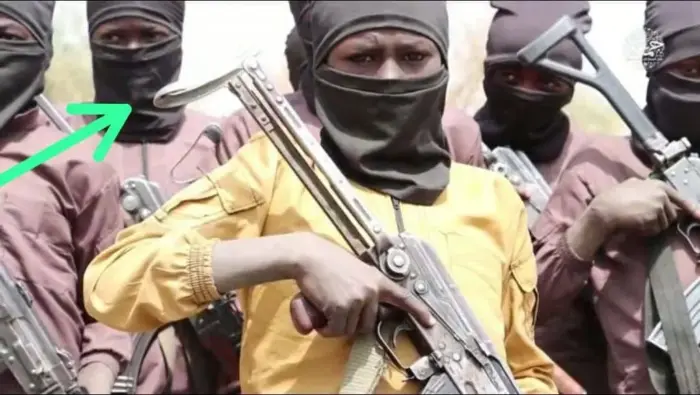
The investigation documents how Khalil, the son of an early Boko Haram commander killed in 2013, grew from a child within the insurgency into a senior figure involved in preparing another generation. His experience illustrates a broader institutional process through which armed groups transmit their beliefs, authority and organisational responsibilities across generations.
Meanwhile, the continued displacement of civilians, insecurity in resettled communities and limited access to state services leave populations exposed to the same structures Nigeria is attempting to defeat militarily.
The emerging threat is the institutional reproduction of insurgency, where armed organisations can lose fighters and commanders while retaining the capacity to produce their replacements.
Key findings
1. The insurgency has evolved beyond an armed movement into an organised population.
HumAngle estimates that more than 300,000 people across the Lake Chad Basin profess membership of Boko Haram or ISWAP. This population includes armed personnel, families, dependants, and other individuals incorporated into insurgent communities. The investigation also identifies a much larger civilian population living across territories where armed groups exercise varying degrees of influence or control.
These distinctions matter. Membership, ideological sympathy, civilian residence under coercion, and active participation in violence are different categories. Conflating them risks exaggerating insurgent military strength, criminalising vulnerable populations, and undermining opportunities for disengagement.
2. Children are becoming central to the insurgency’s long-term survival.
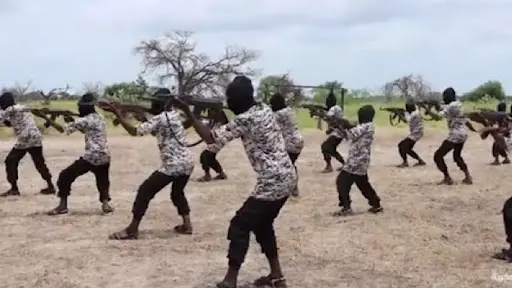
HumAngle identifies an estimated 8,000 children within a priority training and socialisation cohort and reports broader estimates of approximately 24,000 children exposed to insurgent indoctrination or training across the factions.
Children growing up within these environments encounter ideological instruction, narratives of parental martyrdom, militarised social relationships, and restricted access to alternative education. Some are prepared for roles in armed formations, intelligence, taxation, policing, religious administration, and other institutional functions.
The evidence suggests a deliberate effort to sustain organisational continuity. These children must, however, be recognised primarily as individuals requiring protection, rather than treated as future combatants whose guilt has already been determined.
3. Military successes have not consistently translated into the restoration of civilian authority.
The elimination of commanders, destruction of camps, and recovery of settlements can weaken insurgent formations without necessarily dismantling the institutions through which they govern populations.
ISWAP’s decentralised territorial system, known as mantiqa, lets local structures coordinate security, revenue collection, religious administration, logistics, and civilian regulation. This distribution of responsibilities reduces dependence on individual leaders.
Where the state cannot provide sustained security, justice, education, and economic access, insurgent institutions retain opportunities to exercise authority over daily life.
4. Displacement and premature resettlement can reproduce civilian vulnerability.
HumAngle documents the experience of families resettled in communities where insecurity persists. One account describes a family relocated to Gome in Borno State, northeastern Nigeria, after a displacement camp closed in May 2025. Family members subsequently faced abduction, ransom demands, and killings.
Such experiences raise serious questions about whether resettlement programmes sufficiently assess civilian safety, livelihood access, and the durability of security arrangements.
Returning people to their communities does not automatically restore their freedom or protection. Where families cannot farm, travel, trade, or access public services without exposure to armed groups, displacement may have formally ended while its underlying vulnerabilities remain.
5. The insurgency’s household structures contribute to its continuity.
HumAngle’s interviews document how marriage, forced unions, sexual violence, childbirth, and family dependency intersect with insurgent organisation. Women and girls subjected to coercion may remain trapped in systems where armed groups determine their relationships, livelihoods and children’s upbringing.
The expansion of insurgent households can also sustain organisational membership across generations. Children born into these environments may have limited access to alternative institutions or identities outside the armed group.
Any serious prevention strategy must therefore address sexual violence, women’s protection, family dependency and children’s access to independent education and social support.
6. Nigeria’s counterinsurgency response remains insufficiently integrated with long-term prevention.
The investigation points to a persistent imbalance between investment in Nigeria’s counterinsurgency and sustained interventions addressing disengagement, child protection, rehabilitation, community recovery, and reintegration.
The consequences extend beyond humanitarian needs. Without credible alternatives to insurgent authority, military gains remain vulnerable to reversal, while children growing up inside armed groups may inherit the conflict through the institutions that shape their lives.
Why does it matter?
The most consequential measure of Nigeria’s counterinsurgency effort is whether the next generation will have a meaningful opportunity to live outside the conflict.
A military can eliminate commanders, recover weapons, and disrupt attacks. These are necessary security outcomes, but they cannot, on their own, prevent an organisation from rebuilding when its recruitment systems, social networks, economic relationships, and ideological institutions remain functional.
The evidence also raises a fundamental question about how Nigeria measures success. Counting surrendered fighters or reclaimed settlements provides an incomplete picture when armed groups continue to influence populations, collect revenue, control livelihoods and raise children within their institutions.
This has three major implications.
First, Nigeria risks confusing the degradation of insurgent fighting capacity with the dismantling of insurgency itself. A reduction in active insurgents does not necessarily indicate a corresponding decline in organisational resilience or recruitment potential.
Second, the growing population of children exposed to insurgent ideology presents a long-term protection and security challenge. Children raised under armed-group authority may experience trauma, coercion, and restricted choices. Without appropriate interventions, their vulnerability can deepen, particularly when communities or state institutions reject them because of their family backgrounds.
Third, the persistence of insurgent governance reveals a continuing crisis of state legitimacy. Where citizens depend on armed groups for access to farmland, fishing waters, markets or dispute resolution, the state’s absence becomes a practical reality that military operations alone cannot reverse.
The consequences are regional. Boko Haram and ISWAP operate across an interconnected environment spanning Nigeria, Niger, Chad, and Cameroon. Weaknesses in civilian protection, borderland governance, and cross-border cooperation can let insurgent structures survive national military campaigns.
The long-term test is whether Nigeria can prevent children born into this conflict from being compelled to inherit it.
What can be done?
1. The Office of the National Security Adviser should establish a national strategy to prevent the intergenerational reproduction of violent extremism.
Working with relevant federal ministries, Borno State authorities, the military, child-protection institutions, and humanitarian partners, the Office of the National Security Adviser should develop a dedicated prevention framework addressing children raised within insurgent-controlled communities.
The framework should distinguish between children recruited into armed activities, children born to insurgent families, children living under coercive authority, and those disengaging from armed groups. It should establish procedures for safe identification, individual assessment, protection, education, and family-based reintegration, without automatically treating family association as evidence of criminal responsibility.
2. The Federal Ministry of Humanitarian Affairs and Poverty Reduction, working with state governments and UNICEF, should prioritise specialised child protection and recovery programmes.
Nigeria should expand access to trauma-informed mental healthcare, accelerated education, family tracing, vocational pathways, and community-based rehabilitation for children affected by insurgent recruitment and indoctrination.
Programmes must also address the needs of girls and women subjected to forced marriage, sexual exploitation and prolonged captivity. Reintegration should include protection against stigma, support for caregivers and safeguards against renewed recruitment.
Such interventions require sustained funding, trained personnel, and long-term monitoring, not short rehabilitation cycles that end before meaningful social recovery takes place.
3. The Nigerian government should redefine counterinsurgency success to include the restoration of civilian institutions.
The Defence Headquarters, Office of the National Security Adviser and relevant state governments should complement existing military performance indicators with measurable civilian recovery benchmarks.
These should include the number of communities with sustained access to public schools, functioning healthcare, civilian administration, justice services, secure markets and safe agricultural livelihoods.
A settlement should not be considered sustainably recovered solely because military forces have entered it or displaced residents have returned. Civilian protection and access to essential services.
4. Borno State and relevant federal agencies should strengthen protection safeguards in displacement camp closures and resettlement programmes.
Resettlement decisions should be informed by independent security assessments, consultations with displaced households and credible evidence that return areas offer sustainable conditions for civilian life.
Government agencies should establish accessible mechanisms through which returnees can report insecurity, abductions, restrictions on movement and threats to livelihoods.
The principle of voluntary, safe and dignified return must guide resettlement policy, with alternatives available for families unable or unwilling to return.
5. The Lake Chad Basin Commission and affected governments should strengthen regional cooperation on prevention and reintegration.
Nigeria, Niger, Chad and Cameroon should expand cooperation beyond military coordination to address the cross-border movement of vulnerable children, family reunification, protection referrals and community recovery.
Regional institutions should develop compatible child-protection procedures and safeguards for individuals leaving insurgent-controlled territories, ensuring that children are not denied protection because of their nationality, family background or location.
6. The National Assembly should strengthen legislative oversight of counterinsurgency and reintegration spending.
Relevant committees should examine the balance between military expenditure and investment in prevention, education, mental healthcare, livelihood recovery and reintegration across conflict-affected communities.
Oversight should require measurable outcomes, independent evaluations and transparent reporting on whether existing programmes reduce vulnerability to recruitment and support sustained civilian recovery.
7. Civil society, research institutions and independent media should establish sustained monitoring of insurgent institutional resilience.
Reporting and research should track changes in recruitment patterns, civilian exposure to armed-group governance, education access, community reintegration and the experiences of children affected by the conflict.
This monitoring must distinguish verified evidence from estimates, protect vulnerable sources and avoid treating populations living under insurgent authority as collectively responsible for violence.
HumAngle’s investigation demonstrates the importance of examining what happens beyond the battlefield, particularly within communities and institutions that conventional security reporting frequently overlooks.
Conclusion
Nigeria’s struggle against Boko Haram has entered a phase in which battlefield achievements and the insurgency’s long-term survival can coexist. Commanders may be killed, fighters may surrender, and territories may be recovered, yet armed organisations can continue rebuilding through families, economic networks, religious institutions and children raised within their authority.
HumAngle’s investigation exposes a difficult reality: the insurgency is investing in continuity while the Nigerian state continues to measure progress largely through disruption.
The children growing up in these environments did not choose the circumstances of their birth, the beliefs imposed upon them or the violence surrounding their childhood. Their future should not be determined by the organisations that raised them, nor by a state response that sees them primarily through the lens of security.
Nigeria must sustain military pressure against armed groups while making equally serious investments in child protection, education, civilian governance, safe resettlement and community recovery. These priorities are essential to preventing recruitment, restoring public trust and ensuring that military gains translate into lasting peace.
The war will not end simply because Nigeria has defeated today’s fighters. It will end when the institutions that produce tomorrow’s fighters lose their power over communities and children.

