

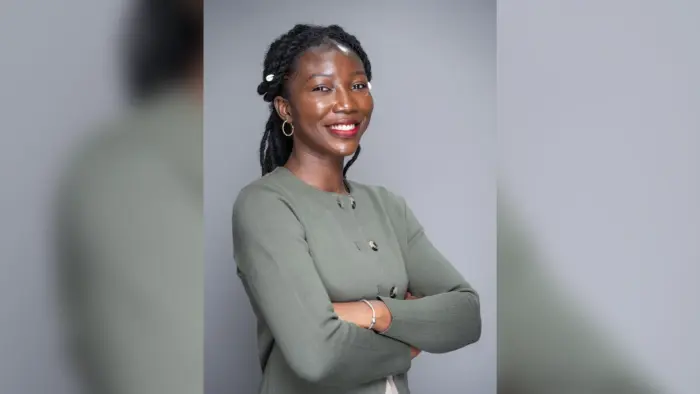
Dr Chioma Nwakanma Akanno is a reproductive healthcare physician, public speaker and global health advocate committed to advancing the health and rights of women and adolescents across Africa. She is the Creative Director of #DrZobo, a leading digital health literacy platform that uses creative visual storytelling to promote public health education and advocacy. A Chevening Scholar, Dr Akanno is an MSc candidate in Reproductive and Sexual Health Research from the London School of Hygiene and Tropical Medicine (LSHTM), where she made history as President of the Students’ Representative Council. She also served on the LSHTM Senate and Council, representing students in the institution’s highest decision-making bodies. In this interview, the Mandela Washington Fellow, YALI alumna, speaks on shaping the future of health communication, policy and advocacy while mentoring the next generation of healthcare professionals across Africa.
You often speak about healthcare as a matter of rights rather than privilege. What shaped this philosophy?
The lens through which we view health determines the kind of solutions we pursue. For me, this perspective began in medical school and became even stronger when I started practising medicine and participating in community health outreaches. Working in Nigeria exposes you to the harsh realities of health inequity. You quickly realise that the difference between a woman who survives and one who does not is often not biology. It is money, geography, illiteracy, discrimination and shame. I remember sitting across from a woman while explaining that she had cervical cancer. I watched her move from confusion to fear, then denial and finally anger. Her anger was justified. It was the first time she had ever heard of cervical cancer. Her symptoms had previously been treated as a simple vaginal infection. She had no health insurance and did not even understand what health insurance meant. Even if she had the money for treatment, the country had only three functional radiotherapy machines at the time, all far from where she lived.
The most heartbreaking part was discovering that the disease could have been prevented through screening and vaccination. Neither service was available in her community. She had daughters who could have benefited from vaccination because of their family history, but the vaccine was expensive and difficult to access. Sadly, she died while waiting for radiotherapy. I have also seen women lose their lives because they unknowingly handed decision-making authority for emergency medical procedures to their husbands. I have watched young girls miss school because they could not afford sanitary products or because their schools lacked basic water and sanitation facilities. Although these situations differ, they all point to the same problem: lack of access to health education, preventive healthcare, funding and specialist services. These experiences changed how I see healthcare. It is not simply a service that people purchase. It is a fundamental human right. A woman should not receive or be denied lifesaving care because of where she lives or how much money she has. Our health system may be under resourced, but that should never become an excuse for treating healthcare as a luxury. Everything I do today, whether through Dr Zobo, the SMILE With Me Foundation, research or advocacy, is focused on closing the gap between what science says people deserve and what circumstances allow them to receive. Health equity begins with health education, and healthcare must always be treated as a right.
Congratulations on serving as President of the Students Representative Council at the London School of Hygiene and Tropical Medicine. What did that achievement mean to you personally and professionally?
It is honestly difficult to capture in words. The significance becomes clearer with every passing day. Personally, it has been deeply humbling. Not because I doubted my ability, but because I appreciate how unique my journey has been. It took years of discipline, preparation and resilience to reach that point. To be trusted with representing students and researchers from different countries, cultures and professional backgrounds at one of the world’s leading public health institutions was truly an honour.

Professionally, the experience accelerated my growth in ways I could never have imagined. It strengthened my leadership, administration, communication, public speaking, negotiation and problem-solving skills. Beyond serving as Student Union President, I was also privileged to sit on the LSHTM Council, the institution’s highest governing body, as well as the Senate and several strategic committees. Those opportunities exposed me to governance at the highest level and shaped me into a more disciplined, emotionally intelligent and confident leader.
As a Nigerian woman leading students in one of the world’s foremost public health institutions, did you feel you were representing not only students but Africa as well?
Absolutely. I felt a responsibility to represent students, Nigeria, Africa, women and my family, but I never saw that responsibility as pressure. I saw it as purpose. Sometimes I reflect on my journey from growing up in Aba, Abia State, to earning a fully funded Chevening Scholarship and eventually leading students at one of the United Kingdom’s most respected academic institutions. Those opportunities were rare, but they were not accidental. Nigeria shaped me. It taught me resilience, courage, confidence and excellence. It also taught me kindness, hospitality and curiosity. Africa shaped my worldview by giving me a rich cultural heritage and unique perspectives that strengthened conversations within the institution. Being a woman taught me empathy, intuition, inclusion and determination. LSHTM attracts some of the brightest public health professionals in the world. I recognised that my presence allowed me to challenge stereotypes and demonstrate what African women are capable of achieving when given the opportunity.
How has the experience changed your understanding of leadership, governance and public service?
One of my biggest lessons is that leadership is never a solo journey. You need people around you who will support you but who will also challenge you when necessary. Public service begins with genuinely caring about people. Leadership cannot become effective unless people remain at the centre of every decision.
Another important lesson is knowing when politics ends and governance begins. Elections eventually finish, but leadership requires collaboration regardless of previous political differences. The experience also strengthened my appreciation for emotional intelligence, cultural competence and empathy. These qualities often determine whether leaders succeed when working with diverse communities. I was honoured to be nominated by staff and students for Student Representative of the Year and Academic Representative of the Year. Those recognitions reminded me that authentic leadership leaves lasting impressions.
What lessons can Nigerian universities and student leaders learn from your experience at LSHTM?
My experience was both eye-opening and transformative. One of the biggest lessons is the importance of listening. LSHTM has structured systems for gathering student feedback and acting upon it. That commitment significantly improves the student experience. The institution also prioritises inclusion through disability support, gender responsive policies, mental health services, hardship funds, career support, alumni engagement and even free menstrual products. These services exist because systems have been intentionally designed to meet students’ needs. For Nigerian universities, the lesson is simple. Strong institutions are built on effective systems, partnerships and accountability. For student leaders, the advice is equally straightforward. Listen carefully, innovate continuously and ensure that every student feels represented.
You balanced a demanding academic programme, advocacy work, motherhood and student leadership. How did you manage everything without compromising excellence?
I will be honest. It was not easy. I do not believe perfect balance exists. Chasing that ideal often leads to exhaustion. Instead, I learnt how to prioritise. Some seasons demanded more attention than others, and I became comfortable making difficult decisions about where my energy was most needed. I was also blessed with an incredible support system both in Nigeria and in the United Kingdom. Their encouragement sustained me on difficult days. Prayer and journaling became daily habits that helped me remain emotionally grounded. My calendar became one of my most valuable tools. Every meeting, study session and period of rest was scheduled. If something was not on my calendar, it probably would not happen. I also learnt to ask for help. I delegated responsibilities within my team and made full use of every student support service available, from academic guidance and career advice to wellbeing programmes and social activities. No leader succeeds by trying to do everything alone.
Many young Nigerians dream of studying abroad but doubt whether they can lead in international spaces. What would you tell them?
I always return to a quote by Bob Proctor: “Thoughts become things. If you can see it in your mind, you will hold it in your hand.” Before anyone else believes in you, you must first believe in yourself. Start where you are. Develop your skills. Find problems that genuinely matter to you and begin solving them, no matter how small the solutions may seem. Leadership is first a responsibility before it becomes a title. Build a track record. Strengthen your communication, technology and professional skills. Surround yourself with people who challenge and inspire you. Seek mentors. Put yourself forward for opportunities, even when they feel intimidating. Everything you want often lies on the other side of fear.
Having studied and led within one of the world’s leading public health institutions, what does the future of global health leadership look like to you?
During my time at LSHTM, my classmates voted me the Global Health Equity Advocate most likely to lead the fight for justice, gender equality and the decolonisation of public health education. That recognition reflected the work I intend to continue. I see myself contributing at the intersection of health communication, research, policy and advocacy, particularly within sexual and reproductive health and rights. The future of global health depends on inclusive leadership, evidence-based policy and ensuring that communities traditionally left behind are finally placed at the centre of decision-making.
Finally, what message would you like to leave with young Nigerians, especially young women, who dream of making an impact globally but sometimes question whether they are enough?
You are enough. Do not allow fear or self-doubt to convince you otherwise. The world needs your ideas, your voice and your leadership. Prepare yourself, pursue excellence, remain teachable and keep showing up even when you feel uncertain. We need more young Nigerians, especially young women, occupying decision-making spaces across the world. There is room for you at the table, and if there is no seat available, build one.
