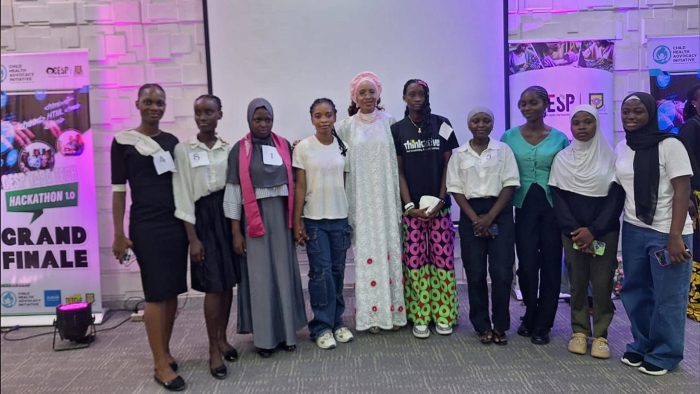
Stakeholders have highlighted the importance of equipping girls with digital and technical skills, as participants at a hackathon in Lagos developed solutions to real-life challenges across sectors including health, finance and logistics.
The hackathon, organised by the Child Health Advocacy Initiative (CHAI) in partnership with the Girls Education and Skills Partnership (GESP) at Yaba College of Technology, brought together young women trained in areas such as web development, phone repair and computer repair to present practical innovations.
Founder of CHAI, Dr Elizabeth Alonge, described the event as “a celebration of possibility,” noting that it reflects what can happen when girls are given opportunities to learn and build skills.
She said the initiative is based on the belief that girls can shape their own destinies when provided with the right support, information and opportunities.
“We always thought it was like men or young boys that can only do tech, but this is an opportunity to show that girls can also be innovators,” she said.
Alonge added that participants had undergone training and were now developing applications, including fintech, health and logistics solutions, to address real-life problems.
She also referenced global and national perspectives, citing remarks by Ngozi Okonjo-Iweala on the economic value of investing in women, as well as comments by President Bola Tinubu on the role of women in national development.
She noted that exposure and opportunity play a key role in helping girls realise their potential, adding that investing in girls remains important.
The Project Coordinator of Girls’ Education and Skills Partnership (GESP) at Yaba College of Technology, Dr Funmilayo Doherty, said the hackathon forms part of the programme’s sustainability plan aimed at identifying and nurturing talent among participants trained under the initiative.
She explained that about 69 applicants initially expressed interest, with 10 finalists selected to present their solutions at the event.
“What they need is just the support. The plan is that the winners, apart from giving them the cash prize, we’re also going to support them to start up their businesses,” she said.
Doherty noted that participants had been trained in web and mobile application development and would receive continued support through mentorship and business development opportunities.
She added that since its launch in 2024, the programme has exceeded its target of empowering over 5,250 young women with technical and digital skills, alongside providing start-up toolkits and certifications to support their transition into the workforce.
In her remarks, the Senior Special Assistant to the President on Sustainable Development Goals, Princess Adefulire, represented by Barrister Ayo Olugbenro, described the initiative as a platform of hope, empowerment, and of transformation.
The address highlighted the link between youth innovation and the Sustainable Development Goals, noting that initiatives like the hackathon contribute to targets such as ending poverty, ensuring quality education, advancing gender equality, promoting economic growth, and fostering innovation and infrastructure.
Adefulire, represented by Olugbenro, added: “Investing in youth innovation is not optional. It is essential.”
She emphasised that empowering girls with digital and technical skills creates opportunities for inclusive participation, strengthens communities, and enables young people to develop practical solutions to real-world challenges.
Similarly, the Rector of Yaba College of Technology, Dr Ibraheem Abdul, said the hackathon reflects the institution’s commitment to fostering innovation, entrepreneurship and sustainable development among young people, particularly girls.
He noted that the initiative serves as a platform for transforming ideas into viable solutions while building resilience and entrepreneurial capacity.
Abdul added that participants had demonstrated dedication and commitment, positioning themselves as future leaders in Nigeria’s technology ecosystem, and reaffirmed the institution’s focus on producing graduates who can create opportunities and contribute meaningfully to national development.
Also speaking, Regional Head at Ecobank, Ademola Okuleye, highlighted the importance of practical innovation, urging participants to focus not only on building solutions but on the real impact those solutions can have within their communities.
Similarly, the Chief Executive Officer of Open Access Data Centres (OADC), Ayotunde Coker, said efforts to encourage girls in technology should include early exposure, mentorship and sustained support.
He noted that building a pipeline of women in the sector requires deliberate and long-term investment, adding that although outcomes may take time, such efforts would yield results over time and strengthen leadership in the industry.
Girls showcase tech solutions at CHAI, GESP hackathon
Girls showcase tech solutions at CHAI, GESP hackathon