

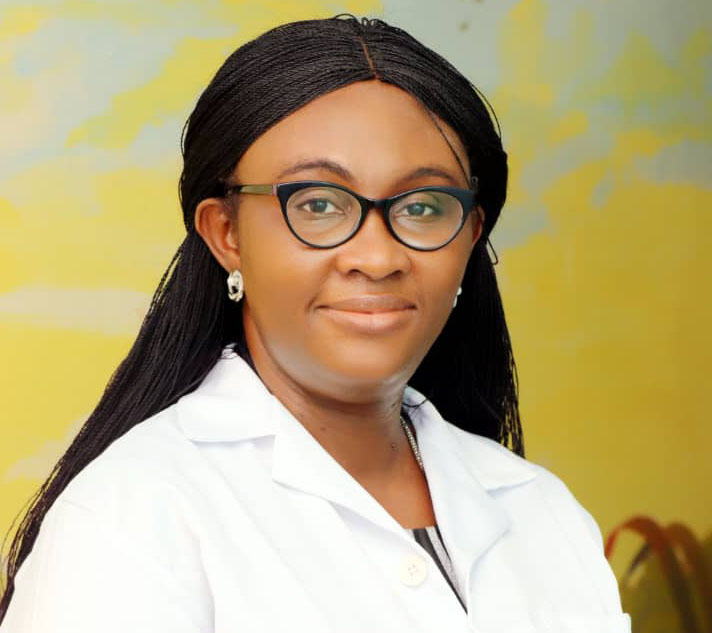

Dr. Yetunde O. Odusolu, a Consultant Public Health Physician at Ikorodu General Hospital, Lagos, has over 21 years of experience in health system strengthening and tackling diseases in Nigeria and beyond. Her community-focused interventions and dedication to public health have earned her numerous awards. She is a member of the Association of Public Health Physicians of Nigeria(APHPN), Nigeria Institute of Management to mention a few. She emphasises on the need to increase women’s accessibility to healthcare, create empowerment programmes for women and education for the girl-child. In this interview with GERALDINE AKUTU, she discusses her journey, challenges, and hopes for Nigeria’s healthcare system.
Can you share your growing-up experience?
I was born in Jericho nursing home at Ibadan in Oyo state but grew up in the ancient city of Abeokuta as a first child in a family of four children(two boys and two girls). I am a scion of Dr. Israel Mofolorunso Malomo and Mrs.Folake Adedoyin Malomo (nee Adebowale). They are both late. They trained my siblings and I to be responsible, honest and to be hardworking. I went to St Bernadette Nursery and Primary school for my basic education and Abeokuta Girls’ Grammar School Abeokuta for my secondary school education.I traversed through various higher institutions of learning – University of Ibadan, Olabisi Onabanjo University, Lagos University, University of Lagos for graduate and post graduate courses, I had stint of online programmes in University of Washington and Boston University for certificate courses.
What made you specialise in Public Health?
I specialised in public health because of passion for community work and reaching across to greater population of people as well my interest in preventive and social medicine.
How has the journey been so far?
The journey has been interesting, full of intrigues and exciting experiences. It has given me a vista of opportunities to learn and develop myself and be useful to humanity.
What do you like most about your field?
I like the fact that it gives you a broad base of knowledge especially as it relates to knowing that there is no sphere of life, or area or institution that you can’t apply public health principles.
What are your thoughts about mentorship and who are your mentors?
Mentorship is to facilitate the personal and professional growth of individuals by providing guidance, support, and knowledge transfer from experienced mentors to mentees. I have mentors in professional and personal life.Prof. Akin Osibogun, Prof.MuyiwaOdusanya, Prof.KofoOdeyemi, Dr Alero Roberts have mentored me with respect to my career. I have personal mentors like Pastor GbemiJaiyebo, my husband and from books written by people such as John Maxwell, Myles Munroe, Joyce Meyer, Bishop David Oyedepo, Rev Sam Adeyemi to mention a few.

How has your experience as a public health physician shaped your life?
It has shaped me to believe in myself and the world of endless possibilities. I have gained knowledge and understanding in leadership and management, It has given me the drive and energy to be a better version of myself. To not rest on my oars but to keep on learning and making useful impact in the field of public health in the little way I can.
What are the challenges facing women’s health today?
Most of the challenges facing women’s health today are multifactorial. Gender-based violence and discrimination, lack of education (ignorance) poverty (financial barriers), social, cultural and economic disparities, lack of access to health care, poor nutrition, scourge of noncommunicable diseases like cancer of the breast, cervical cancer, negative influence of religion and insecurity.
What is the way forward?
Governments, civil society, private sector, and individuals all have a role to play in addressing the key factors that affect women’s health and wellbeing. We need empowerment programmes for women, ensure the education of the girl child(promote female education), increase accessibility of women to essential healthcare, promote family planning and address other reproductive health issues of women, Gender mainstreaming, creating enabling socioeconomic environment, protection against sexual abuse and violence, strong support for screening of non-communicable diseases like breast and cervical cancer, advocacy on benefits of investment in women’s health etc.
How do you combine work and family life effectively without one suffering?
It takes only the grace of God to do this well, with understanding, tolerance and support from the family. Work life balance is a continuous process that every woman must strive to maintain. It is a healthy choice that is of great and tremendous value. One cannot afford to Jeopardize the family because of work.
What would you advise young professionals who would like to specialise in Public Health?
They must be committed, disciplined, intentional and be ready to pay the price to be the best in the field of public health. They can carve a niche for themselves and make an impact as much as they can.
How do you think the health sector can be revamped in Nigeria?
The health sector can be revamped through involvement of the stakeholders each taking up their roles and responsibilities as they ought to. By this I mean the Government at all levels (Federal, State, Local). The Government must be ready to increase budgetary allocation to health (health is a measure of indices of development of a nation), the Abuja declaration should be implemented, increase funding to health can achieve a lot in the health sector, there’s no universal health coverage without funding. We need to encourage and increase enrollment into health insurance. The basic healthcare provision fund should be effective and efficient. The funds must be judiciously used to implement what they are meant for with proper accountability.
The Government reforms in the health sector should be fully operationlised such as the National health Act of 2014. We need support from the private sector and NGOs for the health care system. We need to train more health workforce and ensure measures to retain them are in place to prevent the JAPA syndrome, we need to promote research and development with new innovations and technologies in the health sector, ensure we create an enabling environment for production of drugs, medical devices, equipment, consumables, The health information system in Nigeria needs to be strengthened with regular and sustainable population and health-facility-based surveys, and a functioning vital statistics and civil in registration system. We can increase the quality and coverage of our health service delivery. This can be revamped and strengthened through properhealth planning by health agencies, as well as promoting accessibility to healthcare services, we need orientation to address the poor public health image of the country and use of evidence-based planning for resource allocation and utilisation.
