

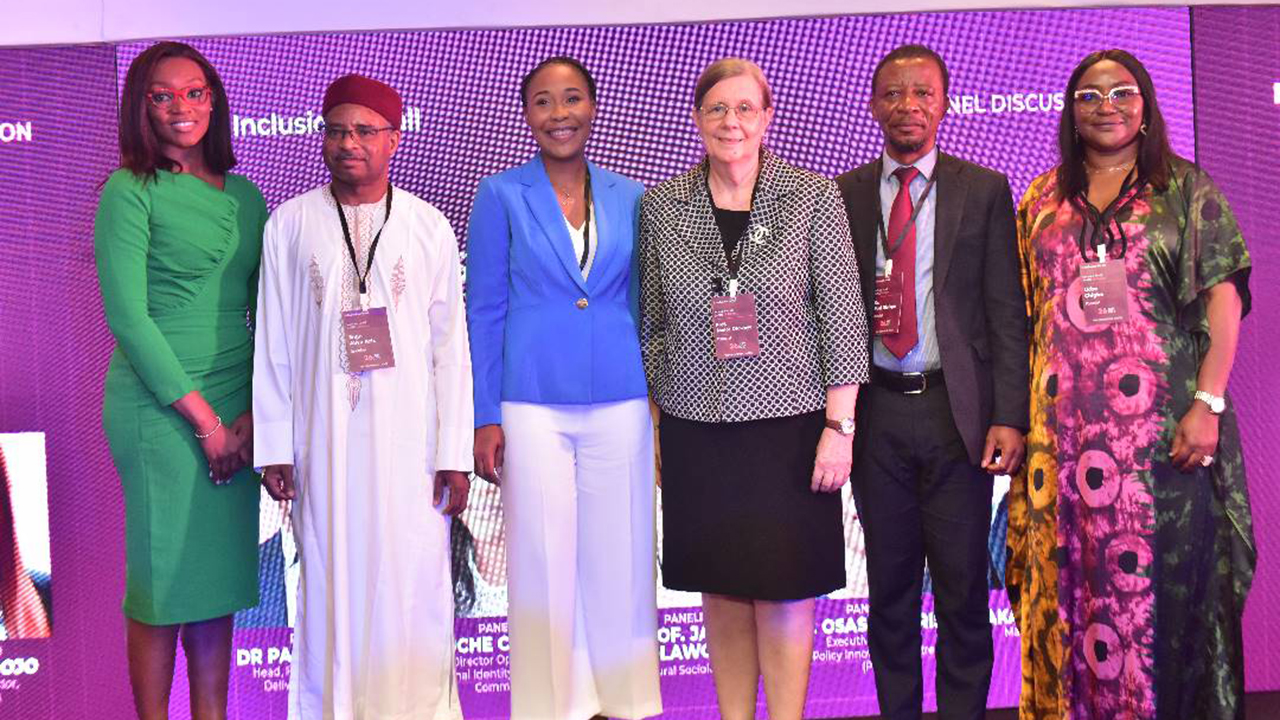

A PRO-poor advocacy platform, Inclusion for All (I4ALL) and the International Institute of Tropical Agriculture (IITA) have decried the digital inclusion barriers faced by rural women in Nigeria’s agricultural value chain.
[ad]
They are therefore seeking enabling access to Digital Identity (ID) for women. This was the thrust of the first edition of the I4ALL dialogue held in Lagos, which focused on ‘Digital ID for the Last Mile-Enabling Access to Digital ID For Rural Female Agricultural Workers’.
Head of I4ALL initiative, Chinasa Collins-Ogbuo, said uneducated women who have no access to a phone and live in hard-to-reach communities were less likely to appreciate the advantages of access to technology and information and the benefits of enrolling for National Identification Number (NIN).
“Universal access to formal identification requires an intentional focus on the most vulnerable Nigerians likely to be poor female farmers in rural communities. Thus far, the National Identity Management Commission (NIMC) has done a great job with the momentum achieved towards the ID enrolment of Nigerians, and it must be maintained. Reaching the last mile is the most challenging part and specific and targeted approaches must be designed and implemented to reach them successfully and leave no one behind,” she said.
Head, Capacity Development of IITA, Zaina Sore, emphasised the significance of digital identity in empowering rural women and transforming their livelihoods.
“Access to national identification as a means for greater financial inclusion is critical for women in remote rural areas. As many of them engage in different agricultural activities and trading particularly in the informal sector, it is important that we better understand their needs and challenges to tailor the services that will lead to greater inclusion and economic empowerment,” Sore said.
[ad]
A study commissioned to IITA by I4ALL carried out in the first quarter of 2023 in Kano, Oyo and Rivers states revealed some new insights and validated pre-existing data insights from I4ALL’s analysis of the 2020 Enhancing Financial Innovation and Access (EFInA) and Access to Finance (A2F) dataset.
According to the study, Kano State recorded 77 per cent higher levels of NIN ownership, among the respondent groups compared to Oyo with 58.1 per cent and Rivers with 46.6 per cent contradicting the hypothesis of lower enrolment rates in the North.

Sore said the research highlighted how socio-cultural norms could be used as a deliberate strategy to drive female enrolment in the North.
In his keynote address, Director General of NIMC, Engr. Aliyu Aziz, highlighted the progress made in NIN enrolment in Nigeria, the challenges faced and the approaches adopted to overcome them.
He underscored the importance of data evidence in shaping policies and highlighted key findings from the summary of the report. During the panel discussion, Lead Research Consultant at IITA, Prof. Janice Olawoye; Executive Director, Policy Innovation Centre (PIC), Dr. Osasuyi Dirisu; Director of Operations, NIMC, Ms. Uche Chigbo and Head of Financial Inclusion Delivery Unit, Central Bank of Nigeria, Dr. Paul Oluikpe, explained the supply and demand side barriers to digital ID ownership for rural female agricultural workers and how they can be overcome to facilitate their active economic inclusion.
[ad]
