

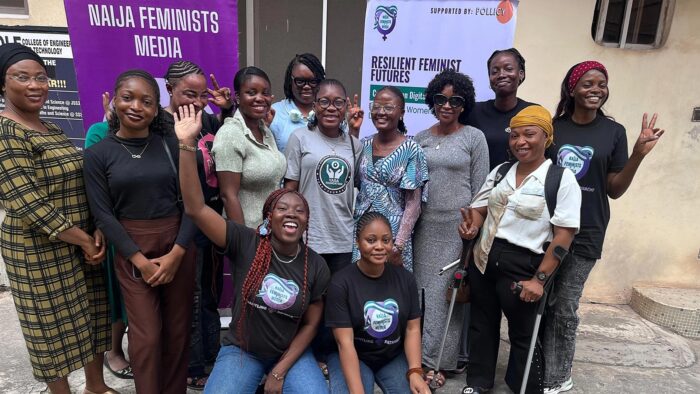
Naija Feminists Media (NFM) has trained 16 women human rights defenders, including women with disabilities, on digital safety and social media security, equipping them with practical skills to mitigate online risks and protect their advocacy work.
The training, held on Friday, October 16, 2026, in Ogba, Lagos, was facilitated by the founder of NFM with support from Pollicy, a feminist collective of technologists and creatives working at the intersection of data, design and technology to improve lives.
The initiative brought together women human rights defenders (WHRDs) from NFM’s community and networks, including journalists, leaders of women’s rights organisations and members of support groups. It focused on strengthening participants’ capacity to navigate digital spaces safely while using online platforms to advance feminist advocacy, promote human rights and drive social change.
As digital platforms become increasingly important for activism, public engagement and the mobilisation of communities, women human rights defenders face risks that can undermine their work and personal security. These include online harassment, privacy breaches, unauthorised access to accounts and the potential exposure of sensitive information.
The training therefore provided practical guidance on digital security measures that participants could apply to their personal online activities, advocacy campaigns and organisational operations.
Key areas covered included social media security, secure browsing, internet censorship circumvention, computer hygiene and data encryption. Participants were introduced to practices for strengthening account security, protecting their devices, browsing more safely and safeguarding sensitive information in their digital communications.

The sessions also emphasised the importance of recognising potential digital threats and adopting preventive measures before security incidents occur. For women working in human rights advocacy, such knowledge is particularly relevant as online platforms increasingly serve as spaces for public education, campaigning, organising and holding institutions accountable.
NFM assessed participants’ understanding through interactive, gamified group activities designed to reinforce the lessons and encourage practical application. Participants shared key takeaways from the sessions, demonstrating their understanding of digital safety principles and how these could be integrated into their everyday activities.
Following the training, participants reported improved knowledge of digital safety and social media security, alongside greater confidence in engaging in online activism. They also expressed their intention to apply the skills acquired to their advocacy work and share relevant practices within their organisations.
For some participants, the programme represented their first formal introduction to digital safety and social media security. They described the sessions as valuable in helping them understand potential online vulnerabilities and identify practical steps to protect themselves in digital spaces.
The inclusion of women with disabilities also underscored the importance of ensuring that digital safety knowledge and resources reach diverse groups of women human rights defenders, whose experiences and access needs may differ.
The training forms part of NFM’s broader efforts to strengthen the digital safety knowledge and capacity of women human rights defenders, particularly feminists who rely on online platforms to challenge inequality, amplify marginalised voices and promote social change.
Through initiatives such as this, NFM seeks to encourage safer digital practices among activists and strengthen the capacity of women’s rights organisations to protect their members, communications and advocacy activities.
As digital technologies continue to shape civic participation and human rights advocacy, building digital literacy and security awareness remains essential to ensuring that women can participate meaningfully online without compromising their safety or the integrity of their work.
