 Follow Us on Google News


 Follow Us on Google Discover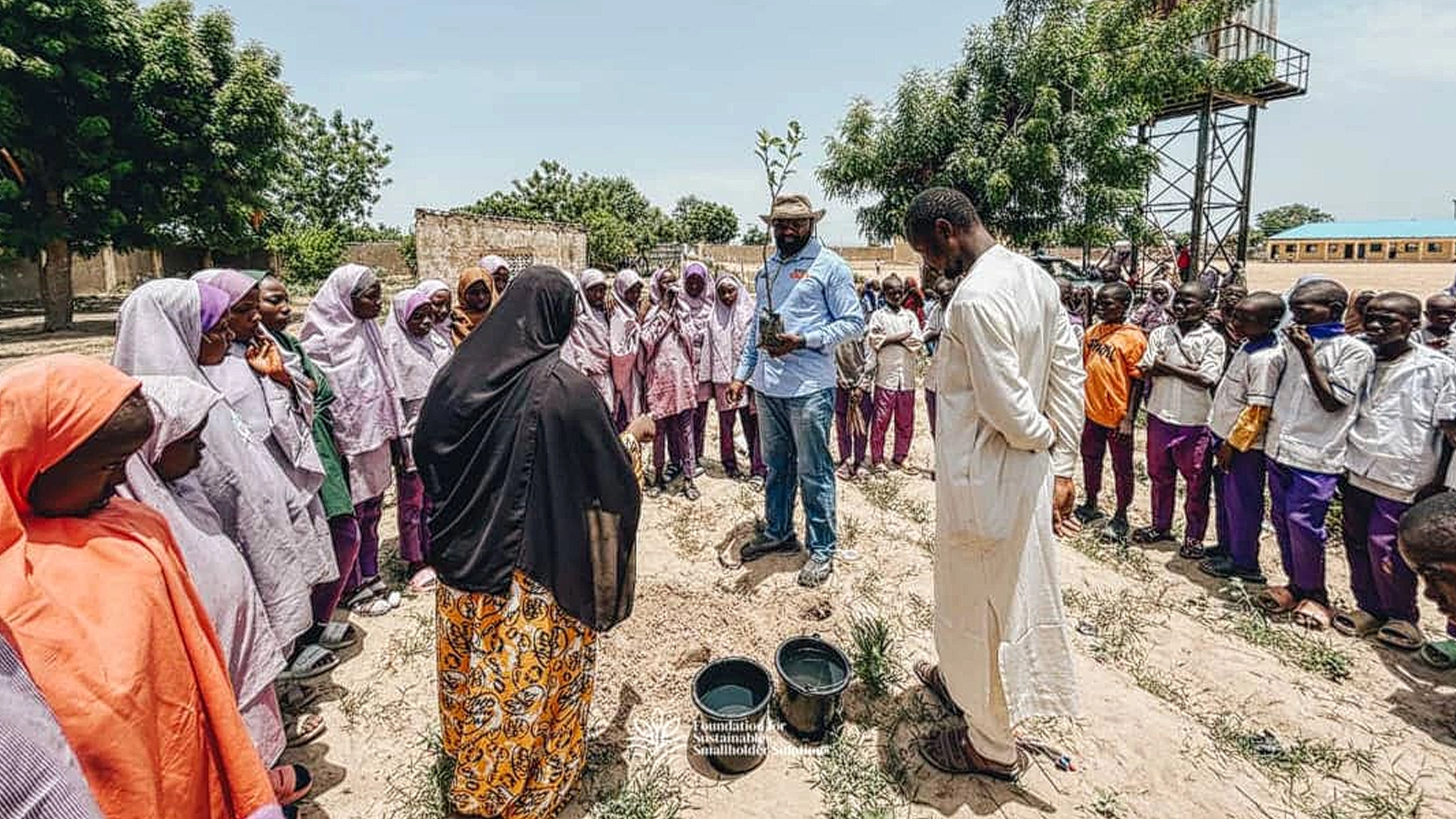
The Foundation for Sustainable Smallholder Solutions (FSSS), with support from the HEINEKEN Africa Foundation and Nigerian Breweries PLC, has planted 12,243 trees across farming communities and schools in Bauchi North as part of efforts to restore degraded land and strengthen farmers’ resilience to climate change.
The intervention is being implemented under the three-year ESTRRA Project across seven Local Government Areas: Katagum, Shira, Jama’are, Giade, Itas-Gadau, Zaki and Gamawa.
The Foundation, in the first phase, more than 70 farmers were trained in agroforestry and supported to establish eight learning sites, where 5,673 seedlings were planted. The sites will serve as practical learning platforms for Farmer Field Schools, where farmers can learn how to establish, manage and integrate trees into their farming systems.
According to the Foundation’s Communications Officer, Clinton Mena, said that over 6,500 economic tree seedlings were distributed to 500 households, with each household receiving 13 seedlings to establish permagardens. Together, the agroforestry sites and household permagardens accounted for 12,173 trees. “An additional 70 trees were planted in secondary schools, bringing the first-phase total to 12,243.”
The trees include mango, citrus, guava, cashew, plantain, banana, moringa, gliricidia and papaya varieties, selected for their environmental, nutritional and economic benefits.
FSSS Technical Lead and ESTRRA Project Manager, Timothy Azakere, said agroforestry would help farmers restore their soil while creating additional sources of food and income. “We’re using agroforestry to regenerate the soil. The same fruit forests will also be used as an economic means for the farmers.”

He added that farmers would begin to see the economic benefits of the trees as they mature. “In the next three years, these things will start fruiting. The farmers will use it as food and the excess of it they will sell to get revenue.”
For Umar Aliyu, an ESTRRA beneficiary from Gambaki community in Katagum Local Government Area, the seedlings represent an investment in his family’s future. “These trees are important to me because they can give us food and also something to sell in the future. The seedlings are still small now, but we will take care of them.”
Agricultural expert and consultant Paul Tamen, who supported the project’s technical training, said farmers were trained in good agronomic practices for establishing and managing economic tree crops.
The training covered land mapping, farm layout, spacing, planting and seedling management. FSSS plans to expand the intervention in the second phase, with trained farmers expected to receive additional seedlings from 14,000 trees for establishment on their farms.
Overall, FSSS plans to plant 24,000 economic trees across the project area.
The agroforestry intervention contributes to ESTRRA’s broader goal of supporting the restoration of 29,000 hectares of degraded land across Bauchi North through regenerative agriculture, land restoration and climate-smart farming.

