 Follow Us on Google News



 Follow Us on Google Discover
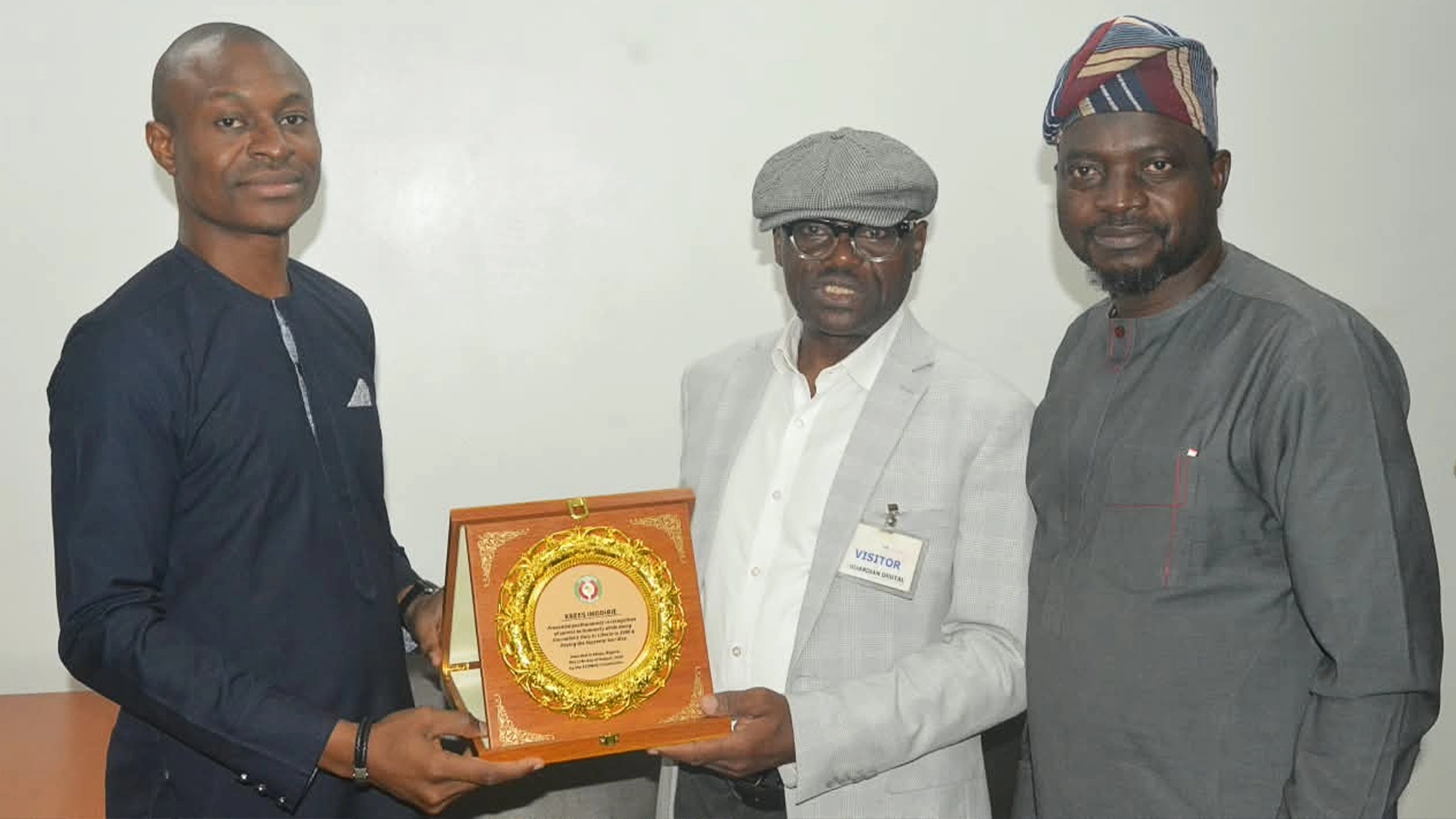
The Economic Community of West African States (ECOWAS) Commission has posthumously honoured late The Guardian war correspondent, Krees Imodibie, 36 years after he was killed while covering the Liberian Civil War in 1990, recognising his sacrifice and service to humanity.
The recognition was part of the public presentation of the Commission’s definitive publications documenting its peacekeeping, peacebuilding and peacemaking interventions across West Africa, where other journalists, former military commanders and victims of regional conflicts were also recognised.
Presenting the commemorative plaque at The Guardian office in Lagos, Arthur Oghogho Obayuwana, a former Foreign Affairs Editor of the newspaper, currently with the Directorate of Political Affairs at the ECOWAS Commission, said the recognition was intended to acknowledge journalists who risk their lives reporting from conflict zones.
Obayuwana, who received the plaque on behalf of the late journalist before bringing it to the newspaper, said ECOWAS considered it appropriate to recognise Imodibie for his service to humanity and the circumstances surrounding his death while on professional assignment.
The inscription on the plaque reads: “Presented posthumously in recognition of service to humanity while doing Journalistic Duty in Liberia in 1990 and Paying the Supreme Sacrifice. Awarded in Abuja, Nigeria, this 27th day of August, 2026 by the ECOWAS Commission.”
Imodibie was among journalists who lost their lives covering the Liberian conflict, during which the regional peacekeeping force, the Economic Community of West African States Monitoring Group (ECOMOG), intervened in efforts to restore peace in the sub-region.

Another journalist, Tayo Awotusin of the defunct Champion newspaper, was also posthumously recognised for paying the supreme price while reporting from Liberia. Others recognised included the late Ben Asante and veteran journalist Lindsay Barrett.
Explaining the circumstances surrounding Imodibie’s death, Obayuwana said forces belonging to the rebel faction of former Liberian President Charles Taylor were alleged to have been responsible for his killing.
He suggested that the incident might have been an attempt to retaliate against Nigeria, which played a leading role in ECOMOG’s operations, contributing the largest contingent of troops and the biggest financial support towards sustaining the force.
“We learned from the grapevine that this was an attempt to get back at Nigeria,” he said, adding that Taylor, when subsequently confronted during the Liberian peace talks in Abuja, denied responsibility for the journalist’s death.
Obayuwana, who said he did not personally meet Imodibie, recalled descriptions of the late journalist by former colleagues, particularly Camillus Eboh, a former Bureau Chief in Abuja, who had worked with him.
“He described him as a very diligent and passionate journalist, and very fearless,” he said, adding that Imodibie remained committed to his professional responsibility even in dangerous circumstances.
Reflecting on the dangers of conflict reporting, Obayuwana said journalists who cover wars deserve recognition alongside military personnel and other combatants because they equally put their lives at risk in the course of their duties.
“Elsewhere in the world, people celebrate their own heroes, war heroes, not only those who are combatants, but those who report and cover conflicts. They put their lives in danger,” he said.
He described the posthumous recognition as an important encouragement to journalists who continue to work in difficult and dangerous environments, despite the risks associated with their profession.
“It’s to strengthen your heart, to steel your heart, to say kudos, well done. You are not unknown, you are appreciated. The world knows you are making sacrifices,” he said.
Obayuwana added that the recognition should encourage journalists to remain fearless and carry out their responsibilities diligently and professionally, knowing that society appreciates their sacrifices.
The Abuja event also featured the presentation of the ECOWAS Commission’s official publication on ECOMOG, titled Fighting Bushfires: ECOWAS and Peacemaking in West Africa, authored by Professor Amadu Sesay. The book documents the regional organisation’s intervention and peacemaking efforts during the conflicts that engulfed parts of West Africa.
The publication was reviewed by the Director-General of the Nigerian Institute of International Affairs (NIIA), Professor Eghosa Osaghae.
Other publications presented at the event included Two Decades of Peace Processes in West Africa: Achievements, Failures, Lessons; The After-Action Review of ECOWAS’ Initiatives and Responses to the Multidimensional Crisis in Mali; and The ECOWAS Intervention for the Transfer of Democratic Power in The Gambia.
Former ECOMOG force commanders and their deputies were also recognised at the occasion for their roles in the regional peacekeeping operations. Those acknowledged included Lt. Gen. Arnold Quainoo, Maj. Gen. Joshua N. Dogonyaro, Maj. Gen. Rufus M. Kupolati, Maj. Gen. J. Ishaya Bakut, Maj. Gen. Tunji Olurin, Maj. Gen. John Shagaya, Maj. Gen. John Mark Inienger, Maj. Gen. Victor Samuel Leonard Malu and Maj. Gen. Timothy M. Shelpidi, among others.
The event also featured symbolic Peace-of-the-Rose awards to civilians, including women and children, who suffered the consequences of the conflicts that engulfed West Africa in the 1990s.
The recognition of Imodibie, Obayuwana said, was part of a broader effort to acknowledge individuals whose sacrifices and contributions to regional peace and stability deserved to be remembered.
He said the plaque was brought to The Guardian because Imodibie worked for the newspaper and died while on active duty as its correspondent.
He disclosed that he had also made efforts to establish contact with the late journalist’s relatives, particularly an uncle who raised him, with a view to ensuring that his family was informed about the recognition.

