 Follow Us on Google News


 Follow Us on Google Discover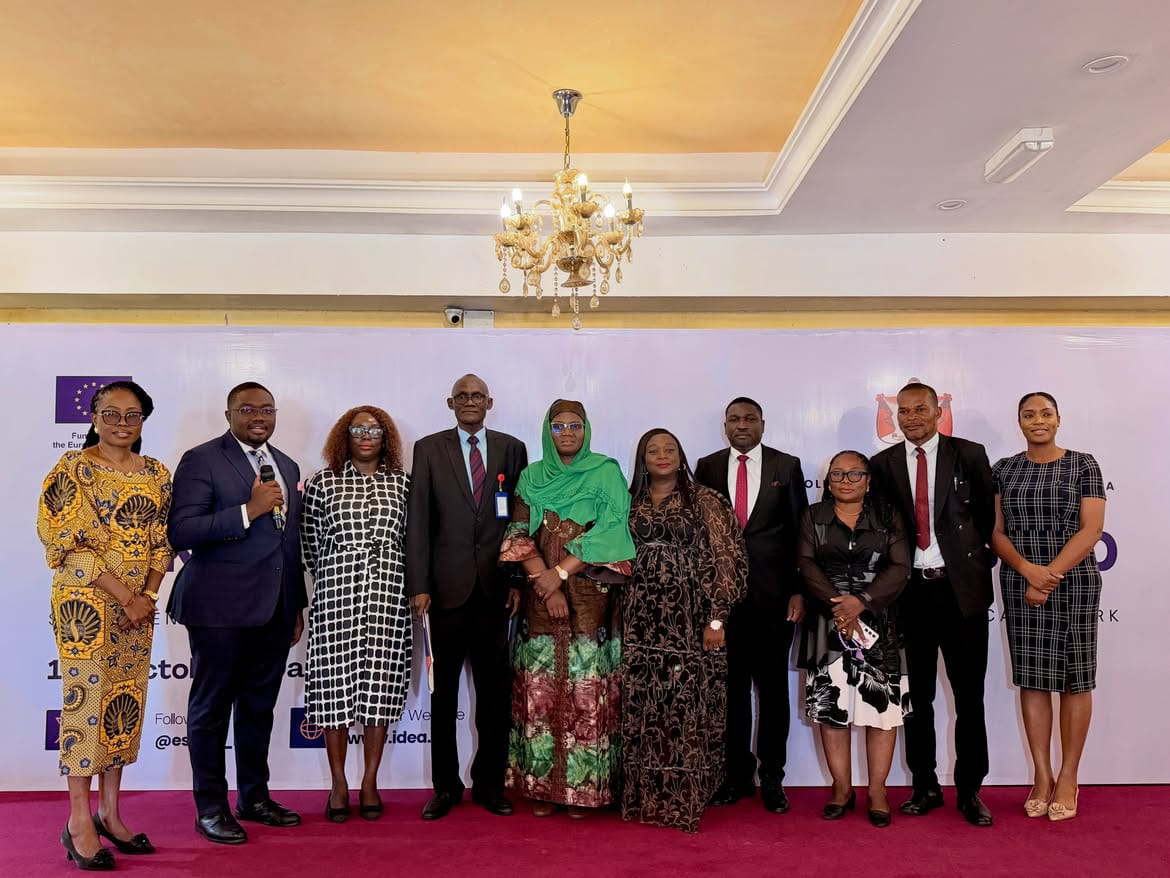
The Legal Aid Council of Nigeria (LACoN), International IDEA and the European Union (EU)-supported programme to end Sexual and Gender-Based Violence (SGBV), have jointly developed new guidelines to help identify survivors of abuse and improve their access to legal and support services.
The tools, developed under the EU Support to End Sexual and Gender-Based Violence Programme in Nigeria, implemented by International IDEA, are designed to address gaps in the identification, documentation and referral of SGBV cases within Nigeria’s legal aid system.
The guidelines, revised intake forms and organised referral pathways were presented for validation at a one-day stakeholders’ workshop held in Abuja on Tuesday.
The event brought together legal practitioners, civil society organisations and government representatives.
Speaking at the workshop, the Director-General of LACoN, Aliyu Abubakar, said the council’s existing processes had largely focused on legal representation and dispute resolution, potentially leaving cases of violence and coercion undetected.
He said: ‘SGBV is shrouded in stigmatization and thrives in the silence of Victims and Survivors and we must confront the reality that in this fight to end Sexual and Gender-Based Violence, the chain of justice is only as strong as its weakest link.”

The new guidelines are expected to provide legal aid officers with a systematic approach to screening clients for possible SGBV, documenting cases sensitively and referring survivors to appropriate support services.
A participant at the workshop said the challenge was not necessarily survivors’ unwillingness to seek help, but the inability of some institutions to respond appropriately when they came forward.
In a goodwill message delivered on behalf of the Attorney-General of the Federation and Minister of Justice, the Head of the Federal Ministry of Justice’s SGBV Unit, Yewande Gbola-Awopetu, stressed the importance of early identification, particularly among vulnerable populations.
Gbola-Awopetu noted that for many survivors of sexual and gender-based violence, particularly the poor, the vulnerable and those in hard-to-reach communities, the Legal Aid Council was the first and sometimes the only, door to justice.
The guidelines cover identification, documentation, referral and follow-up, incorporating survivor-centred principles and the operational realities of Nigeria’s legal aid system.
They were developed through a technical working group before being presented to stakeholders for validation.
The initiative comes amid concerns over the uneven implementation of Nigeria’s Violence Against Persons (Prohibition) Act 2015, which criminalises various forms of violence and abuse.
Civil society organisations have repeatedly highlighted weak identification and referral mechanisms at critical points of contact, including legal aid offices, police stations and health facilities, as factors contributing to under-reporting and under-prosecution of SGBV cases.
The EU-supported programme adopts an institutional approach to addressing the problem by strengthening the systems and procedures through which survivors access justice and other essential services.
Following formal adoption, the validated tools are expected to be deployed across LACoN’s state offices, while International IDEA is expected to support training and implementation in collaboration with the council.

