
 Get Guardian on Google
Lagos State government has said that no single country can unlock the full economic potential of the West and Central African coastline in isolation, stating it requires stronger institutional relationships, practical cooperation between regulators and operators, and a shared commitment to making cross-border ferry services predictable, safe and commercially sustainable.
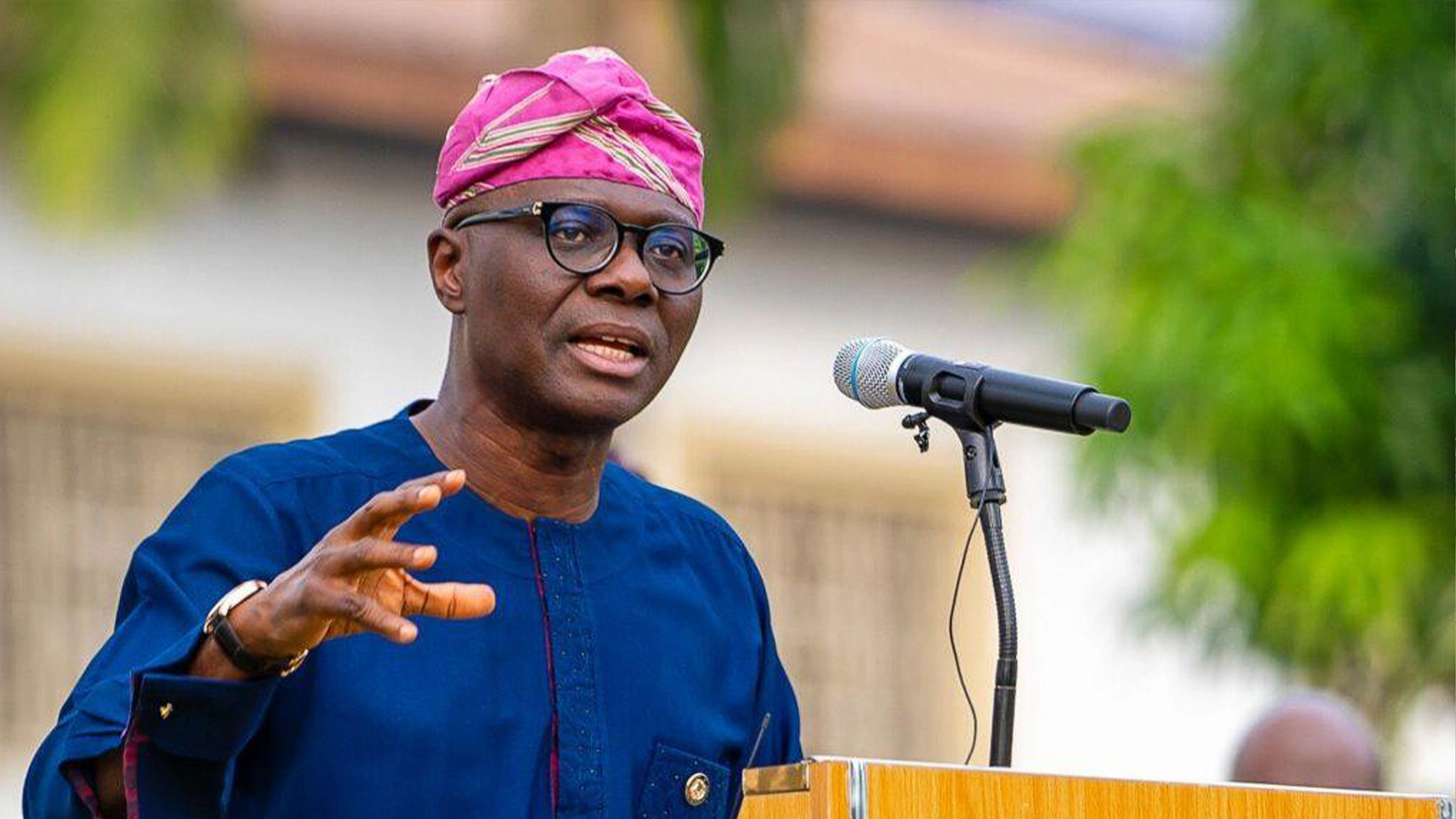
The Special Adviser to Lagos State Governor on Blue Economy, who doubles as General Manager of Lagos State Waterways Authority, Mr Oluwadamilola Emmanuel, stated this on Monday at the opening of the inaugural West and Central Africa Ferry Conference and Exhibition 2026 in Lagos, themed Connecting Nations, Empowering Trade,” with the compelling focus, “From Dakar to Luanda: New Trade Routes.
Emmanuel stated that Lagos State’s experience reinforces an important lesson: waterways development must be approached as an integrated economic and mobility system.
He added that infrastructure must be matched with effective regulation, professional operators, dependable services, passenger confidence, and sustainable financing. Innovation, including cleaner propulsion technologies and digital systems, can help us improve performance while reducing environmental impacts.
“Above all, safety must remain non-negotiable. The regional focus of this conference is therefore especially significant. No single country can unlock the full economic potential of the West and Central African coastline in isolation. We need stronger institutional relationships, practical cooperation between regulators and operators, and a shared commitment to making cross-border ferry services predictable, safe and commercially sustainable.
“I encourage participants to move beyond broad declarations and identify actionable areas of cooperation, including pilot routes, technical partnerships, investment opportunities and mechanisms for harmonising operational standards.
Over the next three days, I urge you to engage openly, share lessons from your respective jurisdictions, challenge existing assumptions and build relationships that will continue long after this conference. Let the exhibition also serve as a platform for showcasing technologies, services and solutions that can help transform our maritime transport ecosystem.”
Emmanuel noted that the region’s coastline is not simply a geographical feature; it is an economic corridor with the potential to connect markets, move people and goods, strengthen regional value chains and create opportunities for businesses and communities.
“Across West and Central Africa, the movement of passengers and cargo remains heavily dependent on existing road and port connections. Yet our coastal geography offers an additional and, in many places, underutilised option: reliable passenger and cargo ferry services linking neighbouring countries and coastal communities. Better use of this opportunity can widen logistics choices for manufacturers, freight forwarders and traders, support the movement of fast-moving consumer goods, and provide passengers with alternative routes for regional travel.
“The ambition of developing viable services along the Dakar–Luanda coastal range will, however, require more than vessels on the water. It calls for coordinated policy and regulatory frameworks, suitable port and terminal infrastructure, harmonised procedures, reliable safety and security arrangements, investment in fleet capacity, and strong collaboration among public institutions and private operators.
“We must also address the practical issues of route economics, demand, insurance, maintenance, skills development and the facilitation of cross-border movement. These are the conversations this conference must encourage, and the partnerships it must help to build.
“For Lagos State, the development of water transportation is a key part of our broader transport and Blue Economy agenda under the leadership of His Excellency, Governor Babajide Olusola Sanwo-Olu. Through LASWA, the State continues to regulate, develop, and promote safe, efficient, accessible, and sustainable inland water transportation. Our work includes strengthening compliance and safety standards, supporting operators, improving terminals and jetties, deepening stakeholder engagement, and using technology to enhance the monitoring and management of our waterways.
“A major expression of this commitment is the Omi Eko Integrated Mass Transit Project, an estimated €410 million initiative supported by the Lagos State Government, the French Development Agency, the European Investment Bank and the European Union. The project is designed to modernise water transportation and improve its integration with the wider transport network. Its planned components include approximately 15 ferry routes across 140 kilometres of waterways, the construction and upgrading of 25 terminals and jetties, and the introduction of 78 electric-powered vessels supported by charging infrastructure. Omi Eko represents an important step towards cleaner, more reliable and more connected water transport in Lagos.”
In his keynote address, Captain Ade Olopoenia implored African leaders to focus on short-sea shipping and regional cross-border ferries, instead of attempting to launch capital-intensive deep-sea fleets to compete against established global cartels.
Speaking on the topic, ‘Solving the problem of failure of shipping lines in Africa: The benchmark for success in regional cross-border ferry services,’ he listed the four-pillar benchmark as: comprehensive pre-investment feasibility study; regulatory harmonisation and public-private partnerships; professional ship management and technical standards and service delivery; and multi-modal integration and security.
In addition, Olopoenia said, ‘by establishing efficient, privately operated coastal ferry networks-supported by sound feasibility studies, professional management, public infrastructure, and integrated logistics, African nations can build a vibrant maritime economy.’
Chairman of the event and Prof. of History and International Relations at the University of Lagos, David Aworawo, noted there is a need to interrogate issues around coastal ferry services in West and Central Africa, which is critical to development in the sub-region.
He observed that moving goods by road has its disadvantages, adding that many countries have realised this; hence they improve their ferry services.
Director, Centre for indigenous Maritime Trade and Transport Studies, Edmund Chilaka, disclosed that the objective of the event is to encourage operators and investors in the boat and ferry transport sub-sector to expand their services and begin cross-border ferry operations in the sub-region, which are considered viable and profitable by various studies.