 Follow Us on Google News


 Follow Us on Google Discover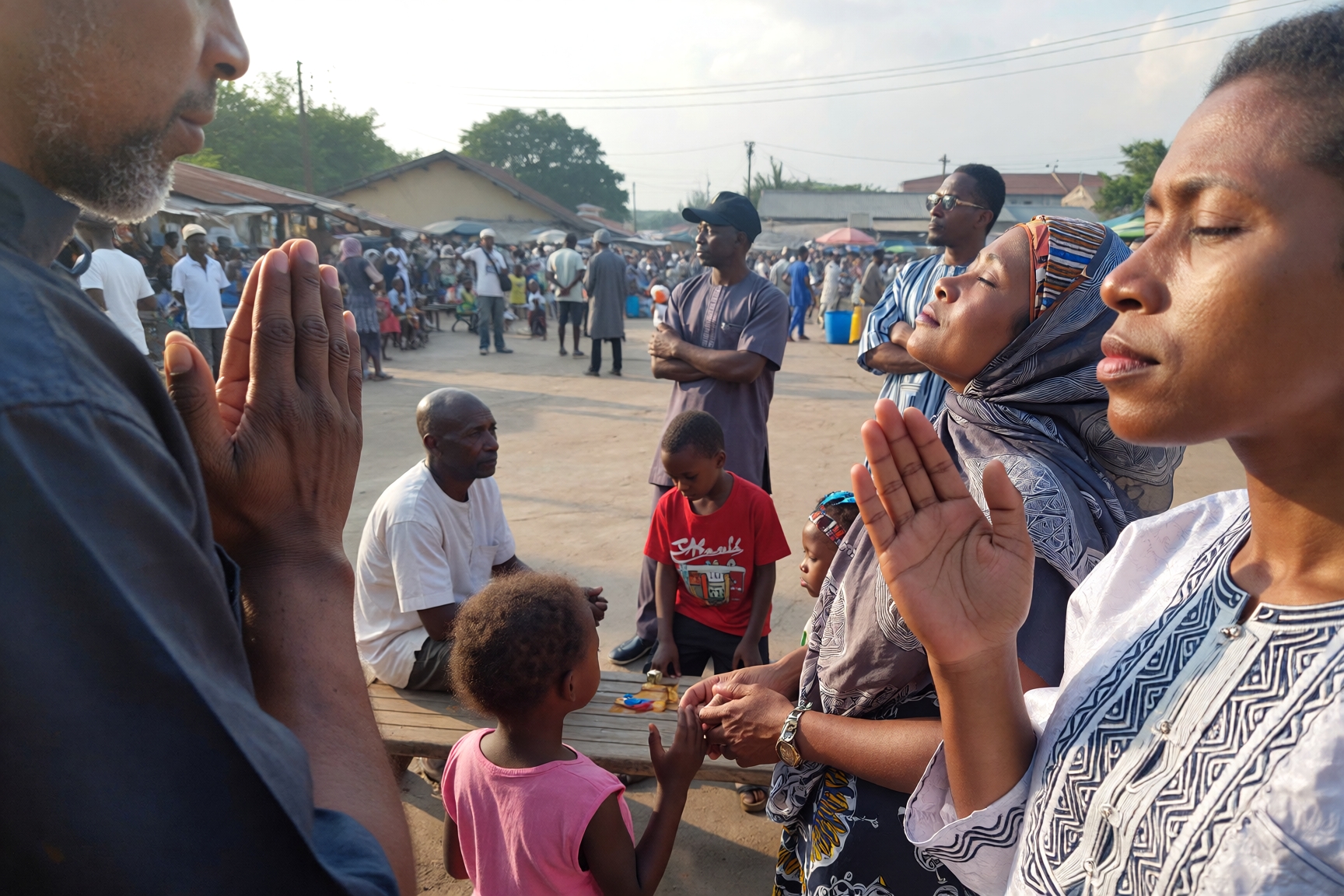
Welcome, and thank you for joining me here. This is a topic I have spent months researching in earnest, and quite honestly, one that has occupied my thinking for years before that. Growing up around Nigerians, travelling through the country, sitting in church halls that shook with song, watching men pause mid-conversation to face north and pray, sharing meals in homes where grace was said with a fervour that made your heart quicken. I have always been struck by how profoundly belief shapes Nigerian life at every level.
What do most Nigerians believe in? The short answer is that they believe in God, in family, in community, and in a moral framework that draws on faith traditions stretching back long before modern borders existed. But the longer answer is far richer, more layered, and frankly more interesting than any simple summary can capture.
This article is the conclusion of months of deep research and years of direct experience with Nigerian culture and society. I want to give you an honest, warm, and genuinely useful picture of Nigerian belief: one that goes beyond headlines.
What Are Nigerian Beliefs About Faith and Religion?
Let us start with the most obvious thing: Nigeria is one of the most openly, enthusiastically, and visibly religious nations on earth. Full stop.
Walk into any Nigerian city on a Sunday morning and you will struggle to park because the churches are overflowing. Head north on a Friday and the streets fall quiet as men gather at mosques for Jumu’ah. Even in the most urbanised and cosmopolitan corners of Lagos or Abuja, you are never far from someone ready to pray, testify, or invite you to a service.
The Nigerian Ministry of Foreign Affairs notes that religion, Islam, Christianity, and indigenous traditions are central to how Nigerians identify themselves. And that phrasing matters enormously. Not just what they practise but how they identify. Faith is not a weekend hobby in Nigeria. It is foundational to personal identity, family structure, social life, and moral reasoning.

Islam arrived in northern Nigeria through trans-Saharan trade routes as far back as the 10th century, and the Hausa have been Muslim for nearly a thousand years. Christianity became established in southern Nigeria from the late 19th century onwards, spread initially through missionary activity and then through home-grown Pentecostal movements that have since become genuinely global phenomena. Traditional African religions, which predate both, continue to shape Nigerian worldviews in ways that are not always visible from the outside but are felt in the texture of daily life everywhere.
What strikes me every time I think about Nigerian faith is not simply the numbers. It is the intensity.
The National Human Rights Commission of Nigeria has acknowledged the country’s significant religious diversity, with Christianity dominant in the south and Islam dominant in the north, with both coexisting alongside indigenous spiritual practices woven through community life in every region. Faith here is not compartmentalised. It spills into commerce, politics, medicine, family decisions, and everyday conversation in ways that can feel startling to visitors from more secular societies.
A friend of mine from Enugu once told me that in her family, you do not simply take a new job. You fast for three days, consult the pastor, invite the elders, and then you take the job. Every major life decision is a communal and spiritual one. That is not unusual. That is entirely typical.
A Seven-Step Guide to Understanding Nigerian Beliefs
If you want to genuinely understand what Nigerians believe and why it matters, these seven steps will take you a long way.
- Recognise that religion is identity, not just practice. In Nigeria, saying you are Christian or Muslim is not merely describing what you do on weekends. It shapes your relationships, your politics, your marriage prospects, your business network, and your social standing. Understand this first and everything else makes more sense.
- Understand the geographic divide. The country’s 36 states break down roughly along religious lines, with 13 northern states predominantly Muslim (including those that adopted Sharia law) and the southern states predominantly Christian. The Middle Belt is a more complex mixed zone. No map perfectly captures the nuance, but this geographic understanding helps enormously.
- Learn to see traditional beliefs beneath the surface. Many Nigerians who identify fully as Christian or Muslim still observe cultural practices rooted in indigenous spiritual frameworks: the use of protective charms, consultations with traditional healers, ancestor reverence, and ritual observances tied to ethnic festivals. This is not hypocrisy. It is layered identity.
- Pay attention to family as a belief system. Nigerian belief in the family unit (extended family especially) functions almost like a religion in itself. Obligations to kin, respect for elders, communal decision-making, and the expectation that individual success belongs to the whole family are deeply held moral convictions, not just cultural habits.
- Watch what people do when things go wrong. Crisis reveals belief most clearly. When a Nigerian faces illness, job loss, or family conflict, the response typically involves prayer, community support, and elder counsel in that order. This tells you more about belief than any demographic survey ever will.
- Notice how belief drives generosity. Nigerian hospitality (the almost reflexive urge to feed guests, share resources, and open one’s home) is itself a religious and moral conviction. Generosity is not merely polite in Nigeria. It is commanded by faith and expected by community.
- Approach faith differences with genuine curiosity. Nigerian religious diversity is real and occasionally tense, but as the Nigerian Embassy in Bern observes, most Nigerians share a strong attachment to family, a hierarchical social structure, and the dominance of religion in shaping community values, even across the divides.
What Is Nigeria’s Most Popular Religion?
This is where numbers become genuinely interesting.
Nigeria sits at a remarkable near-balance between its two dominant faiths. Christianity accounts for roughly 46% of the population, while Islam accounts for approximately 45%. That leaves a small but historically significant percentage identifying primarily with traditional African religions or other spiritual frameworks.
Christianity is the majority faith overall, but only very narrowly. And that slender margin changes at the state level completely. In Kano, Sokoto, or Borno, you are in an overwhelmingly Muslim environment. In Imo, Enugu, or Anambra, Christianity is near-total. Lagos and Abuja, as cosmopolitan megacities, are genuinely mixed.
Religious Demographics Across Nigeria’s Regions
| Region | Dominant Faith | Approx. Percentage | Traditional Practice | Key Ethnic Groups | Notable Feature |
|---|---|---|---|---|---|
| North-West | Islam | 90%+ | Widely blended | Hausa, Fulani | Sharia law in several states |
| North-East | Islam | 80%+ | Present in some communities | Kanuri, Hausa | High religious observance rates |
| North-Central (Middle Belt) | Mixed | 50/50 approx. | Significant | Tiv, Nupe, Igala | Most religiously diverse zone |
| South-West | Majority Christian | 60%+ Christian | Yoruba tradition widely maintained | Yoruba | High Pentecostal presence |
| South-East | Majority Christian | 90%+ | Igbo traditional practices blend in | Igbo | Catholic and Pentecostal stronghold |
| South-South | Majority Christian | 75%+ | Significant traditional practice | Ijaw, Efik, Ibibio | Multiple indigenous traditions |
The table above reveals something important: there is no single “Nigerian” religious experience. Each region carries its own spiritual character, shaped by centuries of distinct history. What unites them is the seriousness with which faith is held.
Even the Pentecostal revolution that has swept southern Nigeria in recent decades, producing megachurches with congregations of tens of thousands, globally recognised pastors, and worship styles that have influenced gospel music worldwide, is itself a distinctly Nigerian expression of Christianity rather than a copy of anything from outside.
As one Guardian Nigeria writer explored in depth, religion has profoundly shaped the growth and development of Nigerian society, from the establishment of early mission schools and hospitals to the moral frameworks guiding community life today.
What Do Most Nigerians Believe In Beyond Religion?
Religion is the headline, but Nigerian belief is far broader than any single institution.
Most Nigerians believe in the supreme importance of family. Not the nuclear family of two parents and a couple of children in a detached house, but the sprawling, multi-generational, geographically scattered extended family that functions as a social safety net, career network, emotional support system, and moral court all at once. Your grandmother’s opinion on your life choices matters. Your uncle’s blessing before a major business decision is sought. Your cousin’s success reflects on you and yours on them.
Most Nigerians believe in the authority of elders. This is not a quaint tradition. It is a living, functioning principle. In Yoruba culture, kneeling to greet an elder is not performative. It is a genuine acknowledgement of wisdom and moral authority. In Igbo culture, the role of the council of elders in resolving disputes remains significant even in urban contexts. In Hausa-Fulani communities, the deference shown to traditional rulers carries real social weight.
Most Nigerians believe in hard work as a moral virtue. The Igbo concept of “ije ndu” (the journey of life as something you must actively work and strive through) captures something felt across all Nigerian ethnic groups. Nigerians are known for entrepreneurial drive, academic ambition, and an unwillingness to accept failure as a final verdict. You see this in the diaspora, in the markets, in the students who study by candlelight when the power goes out.
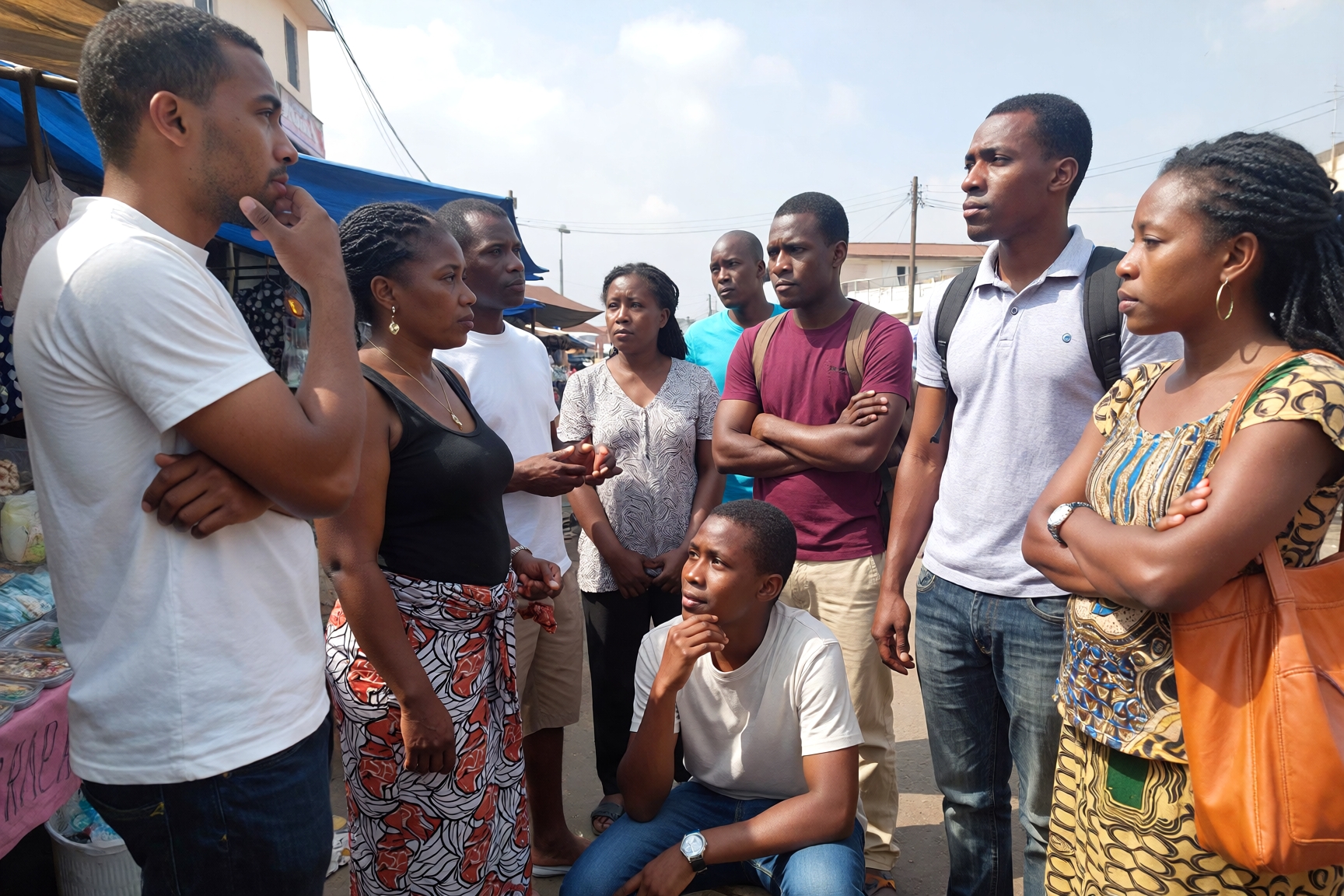
Most Nigerians believe in community as the basic unit of a good life. This manifests in age-grade associations, community development unions, town hall meetings, and the simple expectation that you know your neighbours, greet your elders, and show up when someone needs help.
And perhaps most visibly to the outside world: most Nigerians believe in joy, celebration, and expression. The richness of Nigerian music, the drama of Nigerian weddings, the vibrancy of Nigerian fashion, the warmth of Nigerian hospitality: these are not mere cultural quirks. They are expressions of a deep-rooted belief that life is meant to be celebrated and shared.
Which Religions Do Not Support LGBTQ?
This is a question that appears frequently in any honest discussion of Nigerian beliefs, and it deserves a direct, clear-eyed answer.
Both Christianity and Islam, as they are predominantly practised in Nigeria, hold traditional positions that do not affirm same-sex relationships. This is not unique to Nigeria. These are the majority positions of these faiths globally, though internal debates exist within both traditions in many countries.
In Nigeria, these positions are held with particular strength and are reinforced by legal frameworks. The Same-Sex Marriage (Prohibition) Act of 2014 made same-sex unions illegal and extended prohibitions to related advocacy. The law reflects the broad consensus of Nigerian religious opinion across Christian and Muslim communities alike.
Traditional African religions in Nigeria do not have a single unified position, but most traditional frameworks are structured around roles tied to gender and reproduction, and LGBTQ identities were not historically part of the discourse in most indigenous traditions.
This is a topic where honest engagement requires acknowledging both the sincerity of religious conviction and the very real vulnerability of LGBTQ Nigerians. Diverse voices within Nigeria, including human rights advocates and some progressive religious thinkers, have called for greater compassion and legal protection regardless of theological position. As the Guardian Nigeria piece on faiths uniting illustrates, some Nigerian religious leaders are genuinely committed to the principle that every person carries inherent dignity. The conversation within Nigeria on this topic is ongoing and complex.
What Are Nigerians Most Known For?
Beyond religion and family, Nigeria carries a set of characteristics that define it in the eyes of the world and in the eyes of Nigerians themselves.
Nigerians are known for resilience. A country that has survived civil war, military dictatorship, economic collapse, and constant governance challenges, and yet continues to produce world-class writers, musicians, doctors, engineers, and entrepreneurs: that is a form of collective belief in itself. The belief that tomorrow can be better. That effort matters. That you do not stop.
Nigerians are known for cultural creativity. Nollywood is the world’s second-largest film industry by volume. Afrobeats has conquered global charts and dance floors from Lagos to London to Los Angeles. Nigerian fashion designers are dressing heads of state and celebrities on multiple continents. This creative energy is not separate from belief. It is rooted in a conviction that Nigerian stories matter, that Nigerian aesthetics have something unique to offer.
Nigerians are known for academic and professional ambition. The Nigerian diaspora produces an outsized proportion of doctors, academics, lawyers, and business leaders relative to its size, a fact that reflects the enormous value placed on education within Nigerian belief systems.
And, candidly, Nigerians are known for a certain magnificent stubbornness. The refusal to be overlooked. The insistence on taking up space, speaking up, and being counted. That quality runs through Nigerian history, culture, and faith alike.
As one Guardian Nigeria writer observed in a thoughtful piece on religious intolerance and tolerance in Nigeria, the vast majority of Nigerians of different faiths live and do business together peacefully, sharing fences, markets, and friendships across what the international media often frames as unbridgeable divides.
Related Articles
If this article has left you curious to go further, I have written two pieces that complement what you have just read. The first is What Are Nigerian Values?, which explores how those deep beliefs translate into the moral commitments, social expectations, and cultural practices that shape Nigerian life day to day. The second is What Religions Are Practiced in Nigeria?, which goes into considerably more detail on the history, diversity, and lived experience of Christianity, Islam, and traditional African religion across the country. Both pieces will enrich everything you have read here.
Conclusion: What Most Nigerians Believe In Is More Than a Survey Can Capture
So, what do most Nigerians believe in?
They believe in God (whether called Olodumare, Allah, or the Father) with a fervour that shapes the entire texture of daily life. They believe in family as the bedrock of human flourishing. They believe in community, in elders, in the wisdom of tradition. They believe in hard work, in resilience, in the conviction that their stories matter to the world.
And they believe, perhaps most powerfully of all, that the next generation deserves better than the last one had.
These are not beliefs held lightly or performed for outsiders. They are the operating system of Nigerian life, running quietly and constantly beneath every conversation, every transaction, every celebration, every act of courage.
- Faith is foundational, not decorative. Whatever your background, engage with Nigerian religious belief as a sincere and deeply held force that shapes everything from family dynamics to professional decisions, because it genuinely does.
- Belief extends beyond church and mosque. Nigerian convictions about family, elder respect, community obligation, and hard work are moral beliefs in their own right, as powerful as any formal creed.
- Diversity within belief is as important as diversity between beliefs. Nigeria’s Christians are not one thing, its Muslims are not one thing, and its traditional practitioners are not one thing. Approach Nigerian belief with curiosity rather than assumption.
Frequently Asked Questions About What Most Nigerians Believe In
What do most Nigerians believe in regarding God?
The overwhelming majority of Nigerians believe in a single supreme creator, whether approached through Christianity, Islam, or traditional African cosmologies. This belief in a higher power is one of the most consistent features of Nigerian identity across all 36 states and the Federal Capital Territory.
Is Nigeria a predominantly Christian or Muslim country?
Nigeria is nearly evenly split, with Christianity holding a very slight majority at roughly 46% and Islam at approximately 45%. The balance shifts dramatically by region, with northern states predominantly Muslim and southern states predominantly Christian.
What traditional beliefs do Nigerians still hold?
Many Nigerians maintain beliefs in ancestral spirits, traditional healers, and ethnic ritual practices alongside formal Christianity or Islam. These indigenous frameworks, though rarely counted in official statistics, continue to shape daily life, healthcare decisions, and community conflict resolution.
What do Nigerians believe about family?
Extended family in particular is considered the fundamental unit of society and the primary obligation of any person. Financial support, life decisions, and social reputation are understood as family matters, not purely individual ones.
What do Nigerians believe about hard work and success?
Success through personal effort and education is highly valued across all Nigerian ethnic and religious groups. The Igbo concept of self-determination through striving, and the broader Nigerian respect for those who build something from nothing, reflect a deep moral conviction that effort defines character.
Do Nigerians believe in traditional medicine?
Many Nigerians draw on both modern medicine and traditional herbal or spiritual healing practices, often simultaneously. This is not seen as contradictory but as drawing on all available resources, a pragmatic approach shaped by both belief and experience.
What do Nigerian Christians specifically believe?
Nigerian Christianity encompasses Catholic, Anglican, Methodist, Baptist, and most significantly, Pentecostal and charismatic traditions. Core beliefs include salvation, prayer as direct communication with God, the importance of the Holy Spirit, and often a strong conviction in miraculous healing and divine provision.
What do Nigerian Muslims specifically believe?
Nigerian Muslims hold the five pillars of Islam (declaration of faith, prayer, fasting, charity, and pilgrimage) as central obligations. The Sufi brotherhoods of the north, particularly the Qadiriyya and Tijaniyya orders, add important dimensions of devotional practice and social organisation to northern Nigerian Islamic life.
What do Nigerians believe about children and parenting?
Children are considered an enormous blessing across all Nigerian cultural and religious traditions. Parents, particularly mothers, are respected and honoured deeply. Investment in children’s education is treated as a moral and religious duty, not merely a practical decision.
What do Nigerians believe about morality and community?
Collective wellbeing is placed above individual preference in most Nigerian belief systems. Honesty, generosity, respect for elders, and loyalty to family are considered the foundations of moral character, reinforced by both religious teaching and community expectation.
Do Nigerians believe in fate or personal agency?
Most Nigerians hold a nuanced position that combines divine sovereignty with personal responsibility. God’s plan is real and respected, but human effort, prayer, and wisdom are expected contributions to outcomes. The idea that one simply accepts whatever happens without striving is not typical Nigerian belief.
What do Nigerians believe about death and the afterlife?
Both Christianity and Islam teach strong beliefs in afterlife, heaven, and divine judgement, and these convictions are held with great sincerity in Nigeria. Traditional African cosmologies add beliefs in ancestor spirits who continue to influence the living, making death understood as a transition rather than an ending.

