 Follow Us on Google News


 Follow Us on Google Discover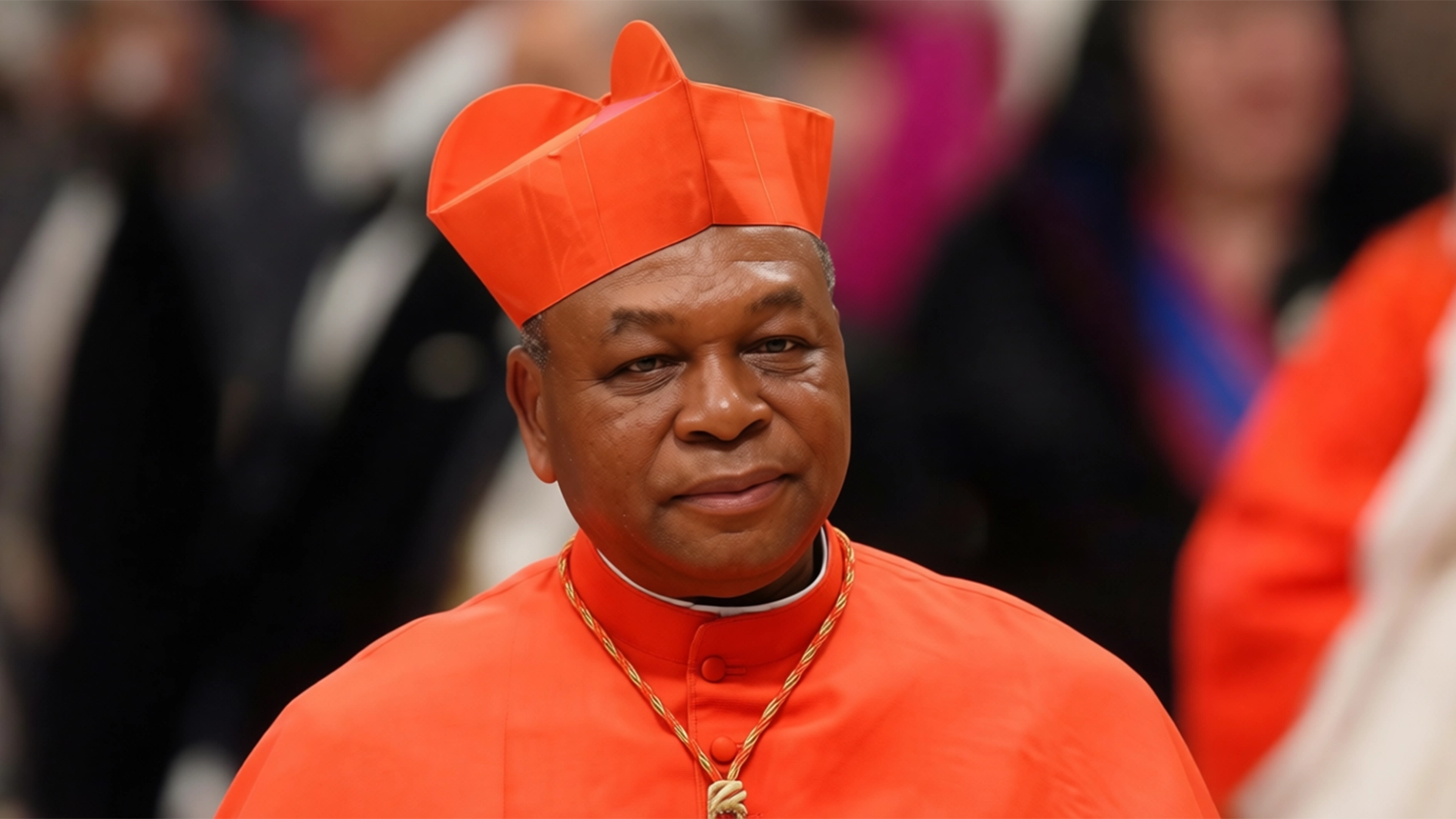
By Anthony Akinwale
An endemic could be a plant, an animal or a disease usually confined to a specific place or a specific group. An epidemic is a disease that breaks out suddenly affecting, at the same time, a large per centage of the population within a region.
In the build-up to the 2027 election, it is difficult to know whether what obtains in Nigeria as an endemic or an epidemic. What is easily perceptible, however, is a disease that could be described as a general lack of appetite for reasoned and civil discourse, rooted in a general lack of democratic temperament found among those who aspire to hold public offices in Nigeria, and their numerous hired cyber warriors.
What then should the Nigerian do? If he expresses concerns about policies of government, he is automatically branded as member of an opposition party and maligned by online supporters of the party in government. If he expresses concerns about any opposition candidate, online supporters of the opposition candidate automatically brand him as a member of the party in government. They will even say he has gone to collect an envelope. The government and the opposition are engaged in a war in which truth is the first casualty. And both sides are guilty of intolerance of divergent opinions.
In a less than decent show of ethnic jingoism, Nigeria’s history is being clandestinely revised to manipulate the emotions of Nigerians who were either too young or not born when some of the selfish and tragic mismanagement of our ethnic diversity took place.
A few days ago, the Catholic Bishops of Nigeria spoke to the President. They legitimately expressed rightly founded concerns about the state of our country, about insecurity and poverty, about the need to refrain from using instruments of state to determine the outcome of next year’s election. They did not insult the President.

But, lest we forget, they were not just addressing the President. Their words are equally applicable to the entire political elite in Nigeria, that is, across boundaries of political parties. Not unexpectedly, they are being maligned by hired cyber warriors. That validates the veracity of the Yoruba saying: “Olootọìlúniìkáilu.” By way of an approximate but valid translation, that means the one who speaks the truth is the enemy of the city. Yet, truth moves not at the speed of a sprinter, but at the speed of a long-distance runner.
It was not the first time the Catholic Bishops of Nigeria engaged Nigerian leaders. On October 1, 1960, the Catholic Bishops wrote a letter to Nigeria at independence. Fifty years later, on October 1, 2010, golden jubilee of Nigeria’s independence, they wrote another letter to Nigeria. It was presented to President Goodluck Jonathan at the Cathedral Church of Our Lady Queen of Nigeria in Abuja on the First Sunday of Lent in 2011. The Catholic Bishops’ Conference of Nigeria holds two plenary meetings a year.
During those meetings, the Bishops pray and reflect on matters of Church and state. At the end of each of those meetings, they issue a communique sharing the fruits of their reflection with the nation.
The Catholic Bishops of Nigeria have constructively engaged past and present leaders with candour, courage and consistency. In the dark days of second bout of pestilential military rule, while other religious leaders were silent, the Catholic Bishops of Nigeria refused to be intimidated by the tyranny of Buhari, Babangida and Abacha.
Theirs was the voice of a Church conscious of the prophetic essence of her mission. For example, in his homily at the Mass of his installation as Archbishop of Abuja in June 1994, in words clearly addressed to General Sani Abacha who arrested Moshood Abiola, winner of the June 12, 1993 presidential election, then Archbishop Onaiyekan said inter alia: “In God’s name and in the name of the poor masses of this nation, I beg all those who are now running the affairs of the nation to sincerely examine their consciences before God, and seek divine guidance in all that they do. One thing that is obvious to all is that we cannot continue along the present path of stagnation, confrontation and general tension in the land. The Lord has been kind and patient with our land. May we not try his patience beyond limits!”
Since restoration of civilian rule on May 29, 1999, which, sadly, has not turned out to be a restoration of democratic rule, the Catholic Bishops of Nigeria have engaged Presidents and politicians across the political spectrum of Nigeria. They spoke to Presidents Obasanjo and Yar’Adua, Jonathan and Buhari.
According to the Premium Times edition of November 20, 2012, “Less than 48 hours after President Goodluck Jonathan praised himself for fighting corruption, John Cardinal Onaiyekan, the Catholic Archbishop of Abuja, has urged him to be less timid, but be fearless in his campaign against corruption in Nigeria.
“The Al-Habibiyyah Islamic Society of Nigeria was at the Cardinal’s house to congratulate and felicitate with him on his elevation to a Cardinal by the Vatican. Onaiyekan said corruption in Nigeria was growing at a pace that required a fearless and honest leader to tackle it.”
If there are Catholic priests who use the pulpit to campaign for any candidate, and indeed there are, which is an abuse of pastoral office unbecoming of a Catholic priest, it is to be noted that the Catholic Church in Nigeria has not, and will not adopt any candidate. Like Biblical prophets, the role of Catholic priests and bishops is to maintain critical vigilance on what transpires in every sphere of human endeavor, including politics. Their duty is to offer a critique of policies.
It is indeed a fallacy to admonish religious leaders to “stay out of politics”. Politics, rightly understood, has the common good as its intent and content. Politics is an ethical project, and religions teach ethics and inform morality. It is therefore the ineluctable duty of religious leaders to challenge the assumption that all is fair in politics, an assumption that mistakes brigandage for politics.
That is why the Catholic Bishops of Nigeria constantly challenge us as a nation—not just government, not just the opposition parties, but all of us—to keep in focus the moral intent and content of politics. That is why asking them to stay out of politics, as a Presidential spokesman admonishes, amounts to a gravely fallacious and pernicious postulation.
The Catholic Bishops’ Conference of Nigeria is a pan-Nigerian body. That is why it is fitting to conclude this piece by addressing a few words to the ethnic jingoists among us.
To cyber warriors in particular, hired by government and opposition parties, to those who keep fanning embers of inter-ethnic strife in the build-up to the 2027 election, please think of this. The night before this piece was written, Nigeria’s Super Falcons engaged the Copper Queens of Zambia in a make-or-break match at the ongoing WAFCON 2026. In that match, an Igbo defender and an Igbo goalkeeper kept Nigeria from conceding a goal, and a Yoruba striker scored Nigeria’s only goal.
In the build-up to 2027, doesn’t that teach us that ethnic bigotry is totally unwise? Doesn’t that point to how great our accomplishments would be if only we would recognise, protect and promote our common humanity?
Father Akinwale is of the Department of Philosophy and Religious Studies, Augustine University, Ilara-Epe, Lagos State.

