 Follow Us on Google News


 Follow Us on Google Discover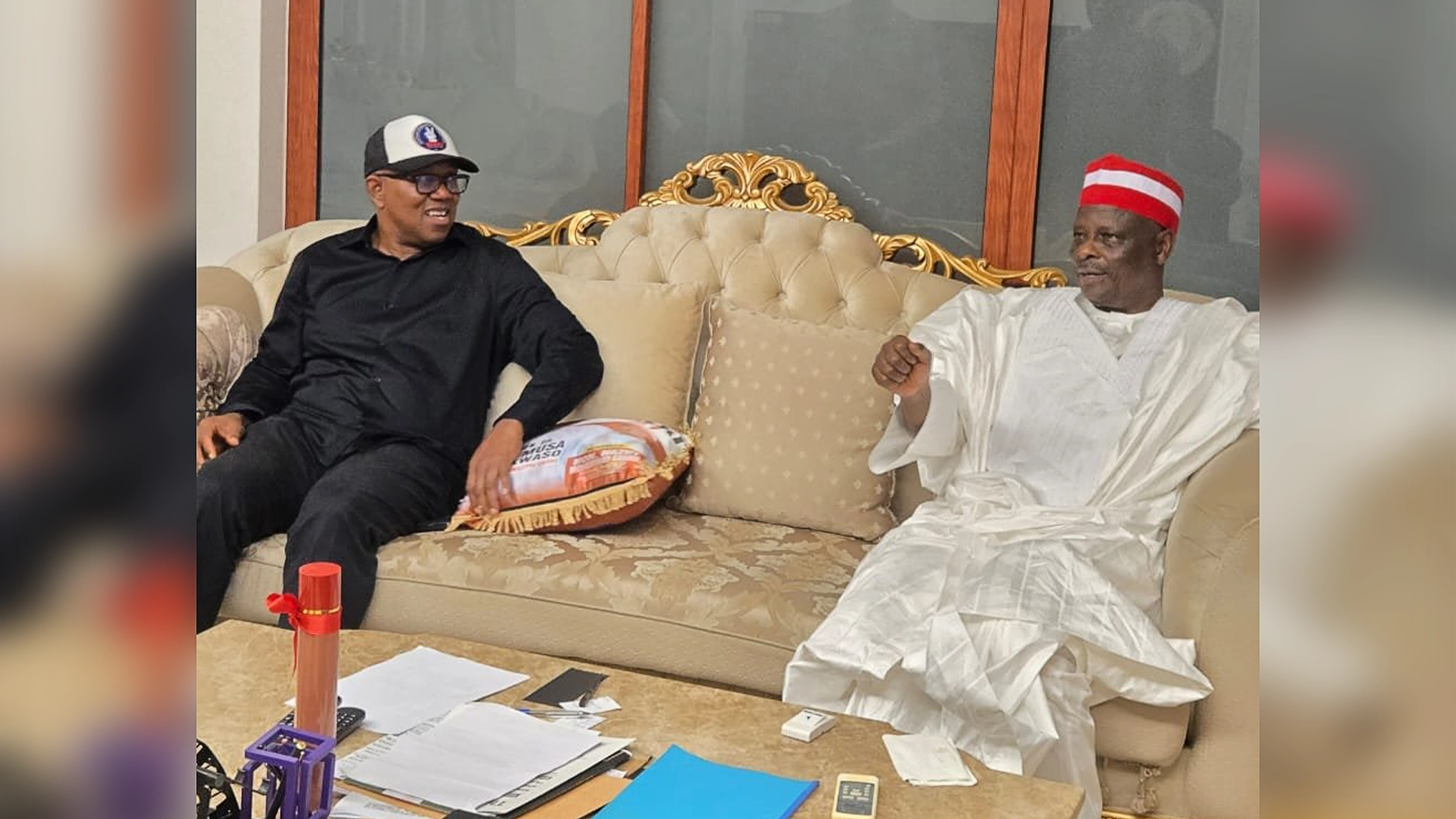
Riding on the strong demographic momentum inspired by its presidential standard bearer, Mr. Peter Obi, the Nigeria Democratic Congress (NDC) seems to be overwhelmed by the sudden burst of fame it enjoys on the way to its first participation in a general election. The party’s preparation for the major electoral contest is proving to be less than tidy in view of the internal ambiguities that belie the recent allegations of a jumbled list of nominated candidates, LEO SOBECHI reports.
Everything about the Nigeria Democratic Congress (NDC) appears to be ad hoc, improvised and rushed. As a political party, it could be said that NDC did not undergo a period of weaning needed to refine its structures.
Barely five months to the 2027 general election, the platform that made headlines as a breakaway from the coalition of opposition figures in the African Democratic Congress (ADC), has continued to manifest signs of premature delivery that follows induced labour.
Encouraged by his performance in the 2023 presidential poll on the platform of the Labour Party (LP), Obi and his supporters had claimed that the leadership crisis in the LP was stoked by some external forces, which they said did not want him on the 2027 presidential ballot. As such, troubled by the prolonged leadership contention caused by Julius Abure’s tenure elongation plots, Obi, alongside the Abia State Governor, Alex Otti, and other members of the party’s caucus, decided to set up the Senator Nenadi Usman-led Caretaker Committee to oversee the affairs of the party pending the conduct of a substantive national convention.
Nonetheless, as the Independent National Electoral Commission (INEC) vacillated in implementing the Federal High Court judgment, which declared that Abure, having exceeded his tenure, does not have a legitimate claim to the office of national chairman of LP, Obi decided to leave the LP and pitched his political tent with the bourgeoning coalition of opposition leaders on the platform of ADC.
But no sooner than he joined ADC that Obi also found that the ADC was actually a special purpose vehicle being readied for the 2027 presidential run of former vice president Atiku Abubakar, who also abandoned the equally troubled Peoples Democratic Party (PDP) on which he contested the 2023 general election.

Not even Obi’s offer to serve for just one term or the argument that the Presidency should remain in the South for the next four years in line with the zoning principle could sway the ADC leaders. Having come to the realisation that the odds were stacked against the possibility of him flying the flag of the opposition coalition in the ADC, the former LP presidential candidate again migrated to the NDC with the former presidential candidate of the New Nigeria Peoples Party (NNPP), Rabiu Musa Kwankwaso.
At the height of the schemes for the 2027 presidential contest, Obi had entered into a political understanding with Kwankwaso, assuring that since the zoning convention between the North and South favours an extra four years of the Presidency in the South, he would not breach that principle.
Consequently, after committing that promise in writing and the document attested to before Kwankwaso’s supporters, under the auspices of Kwankwasiyya Movement, and the larger national leadership of the NDC, Obi and Kwankwaso flocked into the NDC, which has former Bayelsa State governor and Senator representing Bayelsa West Senatorial District, Seriake Dickson, as its national leader.
Internal Contradictions
Although Obi and Kwankwaso and their supporters – the Obidients and Kwankwasiyya Movements – were received into NDC with fanfare, it did not take long before they began to experience new irritations.
Guaranteed of their joint ticket, Obi and Kwankwaso did not find their new political abode an easy platform to exercise authority.
To the newcomers, the NDC, presented as an unusual political party, which was unlike the LP, NNPP and ADC that jettisoned. Though it had a national chairman like every other registered political party, the occasion of a supreme leader brought about some tricky organisational settings that was not easy to grapple with.
As things turned out, the incongruities in the management of diverse relationships within the party played out as NDC embarked on its candidate selection process in readiness for the 2027 general election. The tributaries of electoral cum political interests represented by the Dickson aboriginal members, the Obi and Kwankwaso groupings, threw up a knotty challenge that the newcomers did not envisage.
Matters came to a frenzied pitch when two out of the three tendencies – Dickson and Obidients – clashed over the choice of party’s flag bearer for the Abuja senatorial contest. While the Obidients lined behind the activist Muslim amazon, Hajiya Aisha Yesufu, the Dicksonites preferred Amaanda Pam in apparent show of solidarity for aboriginal/foundation members.
Although the quiet supremacy battle left the Obidients with the short end of the stake, it was to a large extent a crude awakening to the realities of seeking a life-saving political shelter after a long peregrination across different platforms.
Exulting and feeling triumphant with the obvious humbling of the Obidients, Dickson waxed magisterial as the supreme leader when he appeared on Charles Aniagolu’s Arise Prime Time television to boast of his political magnanimity: “Nobody is more qualified than me to run for president. Don’t disparage me or my party; if you think it is easy to form a political party, go and form your own. People should learn to respect their hosts.”
That fateful June 10, 2026, his voice thundered through the television screen. The supreme leader, who is also known as Ofrapepe (white dragon), contended that instead of doing NDC a favour, it was NDC that was doing the Obidients a favour.
The cold water that Dickson’s unguarded television utterances threw on the rising momentum of the NDC dampened the enthusiasm of some of the Obidients and Kwankwasiyya members. While some Obidients retreated to the ADC, their Kwankwasiyya counterparts in Kano State chose to line behind Governor Abba Kabir Yusuf (Abba Gida-Gida).
But as former presidential runners, who needed an emphatic contest on a combined ticket, both Obi and Kwankwaso fell back on the good offices of mutual associates to douse the ember of creeping mistrust and mutual suspicion through backchannel fence-mending.
However, just like mumbling subsists long after madness is cured, the harm has been done. Insider sources disclosed that as a result of the far-reaching implications of Dickson’s utterances on national television, which many considered beneath a leader of a national political party going to a major electoral battle, the senator decided to hire three seasoned administrators and media professionals as aides.
In a statement announcing the appointments, the NDC National Publicity Secretary, Osa Director, explained that while Sani Takori would serve as Dickson’s Political Adviser, VinMartin Ilo, formerly of African Independent Television, and Steve Nwosu, formerly of The Sun and The Nation newspapers, are to function as Chief Technical Adviser and Spokesman, respectively.
According to Director, the new hands are intended to “strengthen the operations, administration and strategic communication of the former Bayelsa State governor and the NDC.”
Party Primaries: New Worries, Yawning Gaps
If the war of words between activist Aisha Yesufu and the aboriginal NDC leaders unsettled the party, the brawl became a telling metaphor about the intricate leadership structure of the party.
While on paper Senator Moses Cleopas Zuwoghe is designated as the National Chairman of the party, the final decision on the management of internal relationships and affairs of the party rests on the supreme leader. For the national chairman and the founder of the party to hail, not only from the same geopolitical zone, but also the same state, shows how determined the leader is to avoid sharing glory, if not fear of possible hijack.
Yet, for the national leader to be gunning for a senatorial seat while promoting the candidacies of presidential runners exposes the minefields along NDC’s path to the future. It was this door-mat leadership mentality that exposed the weakness of the party’s structure during the National Assembly and gubernatorial primaries.
In both Anambra and Kano States, where NDC selected its presidential and vice presidential candidates, the national leader made sure to protect his own loyalists from being swallowed up by the rampaging Obidients and Kwankwasiyyans. That these parallel line-ups exposed the tenuous nature of the NDC platform could be seen in the recent allegations of uploading strange names on the INEC portal as the party’s candidates in Anambra State.
The controversies over the NDC’s nominated candidates’ list did much to echo Yesufu’s claims that the party subverted democratic process of choosing its candidate in the Federal Capital Territory. “I understood what I was getting into; I knew that the quality of our politics has not yet risen to the occasion that values-based candidates do not easily emerge by merit in a system built to resist them,” the Edo State-born Yesufu had stated.
Against that doubtful background, when recently the NDC accused INEC of smuggling some strange names into the list of its nominated candidates, many Nigerians took the allegation with a bag of salt. Many were wondering whether the national leader and the national chairman reconciled their lists before sending them to INEC.
In a statement signed by its National Chairman, Senator Moses Cleopas Zuwoghe, NDC noted that by systematically removing its nominated candidates for the 2027 general election and replacing same with strange persons unknown to the party, INEC was unwittingly supplanting its capacity to be competitive in the February 8, 2027, State Assembly poll in Anambra State.
While the NDC leadership hinted that INEC must have connived with unknown persons to doctor the list of its nominated candidates in Anambra State to favour an unnamed political party, the electoral rejected that claim.
The Chief Press Secretary to the INEC Chairman, Prof. Joash Amupitan, Dayo Oketola, told journalists that it was grossly misleading for NDC to claim that its list of candidates was doctored, stressing that being a non-partisan body created by law, INEC does not dabble into the process of candidates’ nomination.
But maintaining his stance, the NDC chairman noted that “the worst INEC could do in a situation whereby the names submitted by the party did not tally with those that INEC claimed to have received from its monitoring teams on the field, was to leave the space blank, not to preload fictitious names and prevent the party from loading its genuine candidates.
“At the very worst, INEC could have left us with no candidates for those positions, if they knew they were unwilling to engage us in addressing any perceived anomaly…Even as we move to approach the court of competent jurisdiction to seek redress and restore our authentic candidates, the general public and our millions of supporters should note that these are not our candidates,” the chairman asserted.
Clouds Around Dickson
Before the dust raised by the NDC’s allegation could settle, a Human Rights Activist and former Presidential Adviser, Mr. Okoi Obono Obla, chided the party for manifesting a lack of thoroughness and seriousness in its preparation for the 2027 polls.
Further, it was observed that while the presidential and vice presidential candidates of the party are counting on their support and followership to put up a good show during the presidential poll, some of the NDC leaders were busy looking for what they could find to fend for themselves.
In the prevailing prebendal politics, where those influential stakeholders were busy searching for moneybags instead of capable and competitive candidates, the INEC’s publication of the provisional list exposed the structural infirmities of the NDC.
As such, resting his analysis on what he described as the “Cost of Empty Slots,” Obla argued that the opposition party’s failure to field candidates in some 12 states could negatively affect its presidential fate on January 16, 2027. Although the former Presidential Adviser did not include Nasarawa among the 11 states that he listed, he expressed the view that “if NDC enters the triple election of Jan 16, 2027 with 233 LGAs (30.1% of Nigeria) and 141 Federal Constituencies blank, it will cost 4-6 million votes on Jan 16 – not from lack of popularity, but from lack of ballot presence and agent coverage.”
Obna’s assertions broached what many NDC stakeholders were whispering in hushed tones: suggestions that the party had some under the table deals with some incumbent and outgoing governors, leading to the failure to field guber candidates in 12 states. That could explain the National Publicity Secretary’s disclosure that NDC used placeholders in the affected states.
Neither the Electoral Act 2026 nor the Constitution and INEC guidelines permitted the fielding of placeholders, since they neither purchase forms nor stand for primary elections.
For instance, the case of Plateau State stands out because while an aspirant purchased nomination forms was screened and returned unopposed during the direct primary, the name of a placeholder was sent to INEC. With ready indicators pointing to the possibility that the NDC is troubled by internal contradictions, while the national leadership seems overwhelmed by the sudden burst of popularity thrust on the party by the entrance of two former presidential contenders with fanatical followers.
All in all, the indubitable observation is that the two-ended leadership dangles between inexperience and confusion. Yet, amid that disconcerting perception, there are those who weave some conjectures: Could it be that Dickson is merely bidding his time, believing that a possible trade-off of the 2027 poll could pave the way for his possible emergence as running mate to Senator Rabiu Musa Kwankwaso for a KD ticket in 2031?
When confronted with these posers and conjectures, the NDC Spokesperson, Director, told The Guardian that “it is out of place to state that the NDC is ridden with internal contradictions.”
“There is no political party on earth where people don’t have challenges and disagreements. Sometimes, we disagree on specifics, but we are all focused on our core values and objectives. That is not in doubt,” he asserted.
Dispelling any reservations about Dickson’s leadership capacity and experience, Director retorted: “Tell me which politician of his generation is more exposed and experienced than the national leader of our party, Senator Seriake Dickson?
“NDC leadership is not overwhelmed in any way. Undoubtedly, we are the most sought-after, fastest growing political party in Nigeria today. That in itself has attracted envy and negative propaganda from the APC.”
Irked by the negative backlash from the gaps in its candidates’ list as uploaded by the INEC, Obi and Kwankwaso convened a meeting with the ‘problem candidates’ comprising gubernatorial, senatorial and other aspirants who were robbed of their victory during the primaries, as a last-ditch effort at troubleshooting.
How far that belated intervention would go to cover the gaps in NDC’s preparations for next year’s general election would be seen when INEC uploads the final list of contenders after the expected claims and objections. Let it not be that the NDC is using the 2027 contest to test its structure and firm up its strategies.

