 Follow Us on Google News


 Follow Us on Google Discover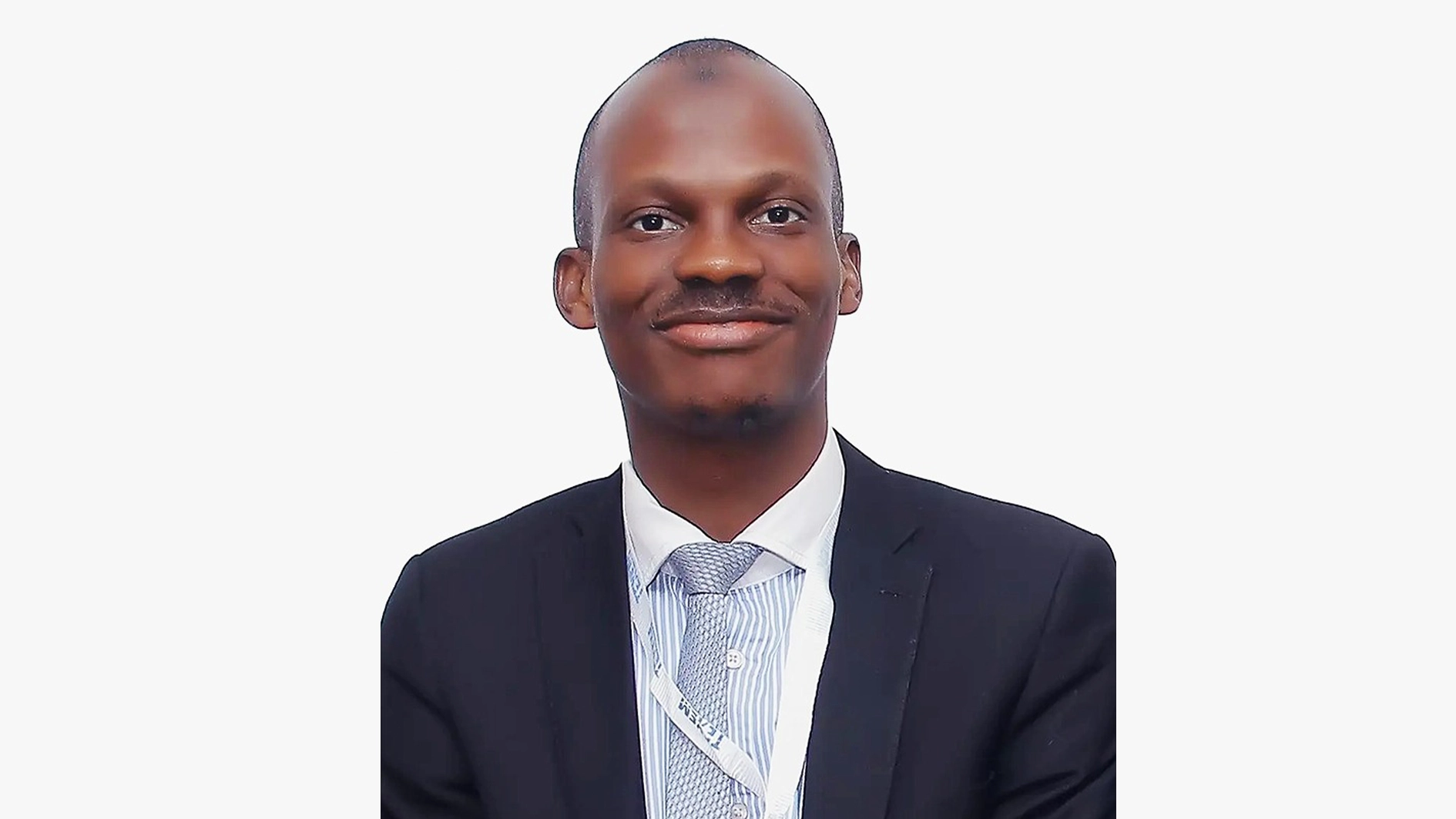
The CIPD Academic Fellowship therefore provides more than another credential in Abubakre’s professional profile. It recognises a body of work built around the relationship between scholarship, teaching, executive development and practical leadership. It also comes at a time when organisations are having to make decisions across increasingly interconnected systems.
Dr Alim Abubakre’s Academic Fellowship of the Chartered Institute of Personnel and Development adds a new distinction to a career focused on connecting scholarship with practical leadership. At a time when organisations are confronting rapid technological change, geopolitical uncertainty and complex decisions, the ability to keep learning has become an important part of leadership.
For Dr Alim Abubakre, that principle has now received formal recognition with his award of Academic Fellowship of the Chartered Institute of Personnel and Development (CIPD). The fellowship, awarded following assessment against the CIPD’s Academic membership criteria, allows Abubakre to use the designation Academic FCIPD.
But beyond the designation itself, the recognition provides an opportunity to examine the work behind it, particularly Abubakre’s efforts to connect academic research with executive education, organisational practice and the development of leaders. His work sits across several spaces. He is an academic, executive educator and practitioner whose interests include leadership, international business, institutional development and the challenges confronting organisations operating in complex environments. That intersection between knowledge and practice is central to understanding the significance of the fellowship.
More than an academic title
Academic fellowships can represent different things depending on the institution and criteria involved. In this case, the CIPD describes Academic Fellowship as recognition of the contribution academics make through teaching, research, thought leadership and the development of future leaders. Victoria Winkler, Chartered FCIPD, Standards & Professional Development Director at the CIPD, described the fellowship as a recognition of “expertise, credibility, and authority”, particularly in advancing the people profession through academic work and leadership development.
For Abubakre, the significance therefore extends beyond adding another designation after his name. His own interpretation of the recognition is revealing. “Recognition should increase responsibility, not simply status,” he said. That distinction is important because it reflects a central theme running through his work: knowledge has limited value if it cannot be applied.

Where research meets practice
The relationship between academic research and the real-world decisions made by organisations has long presented a challenge. Research can identify patterns and provide evidence that may not be immediately visible through experience alone. But research that remains within academic circles may have limited practical influence. Conversely, decisions based entirely on experience can reproduce assumptions that have never been properly tested. Abubakre’s work has sought to operate between these two spaces. Rt Hon Graham Stuart, MP for Beverley and Holderness, who co-delivered a series of leadership sessions with Abubakre, pointed specifically to his ability to translate academic research into practical learning for political and corporate leaders. “Converting the insights of the latest academic research into inspiring, practical and effective courses for political and corporate leaders sets Dr Abubakre apart,” Stuart said. That observation goes to the heart of executive education. The objective is not just to give experienced professionals more information, it is to help them reconsider assumptions, interpret new evidence and make better decisions in situations where there may be no straightforward answer.
The practical value of education therefore depends partly on whether leaders can carry what they learn into the situations in which they exercise authority. It is this movement from knowledge to judgment that has become a recurring theme in Abubakre’s work.
Research shaped by complex problems
The academic dimension of his work also reflects an interest in problems that do not exist in isolation. His research has examined stakeholder collaboration during the pandemic across Sub-Saharan Africa, as well as the interconnected barriers facing small and medium-sized enterprises in public procurement. Although the subjects are different, they share an underlying concern: how complex systems can work better for the people and organisations that depend on them.
The pandemic, for example, demonstrated how quickly a disruption in one part of a system could affect others. Governments, businesses, employees, communities and other stakeholders could not always address their challenges independently. Similarly, barriers to SME participation in public procurement are not necessarily limited to the ability of individual businesses to compete. They can involve institutional processes, access to information, relationships, capacity and the structures through which public resources are allocated. These kinds of challenges require leaders to look beyond individual decisions and understand the systems surrounding them. That systems perspective is relevant to organisations operating in an environment where economic, technological and geopolitical issues are becoming more closely connected.
Leadership in an age of uncertainty
The context in which leaders now operate has also changed. Artificial intelligence is accelerating the speed at which information can be produced and decisions can be made. Geopolitical tensions can affect investment, trade and supply chains. Organisations must respond to technological opportunities while considering questions of governance, accountability and trust. The result is a leadership environment in which technical knowledge alone may not be sufficient. The supplied material makes this point through a series of tensions. Strategy requires people to execute it. Technology can create new capabilities while introducing new risks. Capital can generate growth but may struggle to create durable value without trust. Public policy can remain an aspiration if institutions lack the capacity to implement it.
For Abubakre, this makes judgement a particularly important leadership capability. A leader may have access to more data than ever before and still have to determine which information matters.
They may have sophisticated tools available to them and still have to decide how those tools should be governed. The problem, therefore, is no longer simply access to knowledge. It is knowing what to do with it. The continuing value of lifelong learning Abubakre’s argument for lifelong learning is rooted in this changing environment. Experience is valuable, but it can also become a source of fixed assumptions. Success can build confidence, but confidence without curiosity can eventually limit a leader’s willingness to reconsider established approaches. The supplied material argues that seniority should increase the obligation to learn because the consequences of poor judgement become greater as responsibility grows. That presents lifelong learning not as remedial education for people who lack knowledge, but as an active discipline for people who already have experience.
It is also a departure from the idea that professional development ends when someone reaches a particular level of seniority. For executives and institutional leaders, learning may need to become continuous precisely because their decisions affect more people. An executive decision can influence employees, customers, investors and communities. A decision taken within a public institution can affect citizens and the delivery of services. A policy choice can influence businesses well beyond the organisation that makes it. This is why the quality of leadership has implications beyond individual careers.
From executive education to stronger institutions
The wider work of TEXEM, the executive development organisation founded by Abubakre, provides another dimension to this approach. TEXEM has inspired more than 4,000 leaders globally through its executive development programmes. The significance of executive education, however, cannot be measured simply by the number of people who attend programmes.
The more difficult question is what happens afterwards. Do leaders make different decisions? Do organisations become better governed? Do boards challenge assumptions more effectively? Do institutions become more capable of responding to uncertainty? And does the knowledge acquired eventually produce benefits for people outside the organisation? These are harder outcomes to measure, but they speak directly to the philosophy behind Abubakre’s approach. His work positions leadership development as something that can have institutional consequences. Rules and structures matter, but institutions ultimately depend on people to interpret policies, allocate resources, establish standards and determine whether accountability works in practice. In that sense, leadership development is not merely about individual advancement, it is also about institutional capacity.
The responsibility that comes with recognition
The new fellowship arrives alongside Abubakre’s wider academic and professional engagements, including his role as a Board Director of the Business Council for Africa. The supplied material describes this role as another bridge between academic ideas and the realities confronting leaders, investors and institutions across markets. But it is the way he describes the fellowship itself that perhaps provides the clearest picture of what he believes recognition should accomplish. Rather than treating it as the culmination of his learning, he sees it as creating another responsibility to make that learning useful. That perspective shifts attention away from the prestige of the designation and towards what follows it.
Academic recognition can validate previous work. Its greater test, however, is whether that work continues to generate knowledge, challenge assumptions and influence practice. For an academic working with leaders, that means maintaining a relationship between research and the problems organisations actually face. For organisations, it means being willing to question established practices rather than treating experience as unquestionable evidence. And for leaders themselves, it means recognising that authority does not remove the need to learn. A fellowship with a wider purpose The CIPD Academic Fellowship therefore provides more than another credential in Abubakre’s professional profile. It recognises a body of work built around the relationship between scholarship, teaching, executive development and practical leadership. It also comes at a time when organisations are having to make decisions across increasingly interconnected systems.
Artificial intelligence is changing the way information is produced and work is organised. Geopolitical uncertainty is reshaping markets and relationships. Economic pressures are testing organisations’ resilience. At the same time, expectations around transparency, accountability and responsible leadership continue to grow. In such an environment, leaders cannot rely solely on what worked yesterday. They need the capacity to examine new evidence, recognise the limitations of their own assumptions and make decisions whose consequences may extend beyond the organisation immediately in front of them. That is ultimately where Abubakre’s fellowship intersects with his broader work. Its value is not simply in the letters that can now follow his name. It lies in the expectation that scholarship should remain useful, that learning should inform practice, and that recognition should carry responsibility.
As Abubakre puts it, the ambition is to help knowledge travel, from research to teaching, from teaching into organisations, and ultimately into decisions that people can experience in their everyday lives.

