
 Get Guardian on Google
By Omotoyosi Erinle
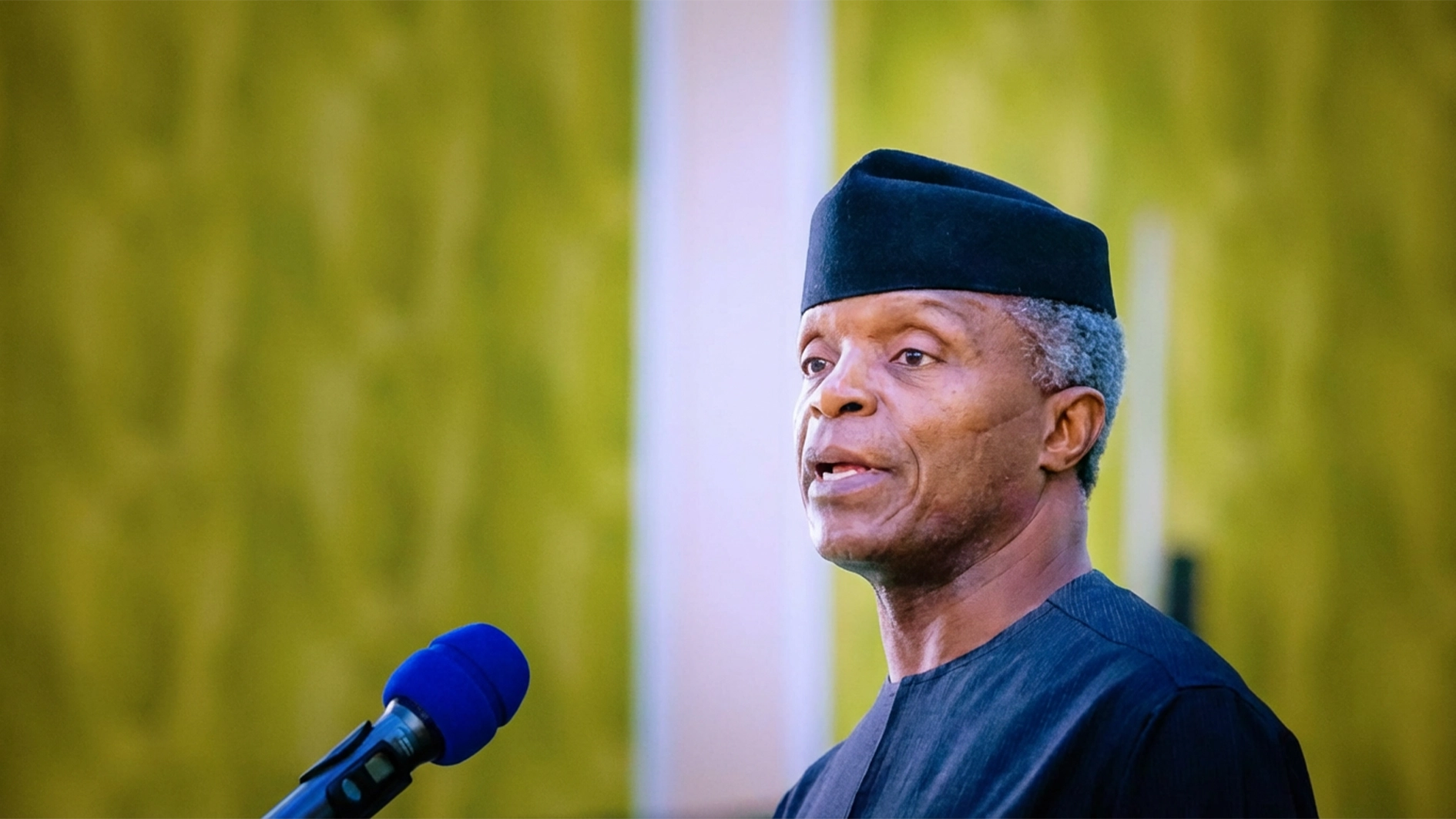
On Monday, November 23, 2021, former vice president of Nigeria, Prof. Yemi Osinbajo, at the 70th anniversary gala of the Nigerian Bottling Company (NBC), commended the company’s decision to invest $1 billion in the economy.
According to him, “your ongoing investment in the country, which I am told will be in the order of $1 billion in the next five years, testifies to your faith in the possibilities of Nigeria.”
Osinbajo further stated that in the 70 years that the company has operated, it has demonstrated commitment to the Nigerian people with repeated investments, in the building of production facilities across the country, in creating thousands of jobs and in its “active support of every aspect of our national life, from health to education, from women and youth empowerment to sports. All done with conscious respect for the environment.”
Continuing, Osinbajo said: “I think it is fair to say that the commitment has been met with the enthusiastic patronage of generations of Nigerians; families who have been supported by the stable careers of staff who have grown with the company through the years.”
Five years later, a new Socio-Economic Impact Assessment findings show that the industrial giant is operating not merely as a beverage manufacturer, but as a brand wired for socio-economic growth.
Conducted in 2024 by Steward Redqueen, a global consultancy that has done similar studies for the
Coca-Cola System in more than 60 markets, the assessment found that the System in Nigeria, made up of The Coca-Cola Company and its bottling partner, the Nigerian Bottling Company (NBC), contributed about $1 billion in value added to the Nigerian economy in 2024.
This value represents the combined contribution of salaries, taxes and profits that support national economic growth and add to Gross Domestic Product (GDP).
The report underscores the importance of local sourcing to this economic contribution. Of that $1 billion spending, $601 million went to Nigerian suppliers for goods and services in 2024, representing 14 per cent of the System’s total procurement across Africa.
From packaging manufacturers and ingredient suppliers to logistics operators and retailers, thousands of Nigerian businesses are connected to the System’s value chain. This reinforces business growth and supports local industries.
According to the report, the Coca-Cola System supported more than 160,200 jobs nationwide. The study puts direct employment at 2,989 people. But its more striking figure lies outside the System’s payroll: an additional 157,200 jobs were supported indirectly through suppliers, distributors, transporters and retail outlets. Put differently, for every person on the system’s payroll, 53 other jobs were sustained elsewhere in the economy.
This multiplier effect is acutely visible on the streets. From corner-store retailers and open-air market vendors to transport workers navigating interstate highways and hospitality staff in local bars and restaurants, livelihoods are inextricably tied to this commercial ecosystem.
Numbers alone do not capture the full scope of corporate citizenship. As conversations around environmental sustainability and community resilience take centre stage in Nigeria, the system has increasingly channelled investments into social impact. Its landmark interventions include the Packaging Collection Hub in Apapa, Lagos. The facility has the capacity to process up to 13,000 metric tonnes of PET plastic bottles yearly, helping to improve recycling infrastructure, reduce plastic waste and support the growth of a circular economy. The project is also expected to support 1,000 informal waste collectors and feed food-grade recycled PET production through third-party partners. The hub aims to serve as a comprehensive solution for plastic waste management. It seeks to facilitate PET collection, process materials into clean PET bales and enable PET production through third-party partnerships, helping contribute to cleaner communities and driving collective action to help reduce packaging waste.
Water stewardship is another area receiving attention. Through partnerships involving The Coca-Cola Foundation and other organisations, water and sanitation projects are already making a difference in communities in Borno State. Nigeria is also part of the Africa Water Stewardship Initiative, a nearly $25 million investment planned through 2030 across 20 African markets, announced by the Africa Operating Unit of The Coca-Cola System, with Coca-Cola Beverages Africa and other bottlers.
In a period marked by foreign exchange volatility and rising operating costs for manufacturers, the assessment suggests that the Coca-Cola System remains a significant contributor to economic activity and community development across Nigeria. This is further boosted by the System’s recent announcement to invest up to $1 billion in Nigeria over the next five years, subject to the availability of a predictable and enabling business environment. Demonstrating its dedication to social impact, the Foundation has also committed $1.25 million towards improving access to safe water and enhancing water management systems in Lagos and Abuja, helping to build more resilient Nigerian communities for the future.