

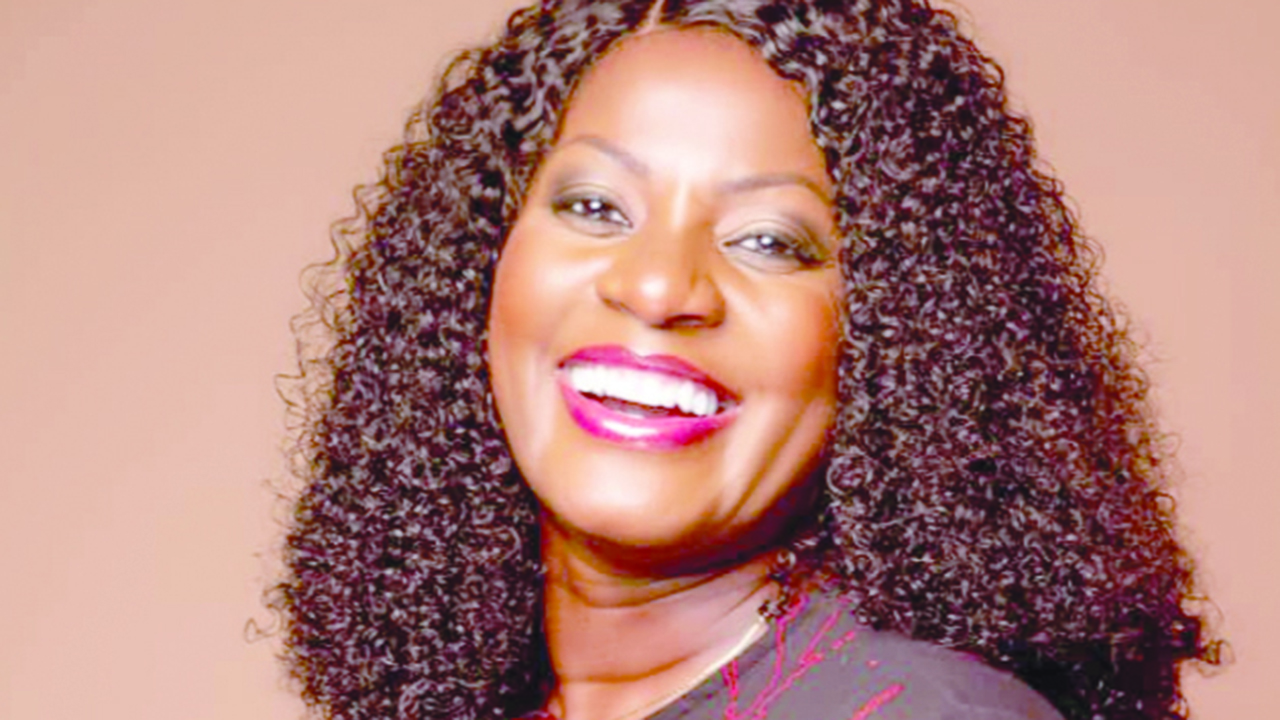

Anwuli Mordi-Anenih is a fashion entrepreneur whose first degree is in Business Administration from the University of Kent, in Canterbury. A trained shoe & bag maker with 2 semesters of Fashion Studies from the then London college of Fashion under her belt, she is the Creative Director of QAMIN (Quality Accessories Made In Nigeria). In this interview with IJEOMA THOMAS-ODIA, she shares her passion for promoting culture through her craft.
Take us through your career path and what led to your love for fashion crafts?
I have always been a creative. I enjoyed drawing and visiting museums at a young age, as well as styling my clothes. I would layer with knits in our hot weather, much to the consternation of my mother. While I did learn how to use my mum’s sewing machine, I wasn’t seriously pushed to look at fashion as a career choice until I finished my first degree. By this time, I was faced with a plethora of choices and made my way through sales, the beginnings of merchandising, as well as production. The career path has been a bit wiggly, but the love for fashion has always been a constant.
[ad]
You were trained as a shoemaker in London even after acquiring a degree in business administration, what informed your choice at the time?
My sister had big feet and had been told by a sales assistant at GINA shoes on Bond Street in London that she would have to wait three months to get a pair of the ‘of-the-moment’ slippers made in her size. She got so irritated by the lack of immediate choice for size 43 feet that she decided to start her own luxury footwear brand. I was the obvious choice for designer at Anyi Mordi shoes, as I was the fashion-crazy one and had some formal fashion education from the London College of Fashion. We came to the conclusion that to help understand how to design for feet, it would be a good thing to actually know how footwear was made. To this end, she ensured that the brand paid for a series of shoemaking courses so that I could become well educated in that area. This proved to be a great help when it came to interacting with the highly skilled artisans at the factories in Italy. It was super easy to understand why a design of mine was or was not possible to achieve.
Having trained abroad, and now practicing full time in Nigeria even for the diaspora market, what stands out for you and what innovation have you brought into the Nigerian terrain?
I think my training started from my parents really; they instilled this natural belief that ‘average’ was not an option. The aim in all things was always to be very good. Training abroad reinforced the thought that excellence is easily achievable to a certain extent. One standout comment when people see my pieces is; ‘they are so thoughtfully and neatly put together.’ They also say the stitches are so straight. To me, that has always been how things should be. My thinking is; what’s the point of me making something that’s not nice to look at or use? It seems to me like a waste of time if someone is not going to keep my bags for years and even pass them on.
Tell us about your choice of preserving culture with the blend of Aso-oke and Akwa-Ocha?
I have always loved our cultural woven fabric. My mum is not the most traditional woman, but she had some really lovely pieces in her trunk box and whenever she let me go through her things, I was over the moon. Growing up, our woven textiles rarely played a part in our day to day lives, so I always respected them from a distance. However, when I became a little frustrated by the lack of continuity when using leather, I began to look at other materials. While akwa-ocha immediately came to mind, its nature (it is predominantly white) meant that it couldn’t always be used in the ways I wanted. I turned to another woven fabric, aso-oke and let’s just say aso-oke became my leather. I once attended a webinar where a Nigerian speaker referred to himself and other designers who use our cultural woven fabric as “custodians of culture”. This label has been stuck in my mind and I have worn this badge with pride since then, as it verbalised something that I hadn’t really thought about giving a label to.
[ad]
How are you driving economic development through fashion?
This is a big one! I routinely buy millions of naira worth of aso-oke from an absolutely fantastic lady. She deals directly with the weavers and has such a good eye. My choice of fabric is a part of my design process and she makes it really easy to source, so I’m basically addicted to her store. My purchasing aso-oke in the quantities that I do contributes to keeping the weavers in business. I can’t tell by how much exactly, but if she has 10 bundles from a particular weaver, and I purchase eight at once, no doubt, the weaver is freed to achieve more as cash becomes more readily available to him/her. QAMINs heavy use of made in Nigerian fabric in the production of our fashion pieces means that we are constantly fueling a demand for certain products to be brought to the market and thus helping to put food on tables, among other things. I have also outsourced a large part of my bag production and I know for a fact that the manufacturing unit I use has grown. Initially a female – led business, she is now married and works in partnership with her husband to keep their excellently organised structure going at a very smart pace. Strategic alliances such as these have meant that we have all grown steadily in our various sectors of the business. I have plans to move back into shoemaking and I’m hopeful that I can contribute to the economic development of that sector as well.
Share with us some challenges you have been faced with and how you have been to pull through?
Initially, my main challenge was sourcing great quality materials for production. I used to go to fairs in Italy to source leather and hardware because that was all I knew at the time. You can imagine how expensive this was. It was not profitable, but I kept costs down by making the bulk of my pieces. As QAMIN began to grow, I then felt a real lack of support in the human resource department. Finding skilled artisans who were consistent with the quality that they produced became another challenge. I certainly went through a few until I found my current manufacturer. It takes a lot of patience and perseverance and I think having the skill of being able to bring my own designs to life has been a great help, however, we need more input. I have dreams of opening or collaborating with an existing skill acquisition center to help train artisans. It is desperately needed in our sector.
How do you stay inspired and motivated?
I have always been of the mindset that there is beauty to be found everywhere. Immersing myself in the art world is a constant for me – online and also art galleries. I’m a budding art collector. Being surrounded by other people’s dreams brought to life, on my walls helps me channel my own ideas. I’m also hugely inspired by the beauty of nature. One of my professors at the then London College of Fashion once physically showed us just how easy it is to transform inspiration from nature into a design, and I cannot tell you how easy it has made the design process for me. I have my sketch books full, and stay motivated to continue filling them through the knowledge that I will soon be able to bring many more of my designs to life.
[ad]
How can we get more women to become successful and rise to the top as you have done? What tips do you have for other women?
Plan! Try to start planning your personal and business lives as early as possible. However, if you feel that a lot of water has already gone under the bridge, no worries, start planning today. It’s never too late to have a plan. I do see my business as successful because after our reboot a few years ago, it’s been on a steady upward trajectory. However, we still have such a long way to go in the business that I can’t say that we are at the top. Not at all. I recommend staying realistic; we have to be realistic about our personal and professional capabilities.

For instance, if you don’t have a network, you have to work at creating one. Someone once asked me why my brand attends so many pop-ups; it’s mainly because I’m not a socialite. In fact, I’m quite an introvert, so I have to go out to find my client base and let them know that we exist. Form useful and profitable partnerships where possible. We have to believe in and work for the betterment of the partnerships. Believe in the good of other humans. I love working with women. All my external partnerships are with women and I believe that there may be a fluidity in the journey and communication as a whole, that can be more easily achieved with my fellow woman. However, I also believe in and have found men to be extremely helpful and supportive. Believe in humanity as a whole, but also do not ignore your instincts.
What is your life mantra?
Many years ago, I would have said ‘work hard, play hard’, but now I’m going to say; ‘a good plan, combined with consistency is the hidden secret’.
[ad]
