

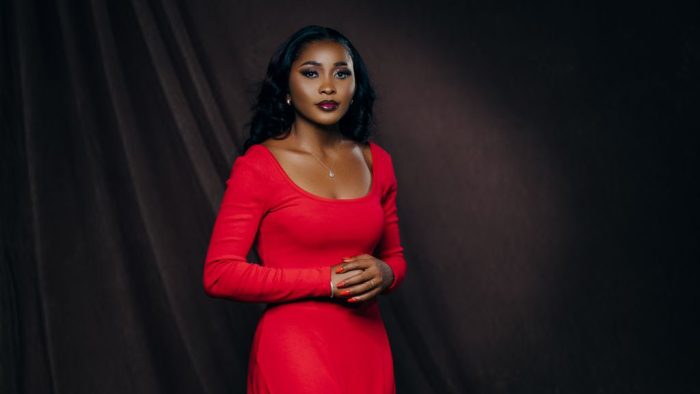
Mary Ijeoma Nriagu is part of a new wave of African thinkers redefining how stories are told in the digital age. Currently a doctoral student at Fordham University, New York with specialty in African American Literature, she has also mentored over 500 students through her MineduCafe. She speaks on her academic journey, advocacy in digital revolution in African women’s writing and mentoring the next generation.
How has this journey shaped your perspective as both a scholar and a global educator?
My academic journey began in Nigeria at Adekunle Ajasin University, where I earned a Bachelor of Arts degree. I then pursued a postgraduate diploma in Education at the esteemed Nnamdi Azikiwe University, followed by a master’s degree in literature from the University of Ibadan, which I completed in early 2025. Interestingly, I commenced my Ph.D. in English at Fordham University in 2022 with only my B.A., and I am currently specialising in African American Literature within the broader field of Twentieth-Century American Literature. This journey has been profoundly transformative. It has enabled me to engage with diverse intellectual traditions while remaining deeply rooted in African epistemologies. This dual lens not only enriches my scholarship and pedagogy but also empowers me to mentor globally and advocate for inclusive narratives in literature and education.
What drew you to your area of study, and why is it important today?
I was drawn to the lived experiences of Black and African women because their stories often carry the weight of history, silence, and resilience. My fascination with women’s writing has been a lifelong passion, beginning with my contributions to Edith Edition Magazine in Nigeria, where I wrote extensively on domestic violence, gender dynamics, and the invincibility of womanhood. Prior to that, my undergraduate thesis focused on race and immigration in Chimamanda Ngozi Adichie’s Americanah, exploring how class, race, and gender intersect in the lives of Black individuals in the diaspora, particularly within the American context. Today, these narratives remain vital for understanding how gender, race, and environment converge to shape identity and memory, especially in postcolonial and diasporic frameworks.
In what ways do you see social media and technology reshaping literature, especially for African and Black women writers?

Social media has profoundly democratised storytelling, enabling African and Black women writers to bypass traditional gatekeepers and cultivate vibrant communities of readers and thinkers across continents. Platforms such as Instagram, Facebook, LinkedIn, and Twitter have evolved beyond mere promotional tools; they now serve as dynamic spaces for literary innovation, cultural dialogue, and activism. In today’s digital age, it is difficult to fully engage with twenty-first-century literature without acknowledging the pervasive influence of social media. These platforms have become powerful conduits for literary dissemination, with their global reach and interactive metrics contributing to what I describe as the “global tottering of literature” a transformative shift in how narratives are created, circulated, and consumed across borders.
What common themes do you see emerging in contemporary African women’s literature?
Recurring themes in contemporary African women’s literature include intergenerational trauma, migration, environmental degradation, and spiritual reclamation. Writers such as Chimamanda Ngozi Adichie, Sefi Atta, Lola Shoneyin, and the late Buchi Emecheta have powerfully explored these motifs in their work. Notably, fourth-generation Nigerian women writers are expanding this thematic landscape by examining how urban life shapes female identity and agency. This is particularly evident in the recent works of Cheluchi Onyemelukwe-Onubia and Abi Daré, who foreground the complexities of city living in their portrayals of women’s experiences. These writers are not merely chronicling lived realities they are actively reimagining futures in which African women occupy central roles in global conversations on justice, ecology, and identity.
You helped over 300 students navigate fellowships and scholarships. What motivates your work in this space, and how do you measure its impact?
Let me say that I have helped over 500 people during my mentorship career. I mean, these are people I have personally worked with either from the space of webinars, workshops, and one to one conversation at Fordham University without adding over ten million people that my social media network reach. So, for me, Mentorship is deeply personal. Having navigated complex academic systems, I’m committed to demystifying them for others especially as someone who came into a PhD programme with only a Bachelor’s degree while winning over $450,000 worth of scholarship for my PhD programme for the duration of six years. Therefore, impact isn’t just number it’s the stories of students who’ve won fellowships, published work, or returned to mentor others. That ripple effect is my greatest reward, honestly.
With increasing recognition of your work from cultural and literary institutions, how are you navigating the demand while remaining grounded in your research and teaching?
Earlier this year, I was honoured by the U.S. Department of Education for my role as a panelist in reviewing the Gilman and Critical Language Scholarship programmes. While such recognition is affirming, my true grounding comes from the communities I serve; my students, readers, and fellow scholars. In navigating increasing demands, I remain anchored in purpose: to produce scholarship that heals, educates, and uplifts. Maintaining balance is essential, and I’m learning the importance of setting boundaries and saying no when necessary to preserve the integrity of my work and well-being.
What challenges have you encountered as a Black Nigerian woman in U.S. academia, and how have these shaped your scholarship or personal mission?
As a Black Nigerian woman in U.S. academia, I’ve encountered moments of invisibility and cultural misunderstanding. Yet, these challenges have only strengthened my resolve. They’ve inspired me to create spaces where marginalised voices are amplified and to advocate for structural change within academic institutions. One such initiative is The Endowed Woman, a community I co-founded with two brilliant colleagues Morayo Joy Akingbelue, who is currently researching disability studies at Georgia Southern University, and Ogechi Christine Kalu, whose work focuses on Intimate Partner Violence (IPV) at SUNY Buffalo. The Endowed Woman is gaining traction across social media platforms including LinkedIn, Facebook, and Instagram. Earlier this year, we awarded JAMB scholarships to twenty female students, helping them overcome financial barriers to accessing higher education. This initiative reflects our commitment to empowering women through education, advocacy, and shared values.
What advice would you give to emerging writers and researchers who hope to contribute meaningfully to global conversations?
Read widely, write boldly, and remain rooted in your truth. Your story matters don’t wait for permission to tell it. Build communities, seek out mentorship, and recognise that your voice holds the power to influence policy, shape culture, and transform history. Literature is more than art; it is a form of activism, a tool for resistance, and a catalyst for change.
