

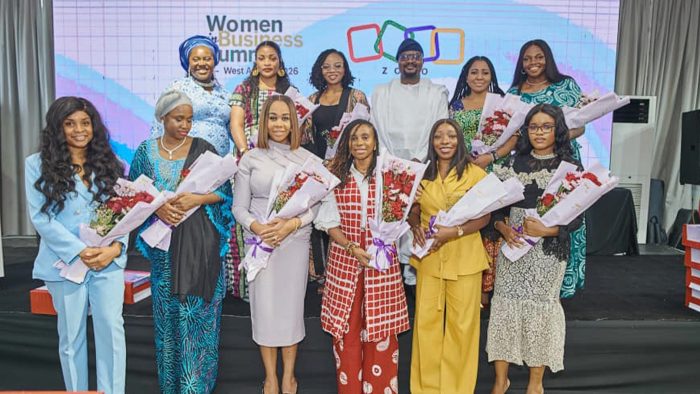
Business leaders and technology experts have called on women entrepreneurs in Nigeria to adopt digital tools, strengthen legal structures and build sustainable systems to scale their businesses and remain competitive in a challenging economic environment.
Speaking at the Zoho’s Women in Business Summit – Nigeria, Country Head of Zoho Nigeria, Kehinde Ogundare, said many businesses struggle due to fragmented access to education, capital and disconnected tools, which create operational inefficiencies and slow growth.
He noted that reliance on outdated systems such as spreadsheets continues to limit productivity and increase the risk of errors, stressing that modern businesses must adopt integrated technology solutions to remain efficient. According to him, the current economic realities require businesses to scale quickly in order to recover costs and generate profit, a process that cannot be achieved with manual or inefficient systems.
Ogundare emphasised that building structured systems is critical for business growth, adding that technology should simplify processes rather than complicate them. He said Zoho’s vision is to democratise access to technology through integrated applications used across more than 80 countries, enabling businesses to manage operations seamlessly.
He highlighted marketing, sales, finance and operations as core pillars of any successful business, noting that marketing plays a crucial role in creating awareness and driving revenue. He added that smart operations and automation can significantly reduce errors, improve service delivery and allow business owners to focus on strategic growth.
The Zoho executive also stressed the importance of effective people management, noting that handling diverse teams requires the right tools and systems. He added that smart customer engagement, including the use of email marketing, is essential for maintaining relationships and driving repeat business.

Ogundare further advised entrepreneurs to adopt connected systems that provide real-time analytics and data-driven insights, enabling smarter decision-making. He encouraged continuous learning and the adoption of emerging technologies, including artificial intelligence, as key factors for staying competitive in a rapidly evolving business landscape.
Sales Manager, Middle East and Africa Zoho, Praise Olusegun, described women-owned businesses as a powerful economic force in Nigeria, noting that the country has one of the highest rates of female entrepreneurship globally.
She said women own more than half of Nigeria’s over 40 million small and medium-sized enterprises, but many still face structural challenges, including limited access to finance, technology and global markets. Citing research findings, she noted that a significant number of women-led businesses earn modest daily profits, underscoring the need for greater support.
Olusegun said digital tools can help entrepreneurs better manage their operations and expand beyond local markets, urging participants to leverage technology and build networks that support growth. She added that technology should empower businesses and not add complexity to their processes.
International Arbitration Consultant, Perenami Momodu, said strong legal frameworks are essential for building resilient businesses capable of withstanding economic shocks and global uncertainties.
She explained that resilience involves preparing for disruptions such as inflation, regulatory changes and global crises, noting that while Africa has a high rate of female entrepreneurship, women-led businesses remain significantly underfunded.
Momodu pointed out that only a small fraction of global and African venture capital funding goes to female-led businesses, limiting their growth potential. She said improving access to capital and legal infrastructure could significantly boost women’s contribution to economic development.
She advised entrepreneurs to establish clear corporate structures, develop strong contracts, protect intellectual property and ensure regulatory compliance in order to build sustainable enterprises.
During a panel session, speakers emphasised the need to redefine success in business beyond financial performance. Uloma Amodu said success should also be measured by the impact leaders create and the lives they influence.
Founder and Chief Executive Officer of AutoGirl, Chinazom Arinze, highlighted the importance of financial growth in expanding influence and driving social impact, explaining that her company leverages technology to connect vehicle owners with individuals and organisations in need of transport services through a scalable mobility platform.
Founder, Fernhill Digital Group,Also speaking, Datari Ladejo, said while many women start businesses to address social challenges, they often overlook the importance of building strong financial systems. She stressed that impact must be supported by sustainability to ensure long-term success.
Chief Impact Officer, Impressum Africa Limited, Judith Didi Ebirim, added that profit and purpose are not mutually exclusive, noting that purpose drives ambition while profit ensures continuity.
Sales Manager for Sub-Saharan Africa, Truecaller, Uloma Amodu, said success should be measured not only by financial results but also by the impact leaders create.
