

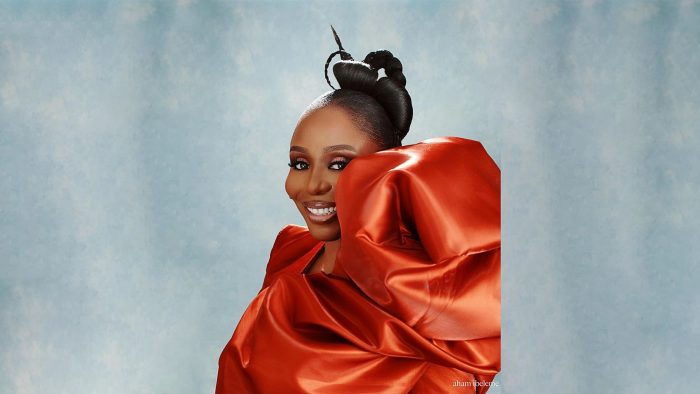
Toyosi Etim-Effiong is the Founder and Chief Strategy Officer of That Good Media. She leads one of Nigeria’s most proactive creative industry companies, operating at the intersection of talent management, influencer marketing, public relations and personal branding. She holds a degree in Economics and a post-graduate degree in Economic Development and Policy Analysis from the University of Nottingham. As visionary behind the TGM Academy, Etim-Effiong stands as one of Africa’s most credible voices at the intersection of Media, Culture and Business. In this interview she speaks on clocking 40, her vision, the creative sector, her faith, motherhood and others.
Tell us about the girl you were growing up. Who raised you, who shaped you, and what was planted early that you’re still drawing from today?
Family and boarding school raised and shaped me. I had a beautiful relationship with my dad who was a sickle cell warrior. He became very ill when I was 11 and even though a lot of effort was made to shield me from it, I saw him in a lot of pain. He eventually passed away a few weeks after I turned 12. I remember it was third term of JSS 1 and by the first term of JSS 2, I was in boarding school. Survival seems like a strong word to use for a young girl in JSS 2, but I learned survival/independence. I also learned the importance of friendships and relationships. It was also in boarding school I became more aware of my faith as a Christian and over time that faith has become a core part of the infrastructure empowering me.
You run a media company but were trained as an economist, with a Master’s in Economic Development and Policy Analysis. How does that lens shape the way you see and operate in the creative industry?
It means I can never just see the art. When I look at a talented person, I’m simultaneously asking: what is the economic model sustaining this talent? Can this talent survive an emergency if one comes up? Is the talent aware that creativity requires structure for impact and longevity? I’m also thinking about the gaps in the industry, what it would take to fix them and the impact that fixing those gaps would have.
You’ve been described in many ways, media entrepreneur, talent manager, producer, wife, mother, even minister. At 40, which of these feels most true to who you actually are?
I will have to choose three of everything you’ve listed. Wife, Mother, Talent Manager. Those three give me the deepest sense of fulfilment. They speak to my interaction and connection with other humans beings and playing those roles can be hectic sometimes but I find them deeply satisfying.
From the outside, your life looks defined by steady progress and a clear sense of purpose. Were there seasons when things felt uncertain or unclear? What did those seasons do to you?
Yes, there were seasons that were genuinely frightening. One that stands out is after I had my first child. I felt lost. Like, I wasn’t sure who I was, what I was supposed to be doing, where I was going. Things felt strange and uncomfortable, but that season also became a turning point. It was the first time I really sat with myself long enough to ask the harder questions: What is my identity actually rooted in? Who am I without roles, titles, or expectations? Without the usual markers I would typically lean on. It wasn’t an easy process but it was grounding in a way that nothing else had been.
You speak about Talent and Talent Management quite ardently, why do you think Talent management in Africa often lacks structure and long-term financial thinking and what is it costing the industry?
The creative industry was built on passion, relationships and loyalty rather than contracts and systems. For a long time it worked or appeared to work. But relationships without structure are just dependency dressed up as partnerships. The cost to the industry is enormous and largely invisible. There are talented people who peak early and have nothing to show for it financially, careers that could have been generational that ended at 35, brands that wanted to invest in African talent but couldn’t find a professional infrastructure to trust, and I’m speaking particularly to the Film and TV industry now because the music guys seem to have their ducks in a row. What many don’t really know is that this gap costs us not just money, it costs us legacy.
Through That Good Media, you’ve worked with top talent and major brands. What have those experiences taught you about power, value, and money that no classroom could?
That the person who sets the price has the power. And that most creatives surrender that power before the negotiation even begins, through desperation, self doubt, a lack of understanding of what they’re actually worth. I’ve also learned that brands don’t buy talent. They buy access to trust. When a creative has built genuine trust with an audience, they are sitting on an asset that is extraordinarily valuable. The tragedy is that most of them don’t know how to convert it and the people around them don’t either. That’s the gap I’m looking to close.
There are conversations about you launching a creative academy. How is this different from every other creative academy?
The academy is going to be solving a structural problem. It’s clear that there is no shortage of creative talent in Africa but there is a profound shortage of the business intelligence, the leadership capacity and the professional infrastructure that allows that talent to become wealth. Most of the existing creative academies train creatives on craft. I’m building something that trains them on business, leadership and longevity. The academy is more for talent managers and aspiring talent managers than creatives. It’s for people who have the desire and capacity to convert creativity to currency and with more trained managers in the industry, creatives can focus on creating at their highest levels.
If your vision for the academy fully plays out, what does the African creative industry look like in 15 years and what has fundamentally changed?
It looks like an industry where contracts are standard and not exceptional; an industry where a creative person can build a career that funds a retirement. An industry where fame (creativity) and fortune (currency) intersect because right now there’s a lot of fame but not much fortune. It’s also an industry where managers, agents, lawyers and strategists around African creatives are as sophisticated as anywhere in the world. Progress in the industry will no longer happen by accident but by design.
You’re quite open about your Christian faith in an industry that doesn’t always align with its values. How does this affect your work?
I always say that the values I have as a result of my Faith are beneficial to everyone. My faith functions as a filter. The industry moves fast and the pressure to say yes to quick money, to fame without a foundation and to access is real. Something has to act as a filter so we’re not walking through every open door including those with harm on the other side. So it’s not a self-righteousness thing but a genuine internal check that protects me and my talents/clients from the dangers of a fast paced industry. Not everybody gets it though and it’s okay.
As you turn 40, what are some things you’ve had to learn, unlearn and relearn over the past years that have made you become the mother, wife, entrepreneur that you are?
I’ve had to learn dependence after being quite independent from a young age. I’ve realised that no one can have a full, rich life as a one-man Mopol. In the same vein, I’ve had to unlearn the constant ‘hustle’ mentality and instead learn how to live and work from a place of rest. I’m daily relearning the strength and importance of Gratitude. Gratitude keeps me light.
What is the most persistent misconception about you and what’s the truth you want to replace it with?
From some comments I see on social media, I think the most persistent misconception about me is that my life is hollow. There are people who genuinely think and again I’ve deduced this from comments that my life is empty and I have nothing going for me personally. That’s far from the truth but honestly I don’t care much to change/replace it. I read this book called ‘The Let Them Theory’ by Mel Robbins. It’s a guide on how to stop letting other people’s opinions, drama and judgment impact your life. I recommend it. Let them opine. It’s ok.
Of course we have to talk about your marriage to one of Nigeria’s most celebrated actors and filmmakers, how have you both made it work in an industry that doesn’t particularly celebrate the institution of marriage?
Our wedding hashtag 9 years ago was #3StrandCord. From the beginning we knew we wouldn’t survive without the third strand in our union, the third strand being GOD. It’s the grace and mercy of GOD that has kept us together. We’ve both been intentional about working on our individual selves as well as the marriage but even that desire to stay together despite arguments and fallouts can only be GOD. So I wish I could attribute it to a five or seven step plan but right now I can only attribute the beauty and success of our marriage to God and our willingness to partner with Him.
Let’s talk about you raising three children while building a company and shaping an industry. What does that actually require of you that people don’t see?
It requires a kind of daily negotiation with myself. I’m having conversations with myself early in the morning, late at night and several times in between about how to be fully present for my husband and three little human beings who need me, while also being fully present for That Good Media, Saints in Media (my ministry expression) and other assignments. Not many people see those daily pep talks and intentional recalibrations, but those definitely help me stay balanced.
What does a typical morning look like for you?
My mornings typically begin with meditation while I’m still on my bed. I sit with my thoughts and turn things over before I get up to pray. Some days, that looks like a prayer walk, which often doubles as my exercise, while other days, I stay indoors. After prayers, my husband and I spend some time talking, and then one of us wakes the kids and walks them through their prayers and Bible reading. From there, depending on the day, I’ll either head to the gym before going into the office or go straight to work and my day pretty much unfolds from there.
40 years from now, what would you be saying about the past 40 years?
I’ll be saying I did everything I wanted to do and made the impact I set out to make and I’ll be looking forward to the next 40 because the promise is 120 years.
