

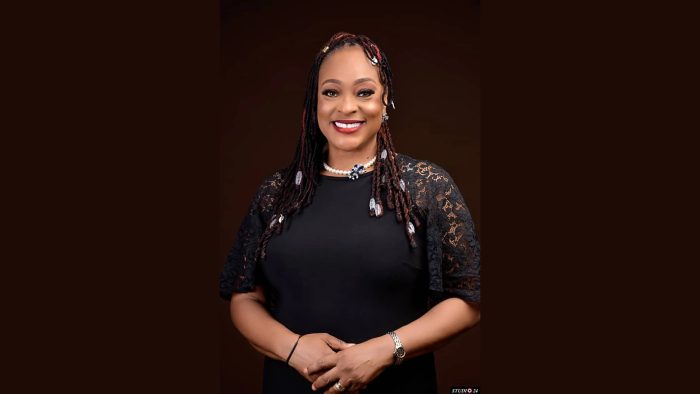
Helen Obiageli Oshikoya is the founder and Chief Executive Officer of Nobelova Gradani PsychoEducational Services. A member of the Nigerian Bar Association, she holds a Master’s degree in Social Science from the UK consisting of child development, clinical and learning assessments and other areas of social sciences that require mental health expertise. With a wealth of experience in children’s rights, she has been the foremost advocate for several campaigns involving the Rights of the Nigerian Child developmental screening at birth being one. A member of the Nigerian Psychological Association, British Psychological Society, American Psychological Association and Certified Autism Specialist. In this interview, she talks about her work, the special education sector and how schools can encourage inclusion.
Can you share the inspiration behind Nobelova Gradani Psychoeducational Services?
The inspiration came from seeing children with neurodevelopmental differences being denied hope and opportunities simply because they were “different.” I was pursuing a legal career (called to the Nigerian Bar in 1991) when I encountered cases and situations where children with developmental challenges were overlooked or stigmatised. This shifted my path. I invested in high-level training in child development, mental health, clinical and learning assessments in the UK, and founded Nobelova Gradani (meaning “Noble Citizen”) to ensure every child receives quality, evidence-based care. Early intervention and developmental surveillance became central because many Nigerian parents previously lacked access to proactive screening.
How has the experience been so far?
The journey since starting our Developmental Surveillance and School Health Programme in September 2012 has been deeply rewarding yet challenging. We’ve screened thousands of children across dozens of schools and hospitals, trained professionals, and provided ABA early intervention and support to many families. Seeing children progress and parents gain hope makes it worthwhile. We’ve built partnerships (e.g., as an IBCCES Certified Training Partner), expanded services like teacher competency training and inclusion consultancy, and created awareness where little existed. There have been financial and systemic hurdles, but the impact on children’s lives keeps us going.
What do school Psychologists do and what role do they play in the special education sector?
School psychologists assess cognitive, emotional, behavioural, and academic functioning through psychoeducational evaluations. They identify learning disabilities, developmental delays, ADHD and autism In special education, they conduct assessments for eligibility and individualised education plans. Provide counseling and behavioural interventions. Consult with teachers and parents on classroom accommodations. Also, promote mental health and inclusion. Train staff and advocate for children’s rights. They bridge psychology, education, and family support to help children thrive.
What are the major challenges that hinder quality service in the special education sector?
In Nigeria, key challenges include inadequate funding and resources, shortage of trained professionals (psychologists, therapists, special educators), Poor infrastructure and lack of accessible facilities, societal stigma, cultural beliefs, and low awareness. Weak policy implementation and enforcement. Limited interdisciplinary collaboration and data-driven practices. High teacher burnout and insufficient professional development. These factors result in delayed interventions and unequal access.
How can schools encourage inclusion in the educational sector?
Schools can adopt Universal Design for Learning (UDL) principles by providing teacher training on differentiated instruction and disability awareness. Develop clear inclusion policies with parental involvement, create peer support programmes and anti-bullying initiatives, ensure physical accessibility and reasonable accommodations. Collaborate with specialists for co-teaching or pull-out support. Celebrate diversity through events and curricula that promote empathy. Inclusion benefits all students by fostering empathy and better social skills.

In your job, what are some of the misconceptions you’ve observed concerning children receiving special education services?
Common misconceptions are that special education is only for severe cases or intellectual disabilities. Viewing it as a label that limits potential rather than an enabler. Believing children in special services are not smart or can’t succeed academically. Thinking behavioural challenges are just bad parenting or laziness. Assuming inclusion means lowering standards for everyone. In reality, with proper support, many children with disabilities excel and contribute uniquely.
What is your advice for parents and caregivers who suspect that their child has a learning and/or developmental disability?
Act early, don’t wait. Seek a professional developmental screening or comprehensive assessment as soon as concerns arise (e.g., speech delays, social difficulties, motor issues). Early intervention significantly improves outcomes. Find reputable providers, document observations, and partner with schools. Join support networks, educate yourself and focus on strengths while addressing needs. Remember that diagnosis is a roadmap, not a limitation. Every child deserves the chance to reach their full potential.
In your opinion, what can be done to improve special education services in Nigeria?
Increase dedicated funding and enforce existing policies. Integrate mandatory special education training in teacher education programmes. Establish national standards for assessments and interventions. Promote public-private partnerships and awareness campaigns to reduce stigma. Invest in local research and culturally relevant tools. Scale up interdisciplinary services and technology, hold schools accountable for inclusion metrics. Government, NGOs, schools, and communities must collaborate.
Is there a particular person for whom you are grateful because of the support he or she gave you to get to where you are today?
I am deeply grateful to my family, particularly those who supported my pivot from law to this specialised field. Mentors in mental health and education, along with early collaborators and the team at Nobelova Gradani, have been instrumental. Many parents and children who have trusted us have also inspired and sustained me through their resilience.
What is your advice to school owners and teachers?
Prioritise every child’s unique needs. Invest in ongoing training on neurodiversity and inclusion. Screen early, refer promptly, and collaborate with specialists. Create welcoming environments where differences are celebrated. Document progress and communicate openly with parents. Remember that supporting one child with special needs often raises the quality of education for the entire class. Be patient, evidence-based, and compassionate, you shape futures.
What message do you have for women going through one challenge or the other?
My message is simple but I mean every word of it, you are not behind, and you are not broken. Challenges have a way of making us feel like we are the only ones struggling, like everyone else has figured something out that we haven’t. But that is rarely the truth. What I have seen, time and again, is that the women who come out stronger are not the ones who never fell, they are the ones who refused to make their pain the final chapter of their story. So, wherever you are right now, in grief, in confusion, in exhaustion, in a season that feels like it will never end, hold on. Seek support without shame. Speak your truth without apology. And remember that needing help is not weakness; it is wisdom. You do not have to carry everything alone.
What valuable lesson have you learnt in your work over the years?
The most valuable lesson I have learnt is that people need to feel seen before they can be helped. Early on, I thought the most important thing I could offer was information, solutions, answers. But over time I realised that what truly transforms a person is the experience of being genuinely heard without judgment, without rush, without someone trying to fix them before they have even finished speaking. The second lesson is patience with people, with processes, and with yourself. Change rarely happens in a straight line. Progress can look like chaos before it looks like growth. If you are doing work that matters, you have to be willing to play the long game.
