

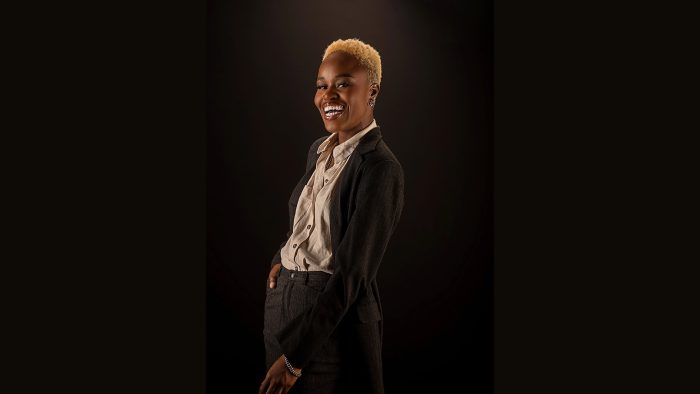
A social entrepreneur, filmmaker, and author, Seyi Oluyole is the Founder and Executive Director of Dream Nurture Initiative, a registered nonprofit organisation dedicated to transforming the lives of young people through education, creativity, and social impact. She is widely recognised as the Founder and Creative Director of Dream Catchers Academy, the organisation’s flagship programme that uses the arts as a powerful tool for social change. In this interview, she speaks on her passion for quality education for young people, especially school aged children where she has impacted over 15,000 young people.
Looking back to the earliest days of Dream Catchers Academy, what was the specific spark that made you realise you couldn’t look away from the plight of these children?

My major spark was living in the United States, working with at risk children and realising that back home, vulnerable children even had less opportunities. The kids in the states got free meals that would include veggies and fruits and they also got to work on personal computers and this was a public school in at risk areas. After about two years in the states, I felt unfulfilled and felt a tug and a call of God for me to relocate back home to continue my work with vulnerable children and families. This moved me to take the big decision of moving back home to Nigeria in 2014 and start Dream Catchers Academy. So, I could create opportunities to succeed for indigent children.
In a society that often overlooks children in vulnerable positions, how did you build a curriculum that prioritises their dignity and artistic expression as much as their formal education?
My desire to build an arts integrated curriculum stems from my personal experience of being gifted yet indigent – I saw firsthand the limitations that can come from lack of opportunities. Also, growing up I would have benefited from a programme like Dream Catchers Academy and unfortunately there wasn’t anything like this back then, so I decided to fill a gap in the world. It has taken time; I am learning and growing every day.
Being a “mother” to many while navigating the complexities of running an NGO is a heavy mantle. How do you protect your own mental and emotional space to ensure you remain a pillar of strength for the Academy?
I have an amazing team, we work together towards a common goal and this definitely helps on days when I am feeling burnt out and need some space. I also practice yoga and I believe this helps tremendously.
Beyond the viral moments and the stage lights, what are the systemic challenges you face as a female founder in Nigeria’s non-profit sector, and how have you navigated those barriers to keep the doors open?
People often underestimate me, and a number of times, I have been called a Mr. Also, there’s some trust issues that as a female founder, my strategy is not as strong and I say this because when we first started raising funds to build a home for 100 vulnerable girls and I made the first call on social media – there were people who commented that no one was going to give a woman that much money. Also, in terms of opportunities and nominations for awards or grants – people seem to overlook women in the nonprofit sector – almost like I am a woman so caring should come naturally to me so there’s nothing significant happening. How I have navigated the barrier is understanding that I don’t need anyone’s permission to shine. I believe in what I am doing and I have amazing people and partners who believe in me and the work I do.
We see the children dancing and thriving now, but the journey of healing is often quiet. Can you share a story of a specific child whose transformation through the Academy best illustrates the “Dream Catchers” philosophy?
I will share the story of a young girl who was dropped off by her mother on a Saturday morning and I got a call on Monday that her mother had passed. This affected the child so much that for two full years, she refused to smile or be friendly. We had to use some interventions and she got better. Now, she is in her final year in primary school (she came to us in Nursery 2), she is able to read and write fluently. She smiles more often, and it’s always beautiful to see her dimples. She is more confident and is one of the students who has represented our school Dream Catchers Academy at international Cultural Exchange Programmes in France, Morocco and Spain.
Looking toward the next decade, how are you evolving the Academy’s model to ensure that the impact remains sustainable and that the “Dream Catchers” blueprint can be replicated across the continent?
Our work at DCA is built on an existing structure with standard operating procedures, proven systems and well qualified and experienced staff. The established framework ensures that daily operations that have been tried and trusted helps run the academy like a professional institution. These frameworks can be replicated across the continent with proper planning. Anyone who wants to replicate the blueprint can reach out to us here – and we will discuss more [email protected] [email protected]
To the young woman reading this who feels overwhelmed by the scale of a social problem she wants to solve, what is the most vital lesson you’ve learned about the audacity to start small?
Trust the process and do not despise the days of little beginnings. Truth is the ‘overwhelm’ won’t go away. The trick is to choose your battles and understand that you can’t help everyone – it’s sad but it is true. Another thing is integrity – do not trade your integrity for anything; with trust you can do more and reach more people. Mentorship is also important – look out for a mentor, read books that align with your goals and constantly commit your path to God. Rest when needed, self-care is not negotiable. You can’t give what you don’t have. How do you care for others if you haven’t cared for yourself? Finally, keep pushing, learning and growing. Consistency always brings progress.
